Muscular strength isn't just about looking strong—it's about being able to lift your groceries, push a stalled car, or pick up your kid without thinking twice. When you understand what builds real strength and how it differs from endurance, you can train smarter and see results faster. Let's break down exactly what muscular strength looks like in practice and how you can develop it safely.
What Is Muscular Strength?
Muscular strength is the maximum amount of force your muscles can produce in a single effort. Think of it as your one-rep max: the heaviest weight you can lift one time with proper form.
This differs sharply from cardiovascular fitness (how well your heart and lungs work) and flexibility (your range of motion). It's also not the same as muscular endurance, which we'll cover later.
Why does muscle strength matter? Your body relies on it constantly. Opening a stubborn jar. Lifting a suitcase into an overhead bin. Standing up from a low chair as you age. Research shows that maintaining strength past age 40 reduces injury risk and preserves independence well into your later years.
Athletes need it too. A sprinter exploding from the blocks, a basketball player jumping for a rebound, a tennis player serving—all depend on generating maximum force quickly.
The pattern I see most often is people confusing "feeling tired" with building strength. But true strength training requires heavy resistance and full recovery between sets. That's the key difference.
Types of Muscular Strength
Not all strength looks the same. Your muscles generate force in different ways depending on the movement.
Isometric strength happens when you produce force without changing muscle length. Picture holding a plank position or pushing against an immovable wall. Your muscles fire intensely, but nothing moves. This type builds stability and is excellent for injury prevention.
Isotonic strength involves moving a weight through a range of motion. This splits into two phases: concentric (muscle shortening, like lifting a dumbbell up) and eccentric (muscle lengthening, like lowering it down). Most traditional strength exercises fall here.
Isokinetic strength maintains constant speed throughout a movement, regardless of force applied. You'll typically see this with specialized machines in physical therapy settings. It's less common in regular gyms but valuable for rehabilitation.
Explosive strength (or power) combines strength and speed. Olympic lifts, box jumps, and medicine ball throws all require generating maximum force as fast as possible. This matters most for athletes but helps everyone move more efficiently.
Each type has its place. You don't need to master all four, but understanding them helps you choose the right exercises for your goals.
Muscular Strength Examples by Muscle Group
Real muscular strength examples make the concept concrete. Here's how strength training looks across your major muscle groups.
Upper Body Strength Examples
Your upper body handles pushing, pulling, and lifting tasks daily.
Bench press remains the gold standard for chest strength. Lying flat, you lower a barbell to your chest and press it back up. If you can bench press your body weight once, you've got solid strength. Elite lifters exceed twice their body weight.
Overhead press tests shoulder strength. Standing with a barbell at shoulder height, you press it straight overhead until your arms lock out. This movement mimics putting items on high shelves—except much heavier.
Pull-ups demonstrate back and arm strength. Hanging from a bar, you pull your chin above it using just your body weight. Many adults can't do even one strict pull-up, making it an excellent strength goal.
Dumbbell rows build unilateral pulling strength. Bracing one hand on a bench, you pull a heavy dumbbell to your ribs. This corrects strength imbalances between sides.
Bicep curls with heavy weight (not the light pumping kind) build arm strength for carrying and holding. Same goes for tricep dips on parallel bars—lowering and pressing your entire body weight.
Lower Body Strength Examples
Your legs contain your body's largest muscles and can generate tremendous force.
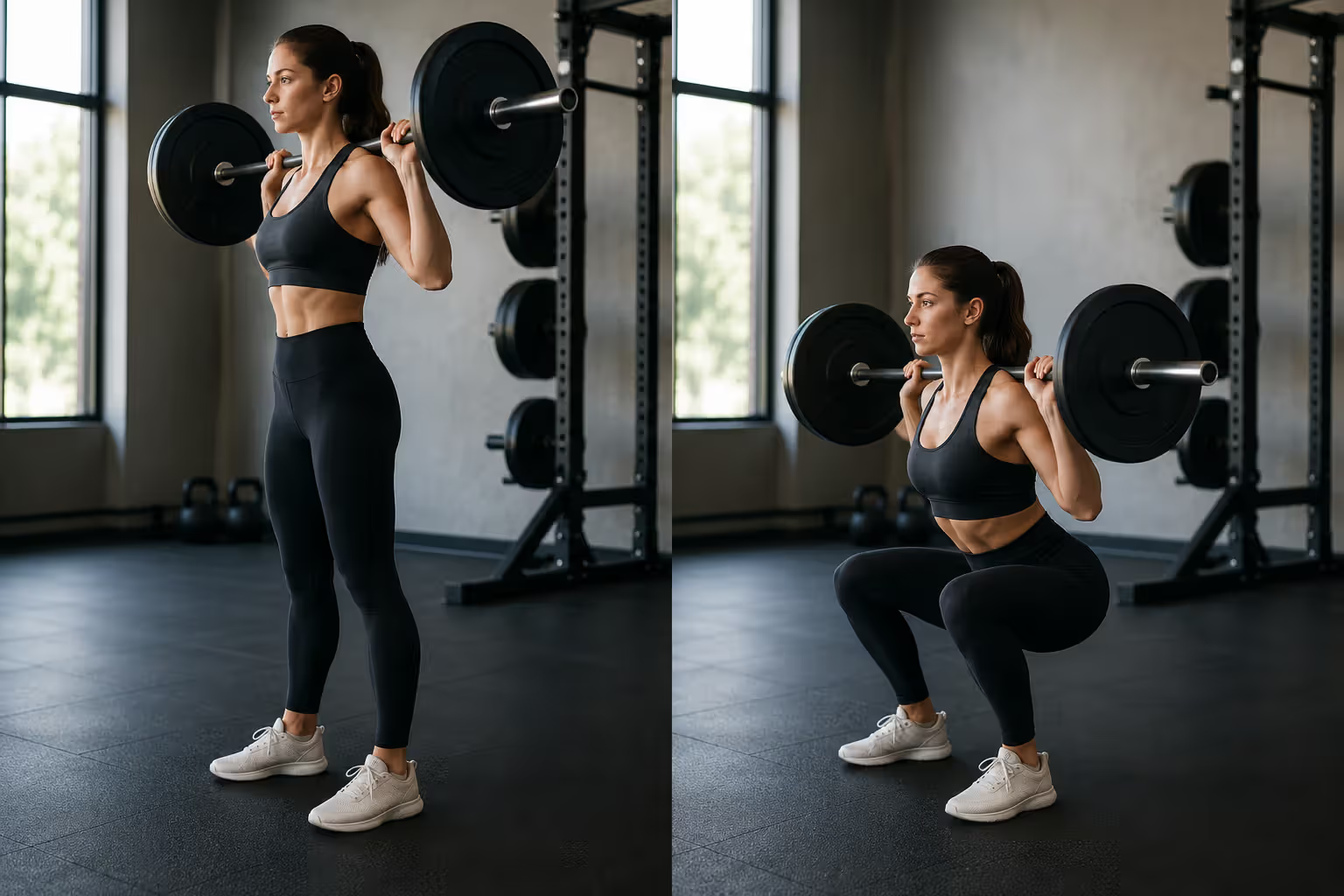
Back squats reign supreme for lower body strength. With a barbell across your upper back, you squat down until your thighs are parallel (or deeper) and stand back up. Strong lifters squat 1.5 to 2 times their body weight for a single rep.
Deadlifts might be the most functional strength exercise. You lift a loaded barbell from the floor to hip height, engaging your entire posterior chain. This directly translates to lifting heavy objects safely in real life.
Leg press allows you to handle very heavy loads safely. Seated in a machine, you push a weighted platform away with your feet. Some people leg press three to four times what they can squat because the movement is more stable.
Bulgarian split squats test single-leg strength. With your rear foot elevated on a bench, you squat down on your front leg. This reveals and fixes strength imbalances while improving balance.
Calf raises with heavy weight build lower leg strength for walking, running, and jumping. Standing on the edge of a step with a barbell or dumbbells, you raise up onto your toes against significant resistance.
Core Strength Examples
Core strength stabilizes your entire body during movement and protects your spine.
Planks with added weight (a plate on your back) build isometric core strength. Holding a straight body position for 60-plus seconds with extra load is genuinely challenging.
Weighted cable crunches target your abdominals with heavy resistance. Kneeling below a cable machine, you crunch down against a weight stack. This beats doing hundreds of bodyweight crunches.
Farmer's carries might be the most underrated strength exercise. You simply walk while holding very heavy weights at your sides. This builds grip, core, and total-body strength simultaneously. Try carrying half your body weight in each hand for 40 yards—it's humbling.
Hanging leg raises with ankle weights require serious core strength. Hanging from a bar, you raise your legs to parallel while controlling the weight. This beats regular leg raises significantly.
Pallof press builds anti-rotation strength. Standing perpendicular to a cable machine, you press the handle straight out and resist the cable trying to twist your torso. This type of strength prevents back injuries during twisting movements.
Muscular Strength Versus Endurance
People constantly mix these up, but they're quite different.
Muscular endurance is your ability to repeat a movement many times or hold a position for an extended period. Think doing 50 push-ups or holding a plank for three minutes. Strength is about maximum force once or a few times.
Your body adapts differently to each type of training. Strength training uses heavier weights, fewer reps, and longer rest periods. Endurance training uses lighter weights, higher reps, and shorter rest.
Here's how they compare directly:
Factor
Muscular Strength
Muscular Endurance
Training focus
High weight, low reps (1-6)
Low to moderate weight, high reps (15-25+)
Rest periods
2-5 minutes between sets
30-90 seconds between sets
Energy system
Phosphagen system (immediate)
Glycolytic and oxidative (sustained)
Example exercises
Heavy deadlifts, max bench press, weighted pull-ups
Bodyweight squats, high-rep push-ups, wall sits
Primary benefits
Maximum force production, bone density, power
Sustained activity, fatigue resistance, work capacity
You need both in real life, but your training emphasis depends on your goals. A powerlifter prioritizes strength. A marathon runner needs endurance. Most people benefit from a mix leaning toward strength, especially after age 30 when muscle loss accelerates.
The biggest mistake I see is people training in the middle zone—too light for real strength gains, too heavy for true endurance work. Pick one goal per training block and commit to the appropriate rep range and rest periods.
A common mistake? Thinking light weights for high reps builds strength. It doesn't. You might feel a burn and get tired, but that's endurance work. For strength, you need to lift heavy enough that you can't complete more than six reps with good form.
How to Improve Muscle Strength Safely
Building strength isn't complicated, but it requires consistency and smart progression.
Progressive overload is the foundation. You must gradually increase the stress on your muscles—adding weight, reps, or sets over time. If you bench press 135 pounds for three sets of five this week, aim for 140 pounds next week or an extra rep per set.
But don't rush it. Adding 2.5 to 5 pounds per week on compound lifts is solid progress. Jumping too fast invites injury.
Rest matters more than most people think. Your muscles don't grow during workouts—they grow during recovery. Take at least 48 hours between training the same muscle group hard. Sleep seven to nine hours nightly. Skimp here and your strength gains stall.
Nutrition fuels strength gains. You need adequate protein (roughly 0.7 to 1 gram per pound of body weight daily) to repair and build muscle tissue. You also need enough total calories—trying to build strength while severely restricting food rarely works.
Form beats ego every time. Lifting heavier weight with terrible form doesn't build strength—it builds injuries. Master the movement pattern with lighter weight first. A controlled, full-range-of-motion rep with 185 pounds beats a half-rep with 225 pounds.
Common mistakes to avoid:
First, training to failure every set. This fries your nervous system and slows recovery. Leave one or two reps in the tank on most sets.
Second, neglecting warm-ups. Jumping straight to heavy weight cold increases injury risk dramatically. Spend 5-10 minutes on dynamic stretching and lighter warm-up sets.
Third, ignoring pain signals. Muscle fatigue is normal. Sharp pain, especially in joints, is not. Back off immediately if something feels wrong.
Programming basics: Beginners can train full-body three times weekly. Hit each major movement pattern—squat, hinge (deadlift), push, pull—each session. Stick with three to five sets of three to six reps on your main lifts.
Intermediate lifters often benefit from upper/lower splits four days weekly or push/pull/legs routines. The key is hitting each muscle group twice weekly with adequate recovery between sessions.
Track everything. Write down weights, sets, and reps. If you're not recording your workouts, you're guessing at progression.
FAQ: Muscular Strength Questions Answered
What is the difference between muscular strength and muscular endurance?
Muscular strength is the maximum force your muscles can produce in a single effort, like your one-rep max on a deadlift. Muscular endurance is your ability to repeat a movement many times or sustain a contraction, like doing 30 push-ups or holding a plank for two minutes. Strength training uses heavy weights for low reps (1-6) with long rest periods. Endurance training uses lighter weights for high reps (15-25+) with shorter rest. Your body adapts differently to each—strength builds maximum force capacity while endurance builds fatigue resistance.
How many reps should I do to build muscular strength?
For pure strength gains, stick to one to six reps per set with weight heavy enough that you can't do more while maintaining proper form. Most strength programs center around three to five reps. This rep range maximizes neural adaptations and recruits high-threshold motor units without excessive fatigue. Rest two to five minutes between sets to allow full recovery. If you can do more than six reps, the weight is too light for optimal strength development—that shifts toward hypertrophy (muscle size) or endurance depending on how many more reps you can complete.
Can you build muscular strength without weights?
Yes, but with limitations. Bodyweight exercises like pull-ups, pistol squats, and handstand push-ups can build significant strength, especially for beginners. The challenge is progressive overload—once you can do many reps, you're training endurance more than strength. You can add difficulty by slowing the tempo, using single-limb variations, or adding a weighted vest. But eventually, you'll need external resistance to keep building maximum strength. Resistance bands offer a middle ground, though they don't provide the same consistent tension as free weights throughout the entire range of motion.
How often should I train for muscular strength?
Most people see best results training each muscle group two to three times weekly with at least 48 hours recovery between sessions. Beginners often do well with three full-body sessions weekly (Monday, Wednesday, Friday). Intermediate lifters might split upper and lower body across four days or use push/pull/legs routines. The key is balancing training stress with recovery—your nervous system needs rest after heavy lifting just like your muscles do. Training the same muscles daily prevents adequate recovery and stalls progress. Quality beats quantity in strength training.
What are the best muscular strength exercises for beginners?
Start with compound movements that work multiple muscle groups: squats, deadlifts, bench press, overhead press, and rows. These give you the most strength gain per exercise. Begin with goblet squats (holding a dumbbell at your chest) before progressing to barbell back squats. Try Romanian deadlifts before conventional deadlifts from the floor. Master push-ups before heavy bench pressing. Focus on learning proper form with moderate weight for the first four to six weeks. Add weight gradually once your technique is solid. Machines can help beginners learn movement patterns safely, but free weights build more functional strength and stability.
How long does it take to see strength gains?
You'll notice neural adaptations—your body learning to recruit muscle fibers more efficiently—within two to three weeks. These "beginner gains" can feel dramatic. You might add 10-20 pounds to your lifts in the first month. Actual muscle tissue growth takes longer, typically becoming noticeable after six to eight weeks of consistent training. Beginners progress fastest, sometimes adding weight weekly. Intermediate lifters might add weight monthly. Advanced lifters measure progress in yearly cycles. Genetics, nutrition, sleep, and program quality all affect your timeline. The key is consistency—strength builds gradually over months and years, not days or weeks.
Building muscular strength changes how you move through the world. You'll feel more capable, confident, and resilient. Start with the basics, focus on proper form, and increase the challenge gradually. Your future self will thank you for the strength you build today.