How to Improve Cardiovascular Endurance Through Exercise?
Your ability to sustain physical activity—whether you're playing with your kids at the park, tackling steep hiking trails, or pushing through a full workout—depends entirely on cardiovascular endurance. It's essentially your body's capacity for continuous movement. While most people understand they need better cardio, they often struggle with knowing how to begin or determining the right training intensity without exhausting themselves. Here's encouraging news: when you train intelligently, your cardiovascular system adapts remarkably fast. This comprehensive guide explores the top exercises for building cardiovascular endurance, reveals the physiological changes occurring during aerobic training, and provides actionable programs that develop genuine fitness while keeping you energized.
What Is Cardiovascular Endurance and Why It Matters
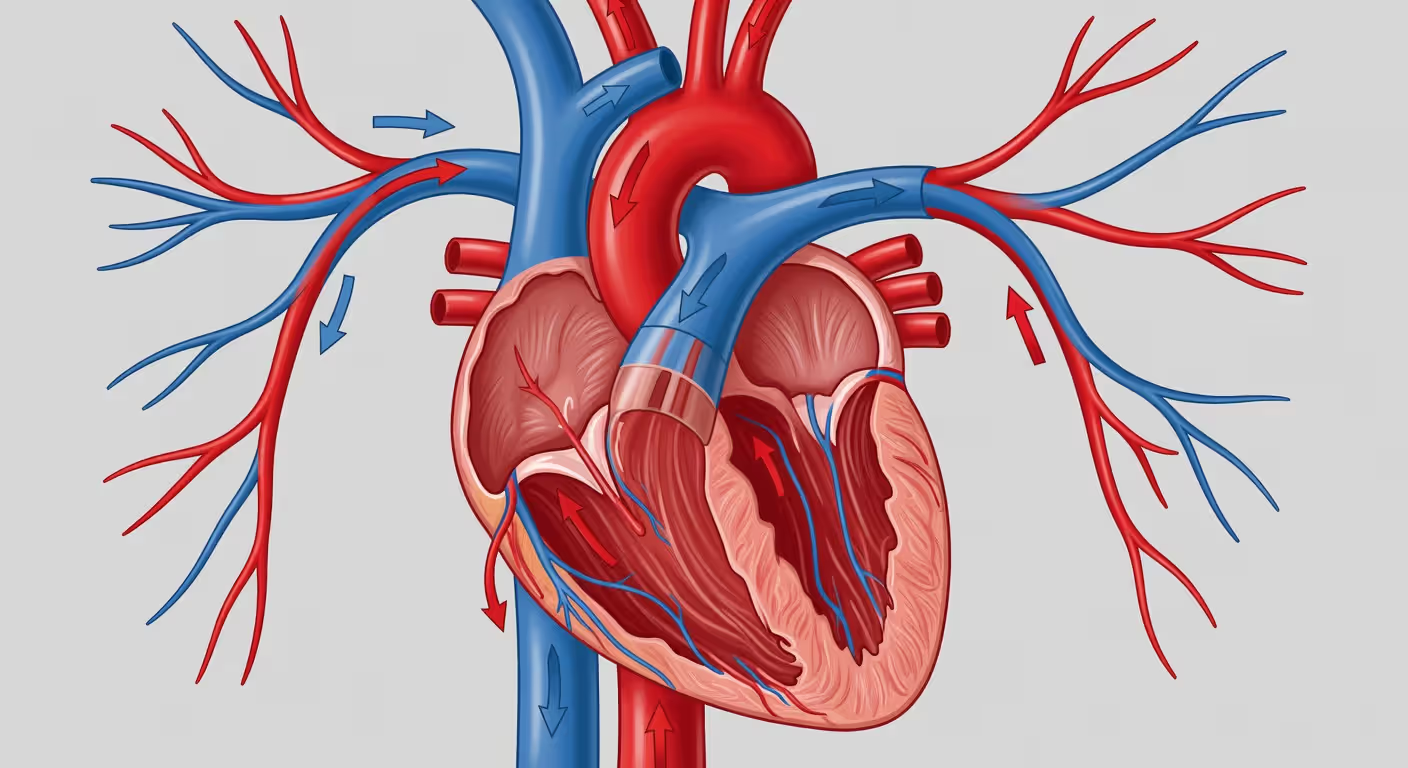
Cardiovascular endurance represents how long your body maintains activity that increases your breathing rate. Your cardiovascular system—heart, lungs, and blood vessels—functions as an integrated network, delivering oxygen-enriched blood to working muscles so they continue contracting.
This differs fundamentally from muscular endurance, which focuses on isolated muscle groups—like determining how many consecutive pushups your chest and triceps can perform. Cardiovascular endurance encompasses your entire oxygen transport mechanism.
Beyond gym performance, why does this matter? Enhanced cardio fitness reduces your likelihood of developing coronary disease, experiencing strokes, managing diabetes, and facing certain cancers. The American Heart Association's research demonstrates that individuals with superior cardiovascular endurance enjoy longer lifespans and maintain independence throughout aging. A 2025 longitudinal study following 12,000 participants across 15 years revealed compelling findings: individuals ranking in the highest 20% for cardio fitness experienced 45% fewer deaths compared to those in the lowest quintile.
The benefits extend beyond longevity. Improved cardiovascular endurance accelerates post-workout recovery, reduces fatigue during routine activities, and sharpens cognitive function. Since your brain depends on oxygen, enhanced circulation delivers greater quantities.
Wondering about your current fitness level? Test yourself: can you sustain moderate-intensity movement—challenging enough that conversation remains possible but singing becomes difficult—for 30 consecutive minutes? Struggling with this indicates improvement opportunities. Completing it comfortably means you're prepared for greater challenges.
How Aerobic Exercise Builds Cardio Fitness
Aerobic exercise triggers cardiovascular adaptations. During running, cycling, swimming, or any sustained activity, your muscles demand increased oxygen. Your heart compensates by accelerating its rate and force. Regular repetition strengthens your cardiac muscle, increasing blood volume per contraction.
This phenomenon, called stroke volume enhancement, means trained hearts might deliver 100–120 milliliters per beat during rest, compared to 70–80 milliliters in untrained individuals. Identical blood circulation requires fewer contractions. This explains why athletes frequently maintain resting heart rates between 40–55 beats per minute.
Your respiratory system undergoes parallel changes. Aerobic training multiplies the quantity and dimensions of capillaries surrounding your alveoli—microscopic air sacs facilitating oxygen transfer into blood. Additional capillaries improve oxygen absorption. Simultaneously, your muscles develop additional mitochondria, cellular powerhouses converting oxygen and nutrients into usable energy. Research indicates consistent aerobic exercise can elevate mitochondrial density 40–50% within just 12 weeks.
VO2 max represents the benchmark measurement for cardiovascular capacity. This metric quantifies the peak oxygen volume your body utilizes during maximum-intensity exercise, expressed as milliliters per kilogram of bodyweight per minute. Elite endurance competitors often achieve VO2 max readings exceeding 70 ml/kg/min. Inactive individuals typically measure below 35 ml/kg/min.
Laboratory testing isn't necessary for VO2 max improvement. Consistent aerobic training incorporating varied intensities naturally elevates this metric. A common error I frequently observe: people exclusively perform extended, low-intensity sessions. While these establish foundations, incorporating higher-intensity intervals dramatically accelerates progress.
Most Effective Exercises for Cardiovascular Endurance
Various exercises challenge your cardiovascular system through different mechanisms. Here are the top choices, each offering unique advantages.
Running and Jogging
Running stands out as perhaps the most accessible example of cardiovascular exercise. Minimal equipment requirements and location flexibility make it universally available. It activates major leg muscles and core stabilizers, rapidly elevating heart rate.
For running newcomers, try alternating intervals: jog 2 minutes, walk 1 minute, repeat this cycle. As fitness develops, lengthen jogging segments. After establishing a baseline, incorporate tempo runs (sustained efforts at 80–85% maximum heart rate) and interval sessions (brief bursts at 90–95% maximum with recovery intervals).
Running does create greater joint stress compared to alternative cardio methods. Quality footwear and gradual progression minimize injury risks.
Cycling and Spinning
Cycling delivers substantial cardiovascular benefits without running's joint impact. Whether riding outdoors or using stationary equipment, you can maintain extended durations without the knee stress from running.
Spinning classes provide structure and intensity fluctuations. Instructors lead participants through climbs, sprints, and recovery segments—essentially pre-programmed interval training. Adjustable resistance and cadence allow precise heart rate zone targeting.
Added benefit: cycling develops considerable leg strength alongside cardio improvements, particularly in quadriceps and gluteal muscles.
Swimming
Swimming engages your entire body with zero impact forces. Water supports your weight while resistance simultaneously challenges muscles and cardiovascular systems.
Different strokes target varied muscle groups, though all elevate heart rate substantially. Freestyle proves most efficient for sustained cardiovascular work. Breaststroke and backstroke serve well for active recovery intervals.
Swimming demands proper technique. Inefficient form limits sustainable intensity duration. If swimming becomes your primary cardio method, invest in professional instruction.
Rowing
Rowing machines deliver exceptionally comprehensive cardiovascular training. Every stroke integrates legs, core, back, and arms through coordinated movement. This total-body engagement increases caloric expenditure and cardiovascular demands.
Rowing provides low-impact yet high-intensity training. A moderate 30-minute rowing session typically burns 250–350 calories—comparable to faster running but gentler on joints.
The caveat: technique significantly impacts results. Poor form (arm-dominant pulling, spinal rounding) diminishes effectiveness and raises injury likelihood. Master the proper sequence: leg drive, core engagement, arm pull during power phase; arm extension, forward lean, knee bend during recovery.
Jump Rope and HIIT Workouts
Jump rope proves surprisingly demanding. Attempt 3 continuous minutes and your heart rate will spike comparable to hard running. It's portable, inexpensive, and remarkably time-efficient for cardio development.
High-Intensity Interval Training (HIIT) encompasses various exercises performed in brief, intense bursts with short recovery periods. Examples include 30-second burpee intervals with 30-second rest, repeated 10–15 times. Or 20-second mountain climber bursts with 10-second recovery (the Tabata protocol).
HIIT accelerates cardiovascular endurance improvements beyond steady-state cardio alone, supported by extensive research. A 2024 meta-analysis determined that 8-week HIIT programs increased VO2 max by 8–12%, compared to 5–7% for equivalent-duration moderate continuous training.
The compromise: HIIT is exceptionally demanding. Daily sessions guarantee overtraining. Two or three weekly HIIT workouts, combined with easier sessions, optimize results.
Cardiovascular Exercise Comparison
Exercise Type
Intensity Level
Calories Burned (30 min)
Impact on Joints
Equipment Required
Ideal For
Running
High
300-450
Significant
Quality running shoes
Time-efficient sessions, location flexibility
Cycling
Moderate-High
250-400
Minimal
Bicycle or stationary bike
Joint-friendly option, leg strength development
Swimming
Moderate-High
250-350
None
Pool access
Complete body conditioning, rehabilitation-appropriate
Most individuals believe developing superior cardio requires months of relentless training, yet we observe genuine improvements in heart rate metrics and recovery capacity within three to four weeks when clients maintain consistency. Success hinges on discovering the optimal balance between sufficient training stress for adaptation and adequate recovery for sustained participation. This equilibrium varies individually, though most adults achieve best results with four or five weekly cardio sessions, including at least one high-intensity workout.
How to Quickly Improve Cardio Without Overtraining
Everyone desires accelerated results—completely understandable. However, the fastest route toward enhanced cardiovascular endurance isn't maximizing daily cardio volume. It's progressive overload paired with intelligent recovery.
Progressive overload involves gradually increasing cardiovascular system stress. Three variables exist for manipulation: frequency (weekly workout count), duration (individual session length), and intensity (effort level). Modify just one variable at a time.
Currently running three weekly 20-minute sessions? Add a fourth weekly run before extending any session length. Once four days feels sustainable, then extend one or two runs to 25 minutes. After several weeks, elevate one session's intensity while maintaining others at moderate levels.
The traditional guideline: avoid increasing total weekly cardio beyond 10% per week. This applies to cumulative time or distance. Jumping from 60 weekly minutes to 90 minutes represents a 50% increase—excessive and rapid. Progress to 66 minutes instead.
Intensity trumps duration when determining how to rapidly improve cardio. Training zones dictate specific adaptations:
Zone 1 (50-60% maximum HR): Extremely gentle recovery intensity
Zone 2 (60-70% maximum HR): Sustainable foundation-building pace
Zone 3 (70-80% maximum HR): Moderately challenging aerobic effort
Zone 4 (80-90% maximum HR): Demanding lactate threshold intensity
Zone 5 (90-100% maximum HR): All-out VO2 max effort
Allocate most training to Zones 2 and 3. These develop your aerobic foundation—cardiovascular endurance's cornerstone. They're sustainable for 30–60 minutes and require minimal recovery.
Schedule one or two weekly sessions targeting Zones 4 and 5. These high-intensity efforts accelerate adaptation but generate substantial fatigue. Simple approach: complete weekly interval training (8–10 rounds of 1-minute hard, 1-minute easy) plus one tempo session (20–30 minutes of steady Zone 4).
Recovery isn't negotiable. Your cardiovascular system adapts during rest periods, not during workouts. Training provides the stimulus; rest enables the response. Schedule at least one complete rest day weekly. On remaining days, include at least one very gentle session (Zone 1 or 2) for active recovery.
Sleep influences outcomes more dramatically than most recognize. A 2025 study revealed athletes averaging under 7 nightly sleep hours experienced 14% slower VO2 max improvements versus those sleeping 8+ hours, despite following identical training programs.
Creating Your Cardiovascular Training Plan
Effective training plans distribute different intensities throughout the week. Here's how this looks across experience levels.
Beginner Plan (0-3 months consistent cardio):
Monday: 20-minute walk or gentle bike ride (Zone 2)
Tuesday: Complete rest or light stretching
Wednesday: 15-minute jog or swim with walk/rest intervals as needed (Zone 2-3)
Thursday: Complete rest or 15-minute walk (Zone 1)
Friday: 20-minute bike or rowing session (Zone 2)
Saturday: 25-minute walk or easy jog (Zone 2)
Sunday: Complete rest
Total weekly duration: 80–95 minutes. Prioritize consistency and habit formation. Speed and intensity aren't concerns yet.
Intermediate Plan (3-12 months consistent cardio):
Monday: 35-minute comfortable run or bike (Zone 2)
Tuesday: 25-minute intervals—10 rounds of 1-minute hard effort (Zone 4), 1-minute easy (Zone 2)
Wednesday: 30-minute swim or rowing (Zone 2-3)
Thursday: Complete rest or 20-minute gentle walk (Zone 1)
Friday: 40-minute tempo run or bike—30 minutes at Zone 3-4 with 5-minute warm-up/cool-down
Wednesday: 40-minute moderate bike or swim (Zone 3)
Thursday: 30-minute easy recovery run or walk (Zone 1-2)
Friday: 50-minute tempo—40 minutes at Zone 4 with warm-up/cool-down
Saturday: 75-minute extended run or bike (Zone 2-3)
Sunday: Complete rest or 30-minute easy cross-training
Total weekly duration: 270–300 minutes. You're maximizing cardiovascular adaptations through substantial volume and strategic intensity.
Monitor progress using straightforward metrics: resting heart rate (measure immediately upon waking—should gradually decrease), perceived exertion at specific paces (should feel easier over time), and performance assessments (speed over fixed distance, or distance covered in fixed time).
Common Mistakes That Slow Cardio Progress
Even with solid programming, certain errors undermine cardio fitness development. Here are the most significant pitfalls.
Excessive intensity, excessive frequency. Not every workout requires maximum effort. Constantly training at Zone 4 or 5 accumulates fatigue faster than fitness. The 80/20 principle applies: 80% of cardio should remain easy to moderate (Zones 2-3), with 20% hard (Zones 4-5).
Disregarding heart rate zones. Training by perceived exertion works after developing experience, but beginners frequently misjudge intensity. What feels "moderate" might actually be Zone 4, which you cannot sustain sufficiently long for endurance development. Initially use heart rate monitors or fitness trackers to calibrate perception.
Neglecting recovery. Rest days aren't wasted opportunities. Your body requires time for repair and adaptation. Overtraining manifests as persistent fatigue, elevated resting heart rate, disrupted sleep, and declining performance despite continued training. Observing these symptoms warrants 3–5 complete rest days.
Inadequate nutrition and hydration. Cardiovascular exercise depletes glycogen stores and requires proper hydration for optimal performance. Skipping pre-workout nutrition or training chronically dehydrated restricts intensity and duration capabilities. Fancy supplements aren't necessary, but adequate carbohydrates for workout fuel and sufficient water to replace sweat losses are essential.
Identical workouts repeatedly. Your body adapts to specific stresses. Running the identical 3-mile route at the same pace every session stops producing cardiovascular adaptations after several weeks. Vary routes, distances, intensities, and exercise modalities to continually challenge your system.
Comparing yourself to others. Someone else's pace or workout volume is irrelevant to your progress. Cardiovascular fitness improvements depend on your baseline, genetics, age, training background, and lifestyle factors. Focus exclusively on your own metrics and trends.
Measuring Your Cardio Fitness Improvement
Objective measurements reveal whether your training produces results. Here are the most practical assessment methods.
Resting heart rate. Measure your pulse for 60 seconds immediately upon waking, before leaving bed. Declining resting heart rate signals improved cardiovascular efficiency. Most people begin between 60–80 beats per minute. With consistent training, anticipate a 5–10 beat reduction over 8–12 weeks. Athletes often reach 45–55 bpm.
Heart rate recovery. Following intense exercise, how rapidly does your heart rate decline? Stop exercising and measure heart rate after precisely 1 minute of rest. A 12+ beat drop indicates reasonable fitness; 15–20 beats demonstrates excellent fitness. This improves noticeably within 4–6 training weeks.
Talk test. Can you maintain conversation while exercising? Speaking complete sentences without gasping indicates Zone 2–3. Only managing brief phrases signals Zone 4+. As fitness improves, you'll maintain conversation at progressively faster paces.
Time trials. Select a fixed distance (1-mile run, 2000-meter row, 5K bike) and test every 4–6 weeks. Your completion time should improve, or identical times should feel easier. This provides the most concrete evidence of enhanced cardiovascular endurance.
VO2 max estimates. Many fitness trackers now estimate VO2 max based on heart rate responses during exercise. While less accurate than laboratory testing, these estimates reliably track trends. Anticipate 5–10% improvement across 12 weeks with consistent training.
When should results appear? You'll experience subjective improvements within 2–3 weeks—reduced breathlessness during daily activities, faster recovery between efforts. Measurable heart rate changes emerge around week 4. Significant performance gains (faster times, extended distances) typically materialize between weeks 8–12.
After 6 months of consistent training, your cardiovascular system fundamentally differs from your starting point. Your heart pumps more forcefully, your lungs transfer oxygen more efficiently, your muscles contain abundant mitochondria. That's when cardio exercise transitions from obligation to something your body anticipates.
FAQ: Cardiovascular Endurance Questions Answered
How long does it take to improve cardiovascular endurance?
You'll recognize subjective improvements—such as reduced breathlessness during routine activities—within 2–3 weeks of consistent training. Measurable changes in resting heart rate and heart rate recovery typically emerge around 4–6 weeks. Substantial performance improvements, like maintaining faster paces at identical effort or extending duration, usually materialize between 8–12 weeks. Your genetics, initial fitness level, training consistency, and program design all influence your timeline. Someone beginning from complete inactivity will experience faster initial gains than someone already moderately active.
What is the best exercise for cardiovascular endurance for beginners?
Walking represents the optimal starting point for complete beginners. It's low-impact, requires zero equipment, and you can easily modify intensity by adjusting pace or incorporating inclines. Once you can walk briskly for 30 minutes comfortably, advance to alternating jogging and walking, or try cycling for reduced impact. Swimming excels if you have pool access and fundamental swimming ability. The optimal exercise is ultimately whatever you'll perform consistently—if you dislike running but enjoy dancing, cardio dance classes will produce better results than forcing yourself to run.
Can you build cardiovascular endurance without running?
Definitely. Running represents just one effective cardiovascular exercise among numerous options. Cycling, swimming, rowing, elliptical training, stair climbing, brisk walking, dancing, and jump rope all develop cardiovascular endurance effectively. What matters is sustained heart rate elevation, not the specific activity. Many individuals with joint concerns, injuries, or personal preferences develop excellent cardio fitness without ever running. Select activities you genuinely enjoy and can perform consistently at moderate to high intensity for 20–60 minutes.
How many days per week should I do cardio to improve endurance?
For noticeable improvement, target at least three weekly cardio sessions. Four to five weekly sessions produce optimal results for most individuals. Beyond five sessions, additional benefits diminish unless you're preparing for specific endurance competitions. Beginners should begin with three sessions and add a fourth after 4–6 weeks. Ensure you schedule at least one complete rest day each week, and maintain 80% of sessions at easy to moderate intensity, with only 20% hard efforts. Consistency surpasses volume—three sessions every single week outperforms six one week and zero the next.
Is walking considered a cardiovascular endurance exercise?
Absolutely, walking qualifies as cardiovascular exercise, particularly for beginners or during recovery periods. Brisk walking (3.5–4.5 mph) elevates your heart rate into Zone 2–3, which develops aerobic foundation and improves cardiovascular health. While walking doesn't challenge your system as intensely as running or HIIT, it's sustainable, joint-friendly, and effective for building initial fitness. As you advance, you'll need to walk faster, incorporate hills, or transition to jogging for continued improvement. Walking also functions excellently as active recovery between harder training sessions for advanced exercisers.
What heart rate zone is best for building cardio fitness?
Zone 2 (60–70% of maximum heart rate) develops your aerobic foundation and should comprise most training—approximately 80% of total volume. This is where your body masters efficient oxygen utilization and fat metabolism. Zone 3 (70–80% maximum HR) provides moderate aerobic development and works effectively for extended tempo efforts. Zone 4 (80–90% maximum HR) enhances your lactate threshold—the point where fatigue accumulates rapidly. Zone 5 (90–100% maximum HR) maximizes VO2 max gains but demands substantial recovery. For balanced development, allocate most time to Zone 2, with strategic sessions in Zones 4 and 5 once or twice weekly.
Developing cardiovascular endurance doesn't demand expensive equipment or extreme training approaches. It requires consistency, intelligent progression, and sufficient variety to continually challenge your system. Begin at your current level, select exercises you can maintain, and trust the process. Your heart and lungs will adapt more rapidly than anticipated, and the benefits extend far beyond your workouts—you'll navigate daily life with greater energy, recover faster from physical stress, and invest in long-term health that generates returns for decades.