You don't need elite athletic status to understand the frustration of restricted movement. Consider the struggle to retrieve your phone from between car seats, the stiffness when tying your shoes, or the discomfort during a weekend hike with friends. These ordinary activities expose whether your body cooperates with your intentions or resists them. Many people only recognize their diminished movement capacity after pain becomes unavoidable. The encouraging truth: rebuilding functional range requires neither expensive gym access nor specialized gear. Dedicating 10-15 focused minutes on most days, combined with targeting the right movement patterns, creates meaningful change.
What Mobility Is and Why It Matters
Mobility represents your capacity to actively guide joints through their complete range while maintaining control throughout the motion. This goes beyond simple stretching distance—it encompasses whether you possess adequate strength, neurological coordination, and structural stability to safely utilize that range.
Consider this distinction: mobility demands active command rather than passive lengthening. Training exercises for mobility means developing integrated function across muscles, connective tissues, and neural pathways. The result is movement that combines freedom with security.
Limited mobility reveals itself during real-world tasks. Lower back discomfort might appear when picking up laundry. Overhead movements could trigger shoulder irritation. Hip restrictions might prevent comfortable floor sitting or deep squatting positions.
American Council on Exercise research demonstrates that individuals with restricted joint function experience higher injury rates during both structured workouts and routine daily activities. When joints cannot access their designed movement patterns, your body creates compensatory strategies. These workarounds eventually generate muscular imbalances and persistent discomfort.
Enhanced exercise flexibility simultaneously boosts athletic output. Athletes possessing quality mobility produce greater force, demonstrate superior movement economy, and bounce back faster between training blocks. Yet athletic pursuits aren't prerequisites for these benefits. Improved mobility translates to easier gardening, comfortable desk posture, and waking without morning stiffness.
Most individuals postpone mobility training until injury demands attention. Pain becomes the reluctant instructor. Building proactive habits today sidesteps this scenario entirely.
How Mobility Differs from Flexibility
These terms often get confused, yet they represent distinct movement qualities.
Flexibility describes passive range—the distance your tissues can lengthen when external forces create the stretch. Mobility describes active range—the distance you can travel using your own muscular control and force production.
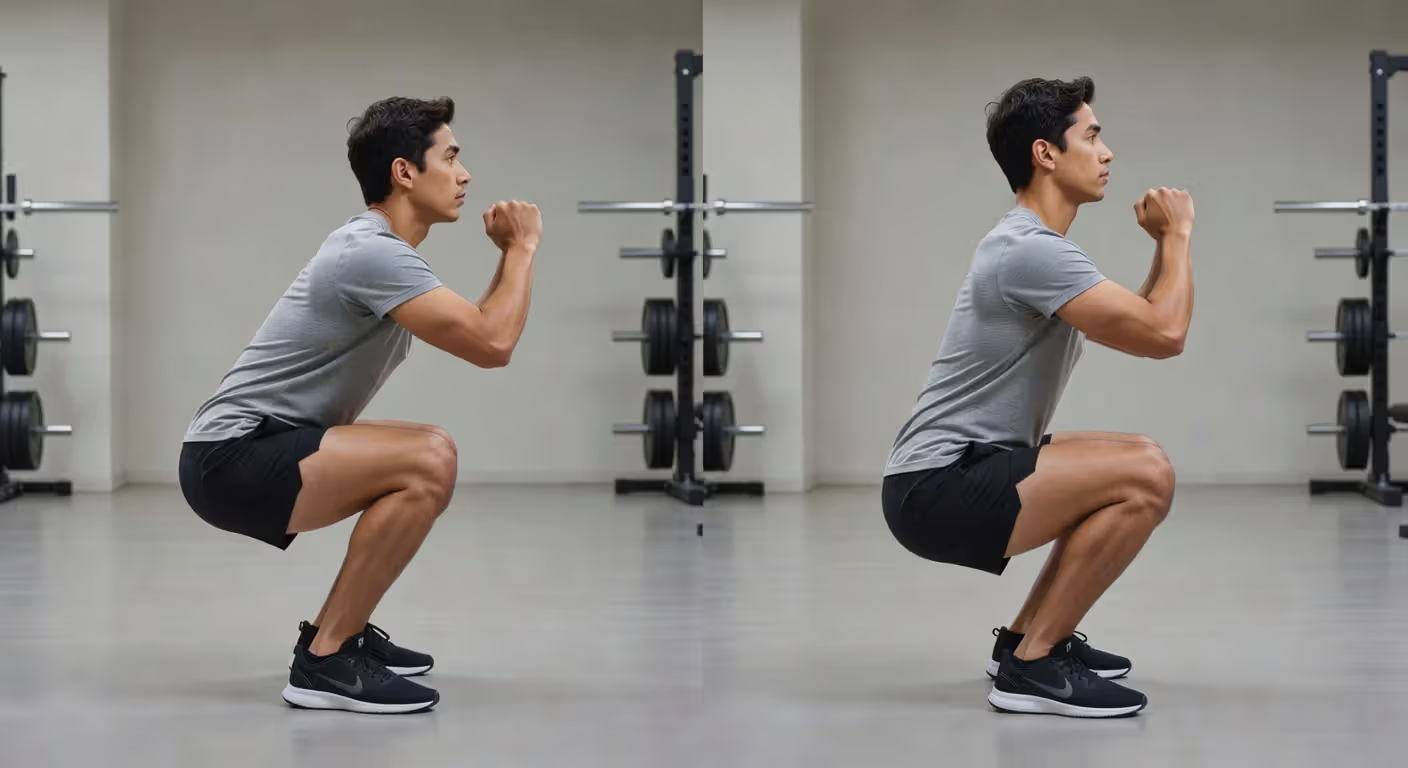
Someone can demonstrate high flexibility without corresponding mobility. Imagine a person easily reaching their toes during seated stretches but struggling to maintain proper form during a bodyweight squat. This represents flexibility divorced from functional control.
The opposite scenario appears less frequently: strong mobility despite restricted tissue extensibility. This typically indicates robust neuromuscular command compensating for less pliable connective structures.
Here's a practical comparison:
Characteristic
Mobility
Flexibility
Definition
Controlled, active movement through complete joint range using muscular force
The distance muscles and connective tissue can passively elongate
Muscular Action
Active contraction and stabilization throughout the motion pattern
Relaxed state while external forces create tissue lengthening
Movement Examples
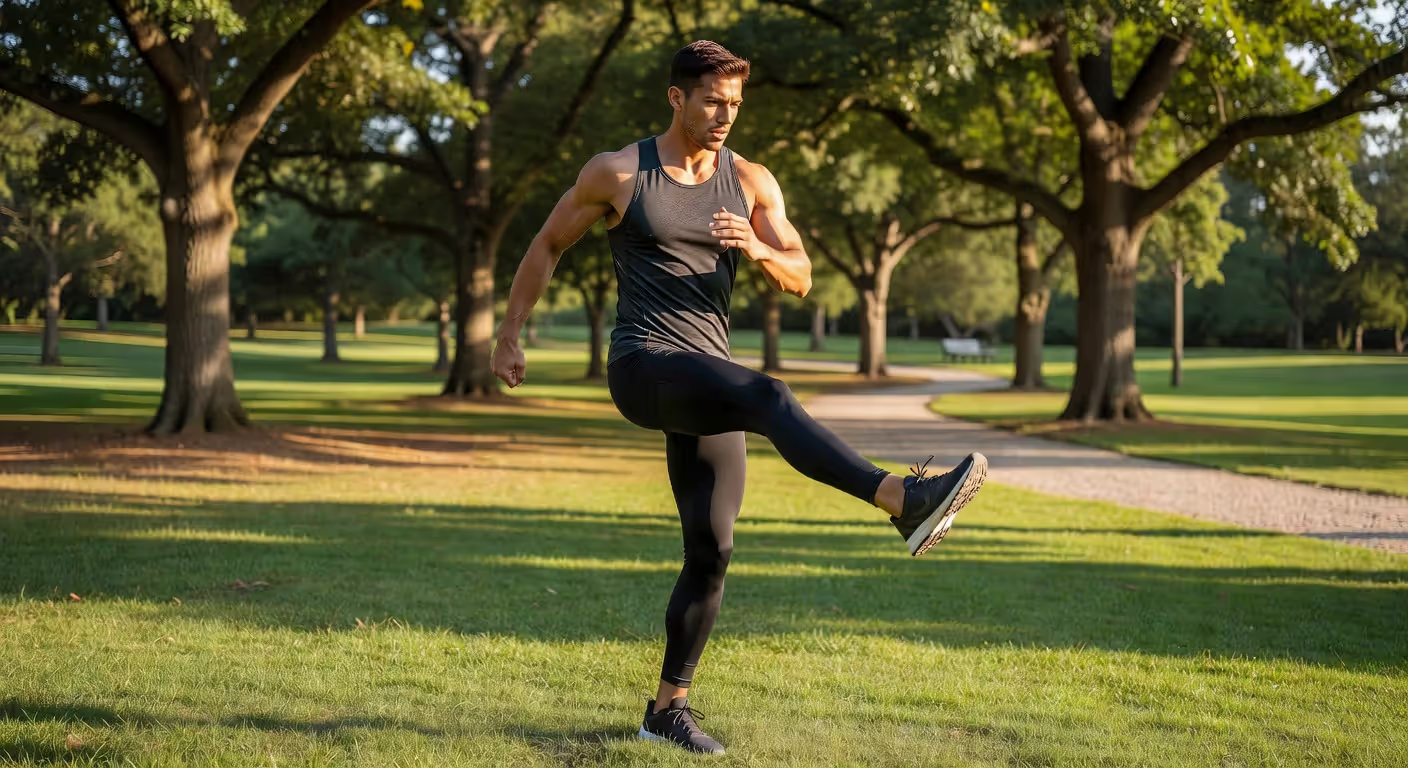
Controlled leg pendulums, deep squat holds with stability, active shoulder rotations
Sustained hamstring stretch, seated forward bend
Primary Advantages
Enhanced movement patterns, strength at extreme positions, reduced injury risk
Pre-activity preparation, movement quality enhancement, joint health maintenance
Post-training recovery, addressing chronically restricted areas
Both qualities contribute to overall function. However, mobility drills typically translate more directly to practical movement demands. You require both strength and control at challenging joint positions, not merely the passive ability to reach those positions.
That acknowledged, flexibility exercises support mobility development. Severely restricted hamstrings will inevitably limit hip mobility training. Address both components, emphasizing whichever currently restricts your progress.
Daily Stretching Routine for Flexibility Beginners
Launching a stretching practice doesn't demand extended sessions. Ten to fifteen minutes performed consistently outperforms occasional marathon efforts every time.
Here's a practical daily stretching routine for flexibility targeting major muscle groups:
Morning sequence (5–7 minutes):
Cat-cow spinal waves: 10 deliberate cycles
Standing quadriceps stretch: maintain 30 seconds per leg
Doorway pectoral stretch: maintain 30 seconds each side
Standing lateral flexion: maintain 30 seconds per direction
Seated spinal rotation: maintain 30 seconds each way
Evening sequence (5–7 minutes):
Child's pose position: maintain 60 seconds
Seated forward fold for hamstrings: maintain 45 seconds per leg
Supine figure-four hip opener: maintain 45 seconds each side
Supine spinal twist: maintain 45 seconds per direction
Multi-directional neck stretches: maintain 20 seconds each
This stretching routine to improve flexibility addresses commonly restricted regions without overwhelming newcomers. Notice evening sessions incorporate longer duration holds—timing details follow below.
Morning vs. Evening Stretching
Your body's response to stretching varies throughout the day. Morning tissues display greater stiffness following overnight inactivity. Evening muscles benefit from accumulated daily movement and warmth.
Morning sessions should emphasize gentler, movement-based approaches. Your objective involves activating your nervous system and lubricating joints rather than pursuing deep tissue modification. Prioritize rhythmic movement over extended static positions.
Evening sessions permit deeper exploration. Your tissues demonstrate greater pliability, making sustained positions more accessible. This timing supports actual flexibility development.
Practical reality: stretch whenever you'll maintain consistency. A reliable morning practice outweighs a theoretically superior evening routine you frequently abandon.
How Long to Hold Each Stretch
Research continues evolving on optimal duration. Static positions require minimum 30-second durations to generate temporary tissue length modifications. Yet extending beyond 60 seconds yields diminishing returns for most individuals.
For flexibility exercises targeting range increases, target 30–60 second holds per position. Perform 2–3 repetitions when addressing particularly stubborn restrictions.
For mobility work, holds become much briefer—typically 5–10 seconds—since you're moving dynamically through positions rather than maintaining static stretches.
Here's a surprising finding: extended static stretching (exceeding 60 seconds per muscle group) before intense activity can temporarily diminish power production. Reserve your longest holds for dedicated flexibility sessions or post-training cooldowns.
Mobility Drills for Hips, Shoulders, and Spine
These three regions restrict most people. Contemporary lifestyle patterns—prolonged sitting, computer-based work, extended driving—systematically limit movement precisely in these joints.
Hip Mobility Drills
Restricted hips manifest as limited squat depth, awkward lunge patterns, and lower back compensation strategies. These exercises for mobility target all hip movement planes:
90/90 position hip opener: Position yourself with one leg bent forward at a right angle, the other angled sideways also at 90 degrees. Maintain upright torso positioning for 30 seconds, then fold forward over your front shin for another 30 seconds. Switch sides. This simultaneously addresses internal and external hip rotation capacity.
World's greatest stretch variation: From a deep lunge stance, plant your front-side hand inside your front foot. Rotate your opposite arm skyward, tracking it with your gaze. Maintain 5 seconds, perform 5 repetitions per side. This combines hip flexor lengthening with thoracic rotation mobility.
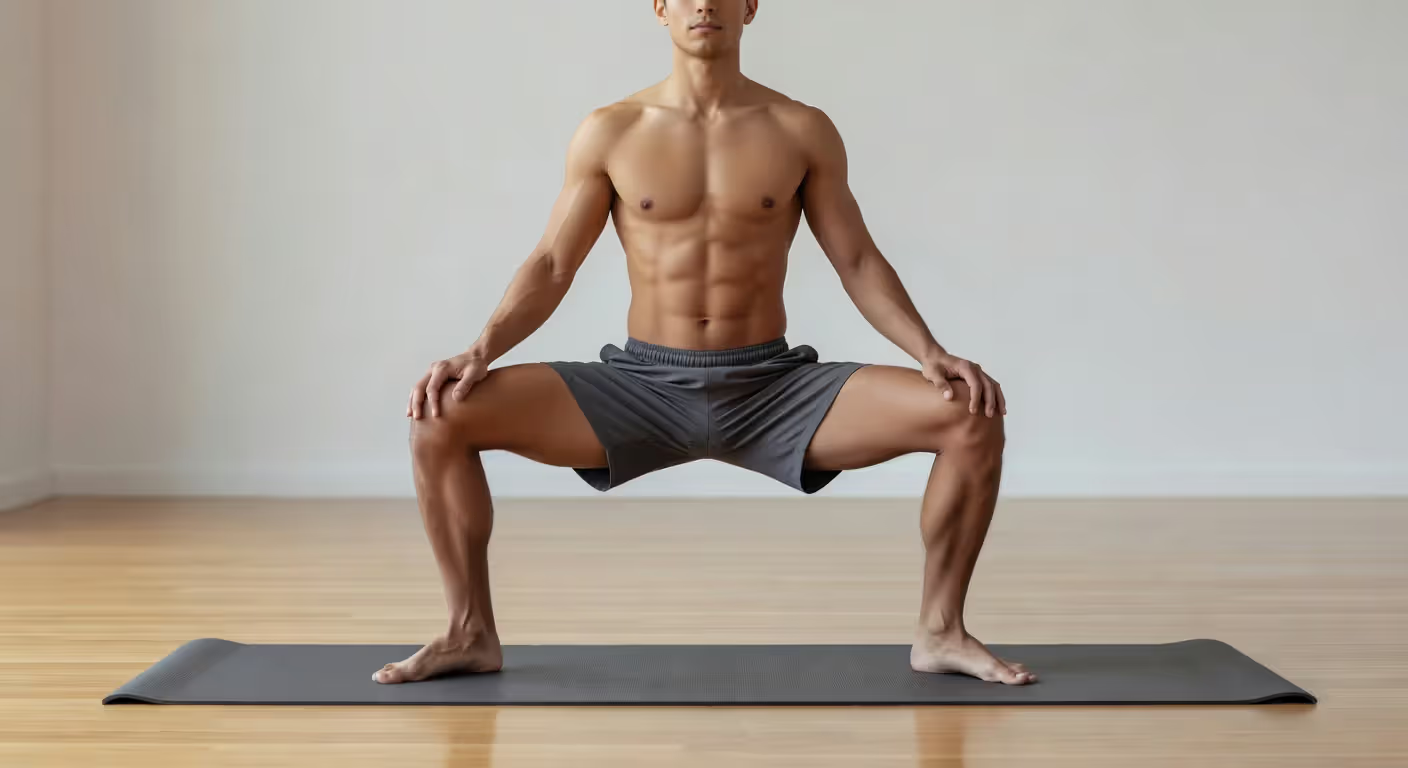
Cossack squat pattern: Begin with feet positioned wide, transfer your weight toward one leg while bending that knee and maintaining the opposite leg extended. Alternate sides for 10 total repetitions. This develops active mobility through hips and inner thigh muscles.
Common error: attempting to force hip mobility without first addressing ankle restrictions. When ankles lack forward shin movement capacity, hips cannot properly execute squat patterns. Always evaluate both areas.
Shoulder and Thoracic Spine Drills
Shoulder mobility depends substantially on thoracic spine function. Your mid-back requires extension and rotation capability for healthy shoulder movement.
Thread-the-needle: Begin on hands and knees. Sweep one arm beneath your body while rotating your trunk, then reverse direction reaching that arm toward the ceiling. Move deliberately through 8 repetitions per side.
Wall slides: Position yourself back against a wall with arms forming a "W" shape. Glide your arms overhead while preserving wall contact throughout. Inability to maintain continuous contact indicates shoulder or thoracic restrictions requiring attention. Execute 10 controlled repetitions.
Band pull-aparts: Grasp a resistance band at chest level with extended arms. Separate the band by drawing your shoulder blades together. This develops strength through ranges you're attempting to access. Complete 15 repetitions.
Thoracic rotation from quadruped: From hands-and-knees position, position one hand behind your head. Rotate that elbow downward toward the floor, then upward toward the ceiling. Motion should originate from your mid-back region, not your lumbar spine. Execute 10 repetitions per side.
Simplicity typically wins here. Complex patterns aren't necessary—consistent practice of fundamental movements produces results.
Ankle and Lower Body Drills
Ankle mobility influences everything upstream. Limited ankle dorsiflexion (forward shin travel over the foot) compromises squat mechanics and generates knee and hip complications.
Ankle rocks from half-kneeling: In a half-kneeling stance, drive your front knee forward beyond your toes while maintaining heel ground contact. Pause at end-range for 2 seconds, return, and complete 10 repetitions. Switch sides.
Complete-range calf raises: Stand on a step edge with heels suspended off. Lower your heels below step level, then elevate onto your toes. Complete range matters here—avoid shortcutting either endpoint. Execute 15 controlled repetitions.
Toe and heel walks: Walk 20 steps exclusively on your toes, then 20 steps exclusively on your heels. This develops strength at extreme ranges.
Common error: neglecting ankle mobility while training squat or lunge patterns. When heels elevate during squats, ankle restrictions limit the pattern. Address the foundational restriction rather than forcing through it.
Stretching Program to Build Long-Term Flexibility
Random stretching provides some benefit. A structured stretching program generates genuine transformation.
Here's a progressive 8-week framework:
Weeks 1–2 (Foundation Phase): Implement the daily beginner routine described previously. Establish the habit. Identify which regions feel most restricted. Your priority involves establishing the behavior pattern, not dramatic changes yet.
Weeks 3–4 (Targeted Development): Incorporate 5 additional minutes concentrating on your two most restricted areas. If hips and shoulders require the most attention, integrate specific drills for those joints three weekly sessions. Maintain the daily general routine.
Weeks 5–6 (Progressive Loading): Extend static stretch duration from 30 to 45 seconds. Incorporate a second set of your targeted mobility drills. This phase typically produces observable range improvements.
Weeks 7–8 (Integration Phase): Begin challenging your expanded ranges with loaded movements. If hip mobility has developed, practice weighted squats. If shoulder range has opened, attempt overhead pressing. Mobility you don't utilize under load doesn't persist long-term.
Track progress simply. Capture video of key movements (squat depth, overhead reach, hip rotation) initially. Review biweekly. Visual documentation maintains motivation.
One unexpected phenomenon: you might experience increased tightness on certain days during this process. That represents normal adaptation. Your nervous system adjusts to expanded ranges, occasionally creating temporary protective tightening. Maintain consistent practice through these phases.
Common Mistakes That Limit Mobility Progress
Despite positive intentions, these errors undermine results.
Overstretching: Pushing into genuine pain doesn't accelerate progress. It activates protective responses where your nervous system defensively contracts muscles. Stretch to moderate discomfort, never sharp pain. This distinction profoundly impacts outcomes.
Skipping warm-ups: Stretching cold tissue proves less effective and riskier. Five minutes of light activity—walking, arm circles, bodyweight movements—prepares tissue for deeper work. Always warm up first.
Inconsistency: Aggressive stretching twice weekly cannot compete with gentle daily practice. Flexibility and mobility respond optimally to frequent, moderate stimulation rather than occasional intense sessions. Think of it like dental hygiene—daily attention surpasses occasional deep cleaning.
Ignoring pain signals: Moderate discomfort is acceptable. Sharp sensations, pinching feelings, or pain that intensifies with repetition are not. These indicate issues requiring professional evaluation, not additional stretching. Respect your body's warning signals.
Only doing static stretching: Static flexibility exercises offer value, yet they don't develop neuromuscular control through new ranges. Combine static stretching with dynamic mobility drills for complete development.
Neglecting strength: Flexibility without corresponding strength generates joint instability. Your muscles require strength throughout the ranges you're developing. That's why exercise flexibility work should incorporate both lengthening and strengthening.
Example: someone stretching hamstrings daily but still unable to touch their toes with quality form. Same person incorporates hip hinge strength work and achieves the movement within weeks. Control equals importance with length.
Movement is medicine. But like any medicine, you need the right dose, the right type, and consistent application. Mobility training isn't about achieving extreme ranges—it's about owning the ranges you need for the life you want to live.
FAQ: Exercises for Mobility and Flexibility Questions Answered
How often should I do mobility work?
Daily practice delivers optimal results, though 4–5 weekly sessions produce substantial progress. What matters more than frequency is consistent attendance rather than sporadic intensity. A focused 10-minute daily session outperforms a single weekly hour-long session. If you're beginning, commit to 5 days weekly for the initial month. Once the habit establishes itself, daily practice feels natural rather than burdensome.
Can I do mobility exercises every day?
Absolutely. Unlike heavy strength training, mobility drills and stretching don't demand recovery days. Your joints and connective tissues adapt effectively to daily movement. Actually, frequent exposure accelerates your nervous system's acceptance of expanded ranges. Just vary intensity—some sessions explore deeper, others remain lighter. Pay attention to feedback from your body and modify accordingly.
How do static and dynamic stretching differ?
Static stretching involves maintaining a position without movement—like sustaining a hamstring stretch for 30 seconds. Dynamic stretching incorporates controlled motion through ranges—like pendulum leg swings or circular arm movements. Dynamic stretching prepares better before activity because it activates your nervous system for movement. Static stretching works better following workouts or during dedicated flexibility sessions when you're pursuing passive range increases.
How long before I see results from a stretching program?
Most individuals notice subjective improvements—reduced stiffness, easier movement—within 2–3 weeks of regular practice. Measurable range of motion increases typically emerge around the 4–6 week mark. Substantial changes that feel permanent usually demand 8–12 weeks. That acknowledged, individual responses vary based on starting point, genetics, age, and consistency level. The more restricted you are initially, the faster you'll observe early improvements.
Should I stretch before or after workouts?
Both, utilizing different approaches. Before training, employ dynamic mobility drills and movement-based stretching. This prepares joints and nervous system without temporarily reducing power output. Following workouts, utilize static stretching to enhance flexibility and support recovery. Your muscles are warm, making this ideal timing for extended holds. If time permits only one, prioritize pre-workout mobility for injury prevention.
Do I need equipment for mobility training?
No. Bodyweight exercises for mobility function extremely effectively. Your own body supplies sufficient resistance and feedback. That acknowledged, a few simple tools can assist: a resistance band for shoulder work, a foam roller for tissue preparation, and a yoga block for support in certain positions. Yet none are required. Begin with bodyweight movements, incorporate tools later if specific limitations require extra assistance.
Your body was engineered for unrestricted movement through wide joint ranges. Modern lifestyle patterns restrict that capacity, yet regular mobility and flexibility work restores it. Begin with the daily routine outlined here, concentrate on your most restricted areas, and track progress over weeks rather than days. Small, regular efforts accumulate into substantial improvements. You don't require contortionist-level ranges—you simply need sufficient movement quality for the activities that matter to you.