What Is a Healthy Body Fat Percentage for a Woman?
Women's bodies require fat for survival. This isn't a matter of preference—it's fundamental physiology. The real question isn't whether you need body fat, but rather how much supports your health without compromising it.
There's no universal magic number. Your optimal range shifts based on how old you are, how active you stay, and what you're trying to achieve. The percentage that works for a competitive athlete in her twenties won't match what's realistic for someone in her fifties who prioritizes functional fitness. Finding your personal sweet spot beats copying someone else's target.
This guide walks through the research, the realistic ranges, and the practical strategies that deliver results.
Understanding Body Fat Percentage
Body fat percentage tells you what portion of your weight comes from adipose tissue compared to lean mass—your muscles, skeleton, organs, and fluids. It reveals your actual composition, which matters far more than what your bathroom scale reports.
Consider two women who both weigh 150 pounds. The first carries 30% fat, meaning 45 pounds of adipose tissue and 105 pounds of lean tissue. The second sits at 22%, with only 33 pounds of fat and 117 pounds of lean mass. Identical scale weight. Dramatically different physiques and health profiles.
Female bodies contain two distinct fat categories: essential and storage. Essential adipose tissue enables reproduction, manufactures hormones, and helps absorb vitamins. The female body requires 10–13% just for basic function—males need only 2–5%. This gap isn't cultural or optional. Your physiology won't allow you to dip below essential thresholds without triggering serious health problems.
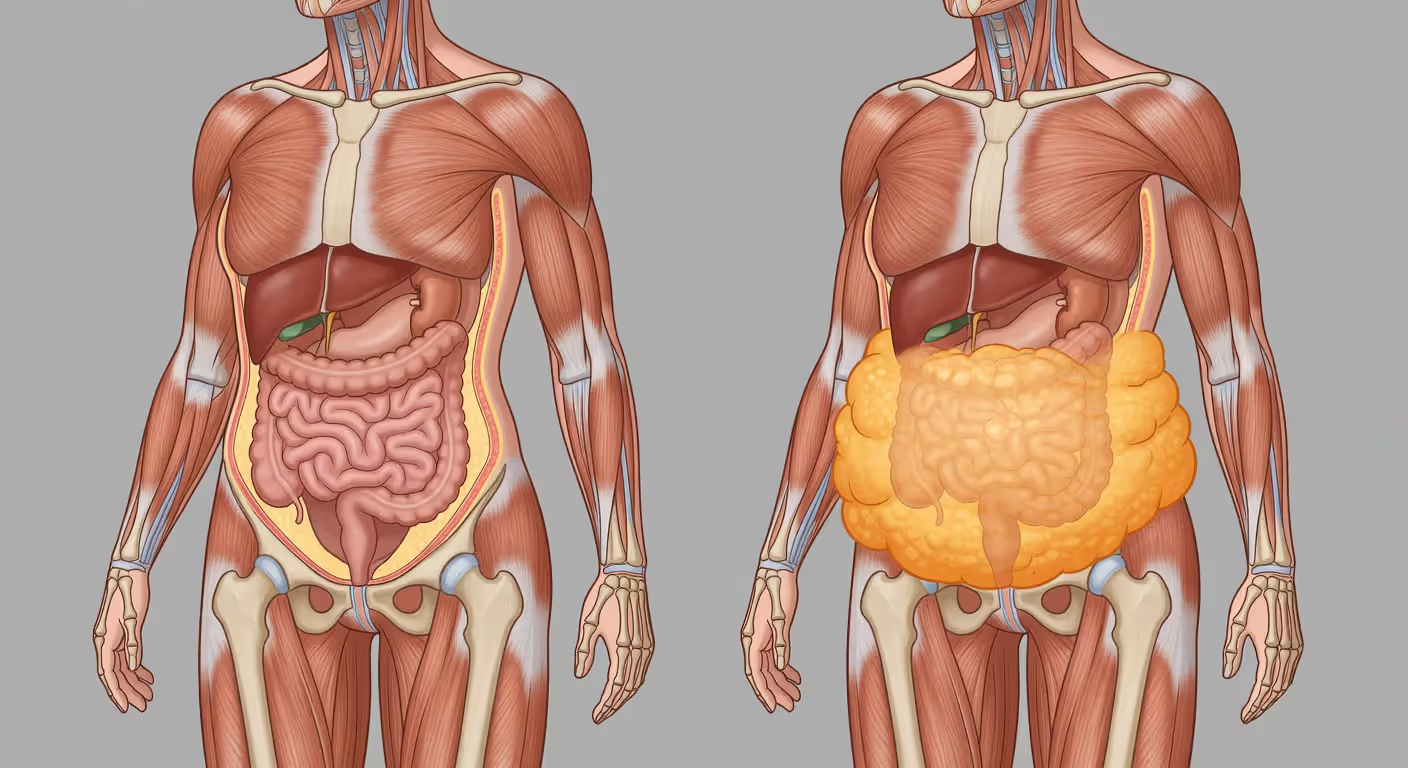
Storage fat accumulates beneath your skin and surrounds internal organs. Moderate amounts provide protection and energy reserves. Excessive amounts elevate disease risk.
The pattern I encounter constantly is women who fixate on scale numbers while completely ignoring what they're actually made of. You can watch the scale drop while simultaneously gaining fat if muscle loss outpaces fat loss. That's why understanding human body fat composition gives you accurate information instead of misleading data.
Healthy Body Fat Percentage Ranges for Women
The healthy body fat percentage for women varies across different life stages and fitness backgrounds. Here's the breakdown:
Age Range
Essential Fat
Athletes
Fitness
Acceptable
Obese
20–29
10–13%
14–20%
21–24%
25–31%
32%+
30–39
10–13%
14–21%
21–25%
25–32%
33%+
40–49
10–13%
14–22%
22–26%
26–33%
34%+
50–59
10–13%
14–23%
23–27%
27–34%
35%+
60+
10–13%
14–24%
24–28%
28–35%
36%+
Competitive athletes generally stay between 14–20% when they're younger. Regular exercisers who prioritize fitness usually fall into the 21–26% zone. The "acceptable" column represents most healthy women who train for wellness rather than competition.
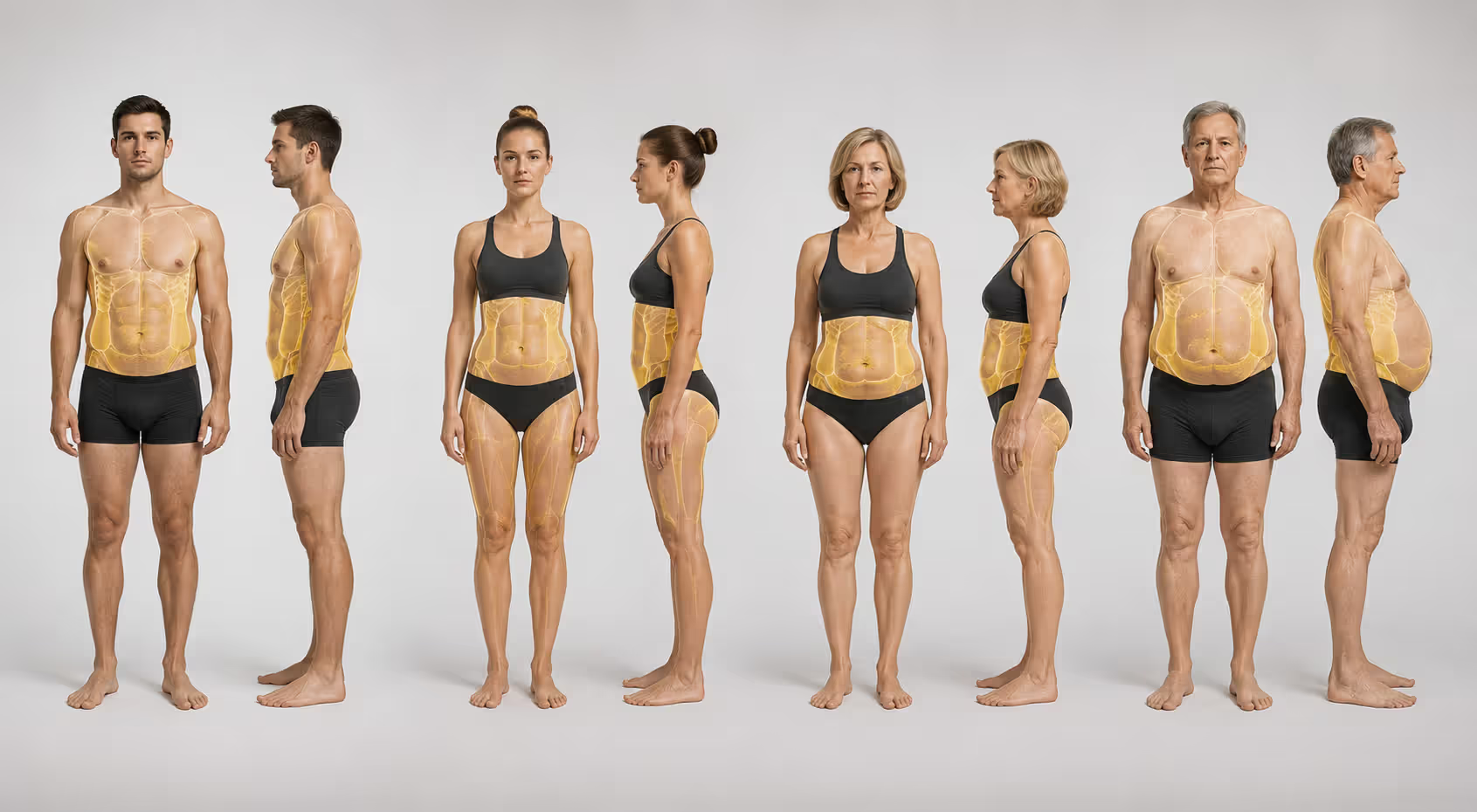
See how the numbers gradually increase with each decade? That's physiology, not failure. Hormonal shifts—especially during perimenopause and menopause—make lower percentages harder to sustain. Battling your biology too aggressively usually creates more problems than it solves.
A 28-year-old measuring 23% falls squarely in the fitness category. A 55-year-old at 27% occupies the equivalent position for her age bracket. Both reflect good health. Both represent achievable standards.
Women often set body fat goals based on images they see online, but those rarely reflect sustainable, healthy ranges. A woman who maintains 18% year-round is either genetically gifted or working harder than most people realize. For the majority, 22–28% supports hormones, energy, and long-term health far better than extreme leanness.
How Body Fat Percentage Is Measured
Every measurement approach involves tradeoffs. You'll sacrifice either precision, convenience, or affordability.
DEXA scanning (dual-energy X-ray absorptiometry) delivers the highest precision available. It maps your bone density, lean tissue, and fat distribution using minimal X-ray exposure. You'll receive detailed data showing exactly where fat accumulates throughout your body. The catch? Each scan costs $75–200, and you'll need access to a medical center or specialty clinic.
Bioelectrical impedance passes a mild electrical signal through your body. Adipose tissue and muscle conduct electricity differently, allowing the device to estimate composition. Countless bathroom scales use this technology. It's inexpensive and simple but produces inconsistent readings. Your hydration status, recent meals, and even ambient temperature can swing results. You might register 25% before breakfast and 28% after lunch.
Skinfold calipers measure fat thickness at designated body sites—typically the back of your arm, abdomen, and upper thigh. A trained practitioner enters these measurements into a calculation formula. Results depend entirely on the measurer's skill and consistency. When done correctly by the same experienced person each time, it's fairly dependable. When done carelessly, the data becomes meaningless.
Hydrostatic weighing submerges you underwater to calculate body density. Adipose tissue floats while muscle sinks, creating measurable differences. It's quite accurate but uncomfortable and rarely available outside research facilities.
Body circumference measurements apply a tape measure and mathematical formulas to approximate fat percentage. The military developed widely-used calculation methods. It costs nothing and anyone can do it, but you're getting an estimate rather than precision data.
Most Accurate Methods for Body Fat Analysis
DEXA scanning provides unmatched accuracy. When you want precise numbers and can budget for periodic scans, nothing surpasses it.
Hydrostatic weighing ranks second for precision but isn't realistic for regular monitoring. Most people can't locate a facility that offers it.
Skinfold measurements come in third—assuming you work with a skilled practitioner who performs every measurement. When tracking progress over time, consistency in technique trumps the absolute accuracy of any single reading.
At-Home Options for Estimating Body Fat
Bioelectrical impedance scales serve well for monitoring trends. Don't trust the exact figure, but when readings shift from 28% to 25% across three months, you're likely making real progress. Take measurements immediately upon waking, after emptying your bladder, before consuming anything.
Circumference tracking requires only a tape measure. Record your waist, hip, and neck measurements monthly. Plug these into an online calculation tool for estimated body fat. Once again, the pattern over time reveals more than isolated readings.
Progress photographs frequently capture changes that numbers miss entirely. Take them in identical locations, with consistent lighting, at the same time each day.
Factors That Affect Ideal Body Fat Percentage
Age gradually raises your healthy target range. A woman at 60 naturally maintains higher fat levels than she did at 25. Hormones change, metabolic rate declines, and muscle tissue decreases unless you deliberately work to preserve it.
Your genetic blueprint establishes your starting point. Some women effortlessly stay around 20% body fat. Others work diligently to remain below 30%. You can't rewrite your genetic code, but you absolutely control how you respond to it.
Hormones drive the entire system. Estrogen determines fat storage patterns—usually concentrating around hips and thighs. Following menopause, fat tends to relocate toward the midsection. Thyroid disorders, PCOS, and elevated cortisol all influence how readily you accumulate or shed adipose tissue.
Your training habits carry more weight than most people recognize. Resistance training protects muscle tissue, which maintains metabolic rate and simplifies maintaining lower body fat levels. Cardio burns calories during the activity but doesn't build the metabolic foundation that muscle tissue provides.
Female physiology includes roughly 6–11% more adipose tissue than male physiology on average. This isn't a flaw. It's intentional design. Your body maintains this extra fat to support potential pregnancy, nursing, and hormone synthesis, regardless of whether you plan to have children. Evolution doesn't adjust for individual life plans.
Medical conditions add complexity to the equation. Insulin resistance makes fat reduction more challenging. Pharmaceutical treatments like antidepressants or steroids frequently promote fat storage. You can still achieve progress, but it requires more time and greater precision in your approach.
Health Risks of Too High or Too Low Body Fat
Carrying excessive adipose tissue—particularly around your midsection—raises your risk for heart disease, type 2 diabetes, hypertension, sleep apnea, and several cancer types. The "obese" threshold in the reference table isn't random. When total body fat percentage exceeds 32–36% (depending on your age), health indicators typically deteriorate.
Joint complications multiply as weight increases. Your knees, hips, and spine bear the burden. Inflammatory markers rise. Movement becomes more difficult.
But pushing too far in the opposite direction creates different hazards.
Women who drop below 15–17% body fat frequently stop menstruating. Amenorrhea signals that your system lacks sufficient energy to support reproductive function. This isn't merely about fertility—it impacts bone health, psychological wellbeing, and long-term vitality.
Bone density deteriorates when body fat drops excessively low. Estrogen production decreases, causing bones to lose calcium faster than they can rebuild it. Osteoporosis risk escalates significantly.
Hormonal disruption cascades throughout your system. Inadequate body fat interferes with thyroid function, elevates cortisol production, and crashes energy levels. You'll experience constant cold sensitivity, sleep disturbances, and unpredictable mood fluctuations.
The optimal zone for most women falls between 20–30%. This range supports hormone production, protects skeletal health, sustains energy, and minimizes disease risk.
How to Achieve and Maintain a Healthy Body Fat Percentage
Shortcuts don't deliver lasting results. You can't crash diet your way to sustainable body composition. The approaches that endure are unglamorous but proven.
Nutrition foundations drive everything. Consume adequate protein—between 0.7 and 1 gram per pound of your body weight. Protein protects muscle tissue during fat loss. Build your remaining calories from whole food sources: vegetables, fruits, intact grains, quality fats. Monitor your intake for several weeks to understand what your portions actually contain. Most people underestimate their consumption by 20–30%.
You don't need to eliminate entire food categories. You need reliable habits and a modest caloric deficit—roughly 300–500 calories below your maintenance level. Anything more severe and you'll sacrifice muscle alongside fat.
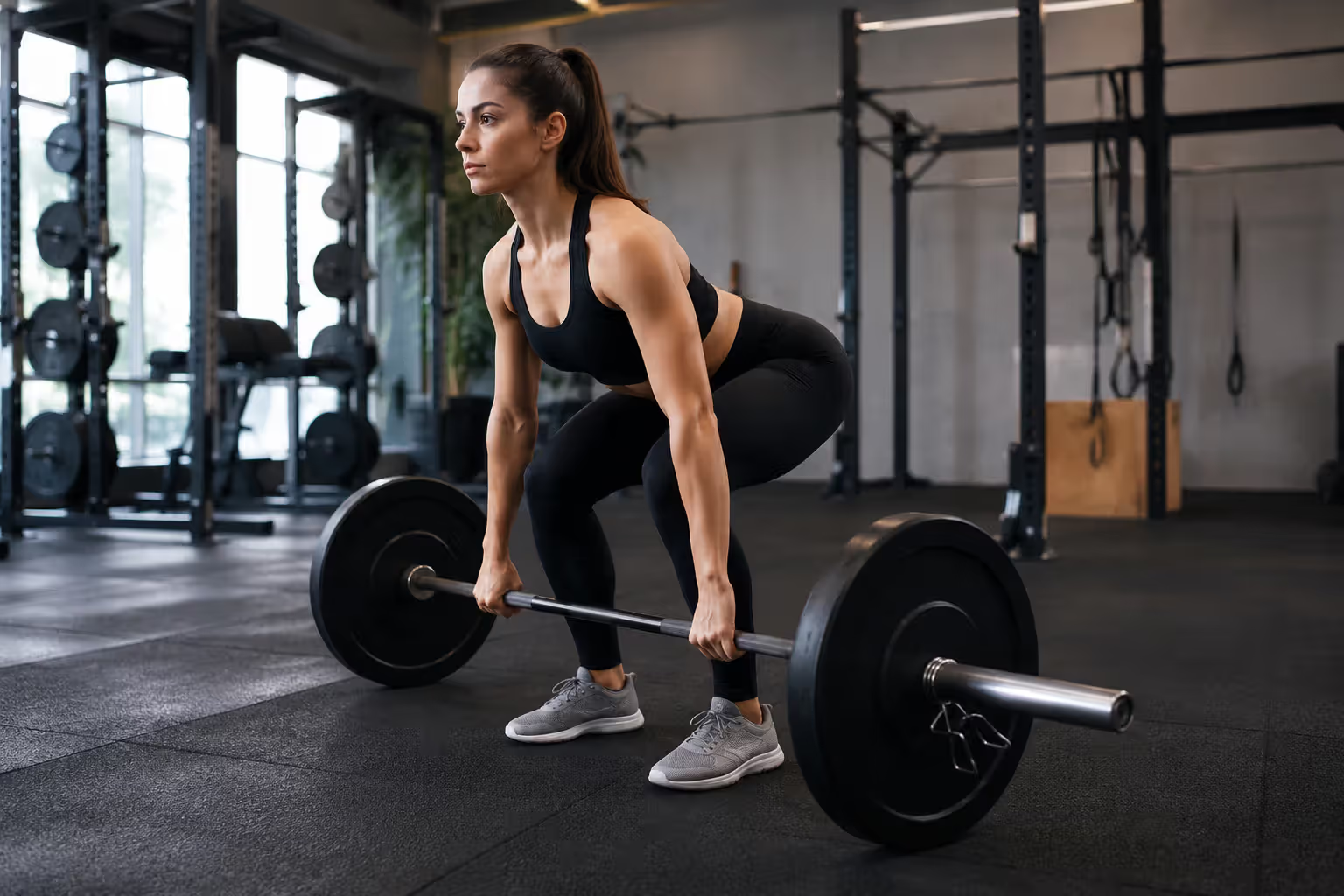
Resistance training develops and safeguards muscle tissue. Lift weights 2–4 sessions weekly. Prioritize multi-joint exercises: squats, deadlifts, various presses, rowing movements. Muscle tissue is metabolically demanding—your body expends more energy maintaining it than maintaining adipose tissue. Greater muscle mass makes maintaining healthy body fat percentage easier.
Women frequently worry that lifting creates excessive bulk. It doesn't. Building substantial muscle requires years of focused training combined with caloric surplus. What resistance training actually delivers is shape and definition at higher body weights.
Cardiovascular work contributes to fat loss but can't carry the entire load. Combine steady-state activities (walking, jogging, cycling) with periodic high-intensity intervals. Target 150–200 minutes of moderate movement weekly. Additional volume helps, but only when you can maintain it without exhausting yourself.
Consistency outperforms intensity without exception. Training aggressively for three weeks, then abandoning it for two, produces zero progress. Moderate sustained effort over months beats extreme effort that collapses.
Sleep quality and stress regulation don't receive adequate attention. Insufficient sleep elevates cortisol and amplifies hunger hormones. Chronic stress produces identical effects. You can't overcome a dysregulated stress response through training or nutrition alone.
One frequent error: obsessing over scale weight exclusively. When you're lifting weights and consuming sufficient protein, you might shed fat while building muscle simultaneously. Your weight could remain static while your body composition transforms dramatically. This is why photographs and tape measurements outweigh scale numbers.
FAQ: Women's Body Fat Percentage Questions Answered
What is considered a dangerously low body fat percentage for women?
Dropping below 10–12% creates danger for most women. Essential fat—the absolute minimum your physiology requires for basic operations—ranges from 10–13%. Push beneath that threshold and you'll experience hormonal chaos, menstrual cessation, compromised bone density, and organ stress. Even maintaining 14–17% long-term can trigger problems without careful medical supervision. Athletes who compete at extremely low percentages typically only sustain those levels briefly around competition dates.
Does body fat percentage change with age?
Absolutely, and it's a natural part of aging. Women typically accumulate 1–2% additional body fat each decade after turning 30, even when maintaining stable weight. Muscle mass naturally declines (sarcopenia), metabolic rate slows, and hormonal transformations—particularly surrounding menopause—alter both the amount and location of stored fat. The "acceptable" categories in the reference table reflect these age-related changes. A 25-year-old at 30% might need intervention, while a 60-year-old at 30% falls within healthy parameters.
How long does it take to reduce body fat percentage?
This depends on where you're starting and how aggressively you approach changes. A realistic, sustainable pace means losing 0.5–1% body fat monthly. If you're currently at 32% targeting 26%, anticipate 6–12 months. Accelerated loss typically means sacrificing muscle tissue too, which undermines your goals. The leaner you already are, the more slowly progress occurs. Moving from 25% to 22% requires more time than dropping from 35% to 32%.
Is BMI or body fat percentage more important?
Body fat percentage delivers substantially more valuable information. BMI calculations consider only height and weight—they can't distinguish muscle from adipose tissue. A muscular woman might register as "overweight" on BMI charts while maintaining perfectly healthy body fat levels. Conversely, someone with normal BMI might carry excessive fat and insufficient muscle (often termed "skinny fat"). When you can monitor just one metric, body composition tells you what you're actually made of rather than simply how much you weigh.
Can you be healthy at a higher body fat percentage?
Definitely. Health isn't reducible to a single measurement. A woman measuring 28–30% body fat who trains consistently, nourishes herself well, sleeps adequately, and shows healthy blood work (cholesterol, glucose, blood pressure) is considerably healthier than someone at 22% who's inactive, chronically stressed, and eating poorly. The "acceptable" range exists precisely because most women can maintain excellent health anywhere within that spectrum. Prioritize sustainable behaviors and clinical health markers over chasing arbitrary percentages.
How often should I measure my body fat percentage?
Every 4–6 weeks provides sufficient data. Body composition changes gradually, and more frequent measurements just generate noise and frustration. Daily or weekly fluctuations in bioimpedance readings don't represent actual fat changes—they reflect hydration shifts, digestive contents, and other temporary variables. Select one day monthly, apply the same measurement method under identical conditions, and monitor the trajectory over time. The overall direction matters infinitely more than individual measurements.
Your body fat percentage represents one component of your health profile, not the complete picture. The reference ranges provide targets, but how you feel, how you perform, and your comprehensive health markers carry equal importance to any number. Most women flourish somewhere between 20–30%, though your personal ideal within that range depends on your age, training background, and objectives. Take measurements periodically, track patterns over months, and invest most of your effort in the behaviors supporting long-term wellness: consistent training, balanced nutrition, quality sleep, and stress management. These habits will optimize your body composition more effectively than fixating on every percentage point.