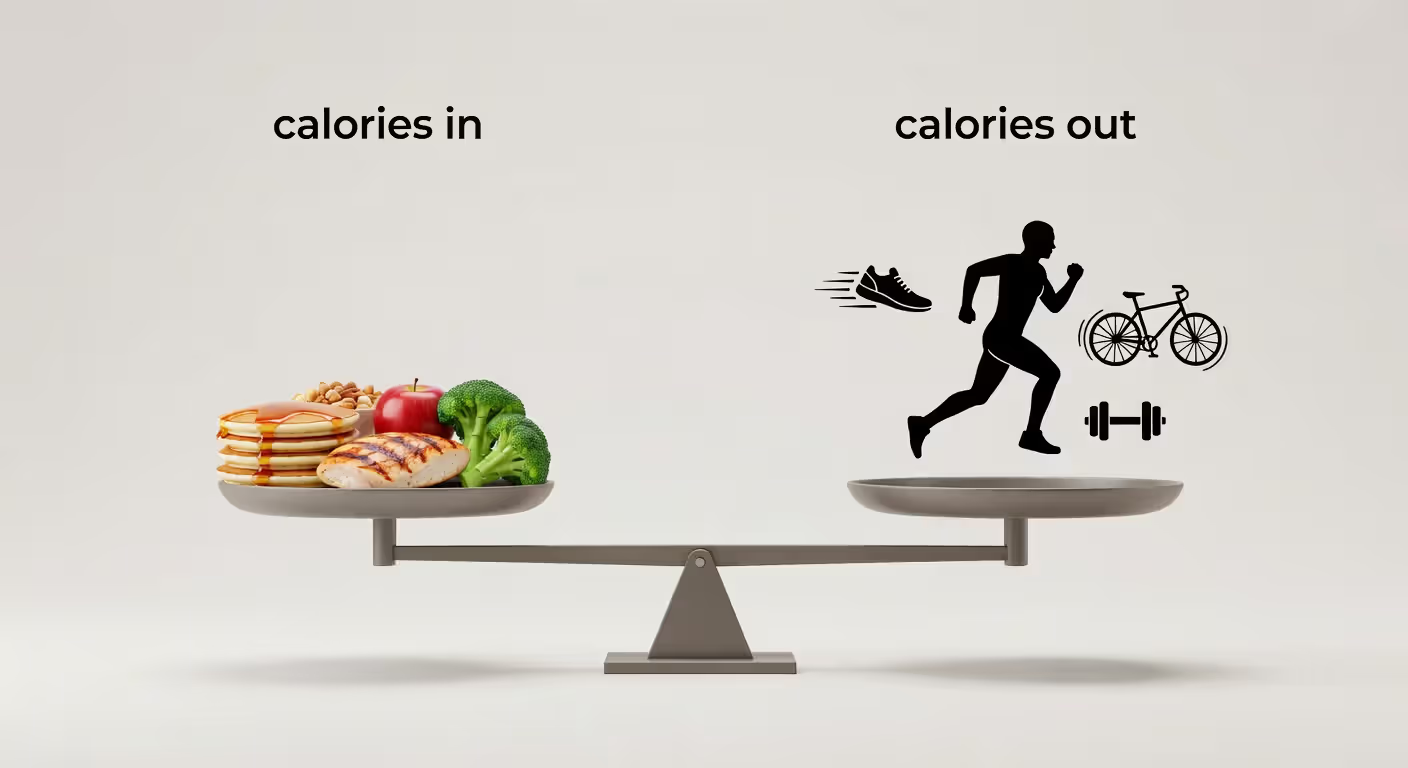
Losing weight doesn't require magic pills or extreme diets. It comes down to one simple concept: eating fewer calories than your body burns. But turning that concept into a sustainable plan? That's where most people get stuck.
A calorie deficit diet plan gives you the structure to lose fat without guessing. You'll know exactly how much to eat, what foods work best, and how to stick with it long enough to see real results. The key is building a deficit that's aggressive enough to work but gentle enough that you don't feel miserable every day.
Let's break down exactly how to create and follow a deficit that actually works.
What Is a Calorie Deficit and Why It Works for Fat Loss
A calorie deficit happens when you consume fewer calories than your body needs to maintain its current weight. Your body requires energy for everything: breathing, thinking, moving, digesting food. When you don't provide enough energy through food, your body taps into stored fat for fuel.
The science is straightforward. One pound of body fat contains roughly 3,500 calories. Create a deficit of 500 calories per day, and you'll lose about one pound per week. Double that deficit, and you'll lose two pounds weekly. Simple math.
But here's what most diet plans won't tell you: the deficit for fat loss isn't just about eating less. It's about eating less than your specific body burns. A 6'2" active man burning 3,000 calories daily can eat 2,500 and lose weight. A 5'3" sedentary woman burning 1,600 calories needs to eat around 1,200 to see similar progress.
Eating in a deficit is the only way to lose body fat. Every successful diet—keto, paleo, intermittent fasting, vegan—works because it helps you eat fewer calories than you burn. The packaging changes. The mechanism doesn't.
Your body doesn't care if those calories come from carbs, fats, or protein. It cares about the total amount. That said, what you eat matters for hunger, energy, and keeping muscle while you lose fat. We'll get to that.
How to Calculate Your Calories Daily to Lose Weight
You can't hit a target you haven't identified. Before cutting calories, you need to know how many you're burning.
Start with your Total Daily Energy Expenditure (TDEE). This number represents every calorie your body burns in 24 hours: your resting metabolism, daily movement, exercise, even digestion.
Tools and Formulas for Accurate Calculation
The Mifflin-St Jeor equation gives you a solid baseline:
For men: (10 × weight in kg) + (6.25 × height in cm) - (5 × age) + 5
For women: (10 × weight in kg) + (6.25 × height in cm) - (5 × age) - 161
That number is your Basal Metabolic Rate (BMR)—calories burned at complete rest. Now multiply by your activity factor:
Sedentary (desk job, little exercise): BMR × 1.2
Lightly active (light exercise 1–3 days/week): BMR × 1.375
Moderately active (moderate exercise 3–5 days/week): BMR × 1.55
Very active (hard exercise 6–7 days/week): BMR × 1.725
The result? Your TDEE. Online calculators do this math instantly, but understanding the formula helps you adjust when progress stalls.
How Much of a Deficit You Actually Need
Here's where strategy matters. Too small a deficit wastes time. Too large a deficit tanks your energy and muscle mass.
Calorie Deficit Levels Comparison
Deficit Type
Daily Calorie Reduction
Weekly Weight Loss
Best For
Sustainability Rating
Mild
200–300 calories
0.5 lb
Those close to goal weight, beginners
Very high
Moderate
400–600 calories
1–1.5 lb
Most people, balanced approach
High
Aggressive
700–1,000 calories
1.5–2 lb
Those with significant weight to lose, short-term
Moderate to low
The pattern I see most often is people starting too aggressive, burning out within three weeks, then quitting entirely. A moderate deficit wins almost every time.
A moderate deficit of 300–500 calories per day allows for sustainable fat loss while preserving muscle mass and energy levels. Aggressive cuts may show faster initial results, but they often lead to metabolic adaptation and diet fatigue that derail long-term progress.
For most people, subtracting 400–500 calories from TDEE hits the sweet spot. You'll lose fat at a noticeable pace without feeling like you're starving. Adjust based on your results after two weeks. Losing more than two pounds weekly? Add 100–200 calories back. Not losing after ten days? Drop another 100–200.
Building Your Calorie Deficit Diet for Fat Loss
Knowing how many calories to eat is step one. Choosing what fills those calories determines whether you succeed or suffer.
Protein comes first. Always. Aim for 0.7–1.0 grams per pound of body weight. A 150-pound person needs 105–150 grams daily. Protein preserves muscle during fat loss, keeps you full longer, and has the highest thermic effect of all macronutrients (meaning your body burns calories just digesting it).
Fat should land between 20–30% of total calories. Fat supports hormone production, vitamin absorption, and satiety. Going too low makes you miserable and can mess with your hormones. A 1,800-calorie diet needs roughly 40–60 grams of fat daily.
The rest? Carbohydrates. They fuel workouts, support recovery, and make food enjoyable. Don't fear them. Just measure them. Carbs aren't the enemy—overeating is.
Meal timing matters less than you've been told. Three meals, six meals, intermittent fasting—all work if total calories and protein are right. Pick a schedule that fits your life. If you're starving by 10 a.m., eat breakfast. If you prefer bigger dinners, skip breakfast and save those calories.
Portion control becomes automatic when you track for two weeks. You'll learn that chicken breast has about 165 calories per 4 ounces, rice has 200 calories per cooked cup, and that "small" bagel is actually 300 calories. After a while, you won't need to weigh everything. But at first? Weigh everything.
Sample Calorie Deficit Meal Plans by Calorie Level
Theory helps. Examples help more. Here's what eating in a calorie deficit actually looks like across three common calorie targets.
These aren't rigid prescriptions. Swap salmon for chicken. Trade quinoa for rice. Hate Greek yogurt? Use cottage cheese. The numbers matter. The specific foods? Flexible.
Notice how protein stays high across all three levels. That's intentional. Dropping calories shouldn't mean dropping protein—it means reducing fats and carbs strategically while keeping muscle-protecting protein high.
Common Mistakes When Eating in a Deficit
You'd think eating less would be straightforward. Yet people find creative ways to sabotage themselves.
Cutting calories too aggressively tops the list. Dropping from 2,500 to 1,200 overnight feels productive. It's actually counterproductive. Your body responds to extreme deficits by slashing energy, increasing hunger hormones, and making every moment feel like a battle. Start with a moderate cut. You can always reduce more if needed.
Ignoring protein is the second-biggest error. People focus on calories and forget that 1,500 calories of pasta and bread will leave you hungry and weak. That same 1,500 with 120 grams of protein? Totally different experience. Protein is non-negotiable.
Inaccurate tracking kills more diets than anything else. Eyeballing portions, forgetting cooking oils, not counting weekend calories—these "small" errors add up to 500+ unaccounted calories. If you're not losing weight in what you think is a deficit, you're probably not actually in a deficit. Track honestly or don't track at all.
Over-restricting food groups makes life miserable. Cutting out all carbs, all fats, all sugar, all fun—that's a recipe for binging. A calorie deficit diet for fat loss should include foods you actually enjoy. Just in controlled amounts.
Expecting linear progress sets you up for frustration. Weight loss isn't a straight line. You'll lose two pounds one week, nothing the next, then three pounds the following week. Water retention, hormones, sodium intake, stress—all affect the scale daily. Judge progress over two-week periods, not day-to-day fluctuations.
How to Sustain a Deficit Without Feeling Deprived
Sustainability separates people who lose weight from people who keep it off. Here's how to eat in a calorie deficit without losing your mind.
Volume eating is your best friend. A huge plate of vegetables, lean protein, and a moderate portion of rice feels more satisfying than a small portion of calorie-dense foods. A 400-calorie meal can look like a tiny burger or a massive chicken and vegetable stir-fry. Choose the massive option.
Protein and fiber control hunger better than anything else. Every meal should include both. Chicken breast with broccoli keeps you full for hours. A bagel leaves you hungry in 90 minutes. The calorie difference isn't huge. The satiety difference is massive.
Flexible dieting prevents burnout. Follow your plan 80–90% of the time. The other 10–20%? Live your life. One restaurant meal won't ruin your progress. Weeks of untracked eating will. The simpler option usually wins here: track carefully most days, relax occasionally.
Strategic refeeds can help both physically and mentally. Every 7–14 days, eat at maintenance calories (your TDEE) for one day. Add those extra calories primarily as carbohydrates. This approach can help restore leptin levels, refill glycogen stores, and give you a psychological break without derailing fat loss.
Diet breaks matter for longer dieting phases. After 8–12 weeks in a deficit, spend 1–2 weeks eating at maintenance before resuming your deficit. This isn't quitting—it's strategic recovery that helps preserve metabolic rate and makes the next dieting phase more effective.
Hunger will happen. That's normal. But you shouldn't feel ravenous all day. If you do, your deficit is too large or your food choices need work.
Frequently Asked Questions About Calorie Deficit Diets
Can I lose weight without counting calories?
Yes, but it's harder and less predictable. Some people successfully lose weight through intuitive eating, portion control, or dietary rules (like cutting out processed foods). These methods work when they accidentally create a calorie deficit. The problem? You won't know if you're actually in a deficit until the scale moves—or doesn't. Tracking calories for even two weeks teaches you portion sizes and calorie density that help you estimate better long-term. You don't need to track forever, but starting with tracking gives you data instead of guesswork.
How long should I stay in a calorie deficit?
Most people should diet in phases: 8–12 weeks in a deficit, followed by 1–2 weeks at maintenance, then resume if needed. Staying in a deficit for months without breaks can lead to metabolic adaptation, hormone disruption, and psychological fatigue. Once you reach your goal weight, transition to maintenance calories and stay there. You can't stay in a deficit forever—the goal is to lose fat, then maintain that loss while eating normally.
Will eating in a deficit slow my metabolism?
Your metabolism will slow slightly as you lose weight—that's normal and unavoidable. A smaller body burns fewer calories than a larger one. But the dramatic "metabolic damage" people fear is mostly myth. What actually happens is metabolic adaptation: your body becomes slightly more efficient, and you move less unconsciously (fewer fidgeting movements, less spontaneous activity). The solution isn't avoiding deficits—it's using moderate deficits, keeping protein high, strength training, and taking diet breaks. These strategies minimize adaptation and preserve metabolic rate.
What should I do if I stop losing weight in a deficit?
First, wait. If you've only been stuck for a few days, it's probably water retention. Give it a full two weeks. Still not losing? Recalculate your TDEE based on your new weight—you burn fewer calories now than when you started. Then verify you're tracking accurately. Weigh everything again for three days to catch any portion creep. If you're truly in a deficit and still not losing after three weeks, drop another 100–200 calories or add 20–30 minutes of walking most days. One of those will break the plateau.
Is it safe to eat 1,200 calories a day?
For most people, 1,200 is the absolute minimum and shouldn't be sustained long-term. Very small or sedentary women might need to go this low to create a deficit, but it leaves little room for adequate protein, fats, and micronutrients. Men and active women should rarely go below 1,500. Eating too little can lead to muscle loss, nutrient deficiencies, low energy, and hormonal issues. If 1,200 is your only option for fat loss, your better move is increasing activity so you can eat more while maintaining the same deficit.
Do I need to exercise while in a calorie deficit?
You don't need to, but you should. Exercise—especially strength training—helps preserve muscle mass while you lose fat. Without it, you'll lose both fat and muscle, leaving you "skinny fat" instead of lean. Cardio increases your calorie burn, giving you more room to eat while maintaining your deficit. But exercise isn't required for fat loss. You can lose weight through diet alone. You just won't look or feel as good at your goal weight compared to someone who trained along the way.
Creating and following a calorie deficit diet plan isn't complicated, but it does require consistency and honesty with yourself. Calculate your target accurately, eat enough protein, track your intake carefully at first, and adjust based on real results—not what you hope to see. The deficit that works is the one you can actually stick with long enough to reach your goal. Start moderate, stay patient, and remember that sustainable fat loss is a marathon, not a sprint.