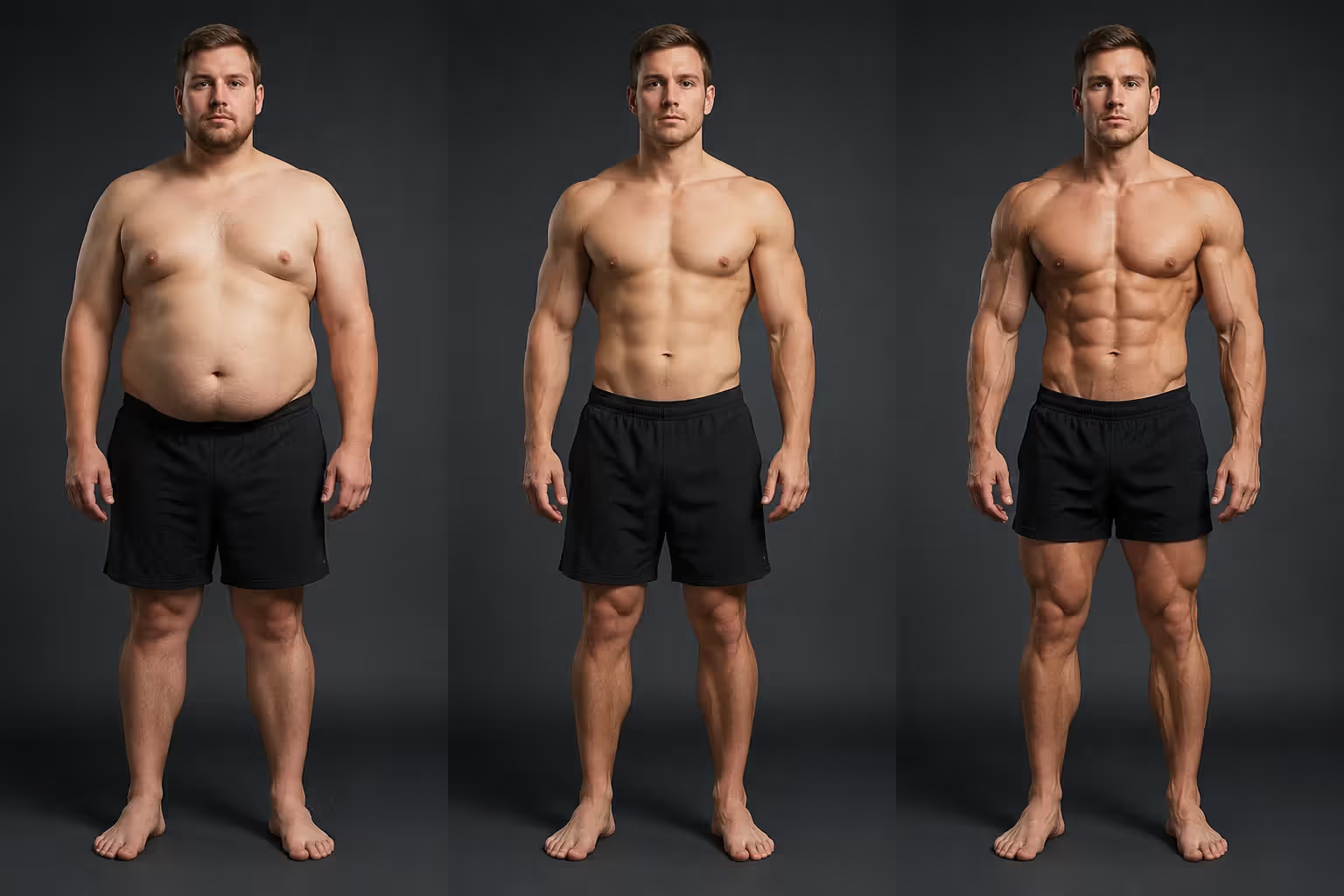
Losing body fat while keeping your hard-earned muscle isn't just about eating less. It's about eating smarter. Most people who "diet" end up losing a frustrating mix of fat and muscle, which tanks their metabolism and leaves them looking softer than they hoped. A proper fat loss diet targets fat stores specifically while giving your muscles every reason to stick around. The difference comes down to how you structure your deficit, what you eat, and how you track progress beyond the bathroom scale.
How Fat Loss Differs from General Weight Loss
Weight loss and fat loss aren't the same thing. Not even close.
When you step on a scale, that number reflects everything: fat, muscle, water, bone, the breakfast you just ate. Losing weight just means the number dropped. Losing fat means you've specifically reduced adipose tissue while maintaining lean mass.
Why does this matter? Muscle is metabolically expensive tissue. Each pound burns about 6 calories per day at rest, while fat burns roughly 2. Lose 10 pounds of muscle during a diet, and your resting metabolism drops by about 40 calories daily. That adds up fast. Over a year, that's enough to regain 4 pounds of fat even if your eating habits don't change.
Body recomposition takes this further. It's the process of simultaneously losing fat and building (or maintaining) muscle. This is absolutely possible for beginners, people returning after a layoff, or anyone carrying excess body fat. The scale might barely move during recomp, but your body composition shifts dramatically. Your clothes fit differently. You look leaner and more defined.
The metabolic implications run deeper than daily calorie burn. Muscle tissue improves insulin sensitivity, supports joint health, and maintains functional strength as you age. Crash diets that strip away muscle leave you weaker, more injury-prone, and primed for rapid fat regain the moment you eat normally again.
Core Principles of an Effective Fat Loss Diet
Every successful fat loss diet starts with a caloric deficit. You need to consume fewer calories than you burn. No deficit, no fat loss. Period.
But the size of that deficit determines whether you lose mostly fat or a discouraging mix of fat and muscle. A moderate deficit of 300-500 calories per day (or about 20% below maintenance) preserves muscle far better than aggressive cuts of 1,000+ calories. The pattern I see most often is people slashing calories too hard, losing weight quickly at first, then hitting a wall as their metabolism adapts and muscle mass drops.
Protein requirements jump significantly during fat loss. While 0.7-0.8 grams per pound of body weight might maintain muscle during maintenance eating, you'll want 1.0-1.2 grams per pound when dieting. For a 180-pound person, that's 180-216 grams daily. This higher intake provides amino acids for muscle repair, increases satiety, and has a higher thermic effect (your body burns more calories digesting protein than carbs or fat).
Macronutrient ratios matter, but less than people think. After you've set protein high, you can split remaining calories between carbs and fats based on preference and performance. Active people who lift weights typically do better with moderate carbs (30-40% of calories) to fuel training. Others prefer higher fat (35-40%) for satiety. Both approaches work if protein is adequate and calories are controlled.
Meal timing? It's the least important variable, but it's not irrelevant. Eating protein every 4-5 hours helps maximize muscle protein synthesis. Having carbs around your workouts can improve training quality. But don't obsess over it. Hitting your daily targets matters far more than when you eat.
A moderate caloric deficit combined with high protein intake and resistance training represents the most effective strategy for maximizing fat loss while preserving lean body mass. The research consistently shows that aggressive deficits, even with adequate protein, lead to greater muscle loss and metabolic adaptation.
Best Diet Approaches for Fat Loss and Muscle Retention
No single diet owns fat loss. Several approaches work, and the best one is whichever you'll actually stick to for months.
Here's how the most popular options stack up:
Diet Type
Protein %
Carb %
Fat %
Best For
Difficulty Level
High-Protein Moderate-Carb
35-40%
35-40%
20-25%
Lifters, active people
Moderate
Carb Cycling
30-40%
20-50%
20-35%
Body recomposition, breaking plateaus
Advanced
Flexible Dieting (IIFYM)
30-35%
40-45%
20-25%
People who want food freedom
Moderate
Mediterranean-Style
25-30%
40-45%
30-35%
Long-term sustainability
Easy
High-Protein Moderate-Carb Approach
This is the default recommendation for most people trying to lose fat while training. Protein sits at 35-40% of calories, carbs at 35-40%, and fats fill the remaining 20-25%.
The high protein content preserves muscle during the deficit. Moderate carbs provide enough glucose to fuel intense workouts without spilling over into excess. Fats stay high enough to support hormone production (testosterone and other hormones need dietary fat) but low enough to make room for protein and carbs.
A 180-pound person eating 2,000 calories might target 200g protein, 175g carbs, and 55g fat. That's plenty of food variety and enough energy for hard training sessions.
Carb Cycling for Body Recomposition
Carb cycling alternates between higher-carb days (usually on training days) and lower-carb days (rest days or lighter activity). The idea is to fuel performance when you need it and create a deeper deficit when you don't.
A typical setup might look like 200g carbs on training days and 100g on rest days, with protein staying constant at 200g and fats adjusting to fill calorie targets. This approach can help break through plateaus and may improve body recomposition by strategically timing nutrient availability.
It's more complex to plan and track, which is why it's better suited to experienced dieters who've already mastered the basics.
Flexible Dieting (IIFYM)
"If It Fits Your Macros" focuses on hitting daily protein, carb, and fat targets without restricting specific foods. Want ice cream? Fine, as long as it fits your numbers.
This approach improves long-term adherence because nothing is off-limits. You learn to fit treats into your plan rather than feeling deprived and eventually binging. The downside? It requires consistent tracking, and some people use it as an excuse to eat mostly junk as long as macros line up. Food quality still matters for health, satiety, and micronutrients.
What to Eat on a Cutting Diet
Specific food choices make hitting your macros easier and keep you satisfied despite the deficit.
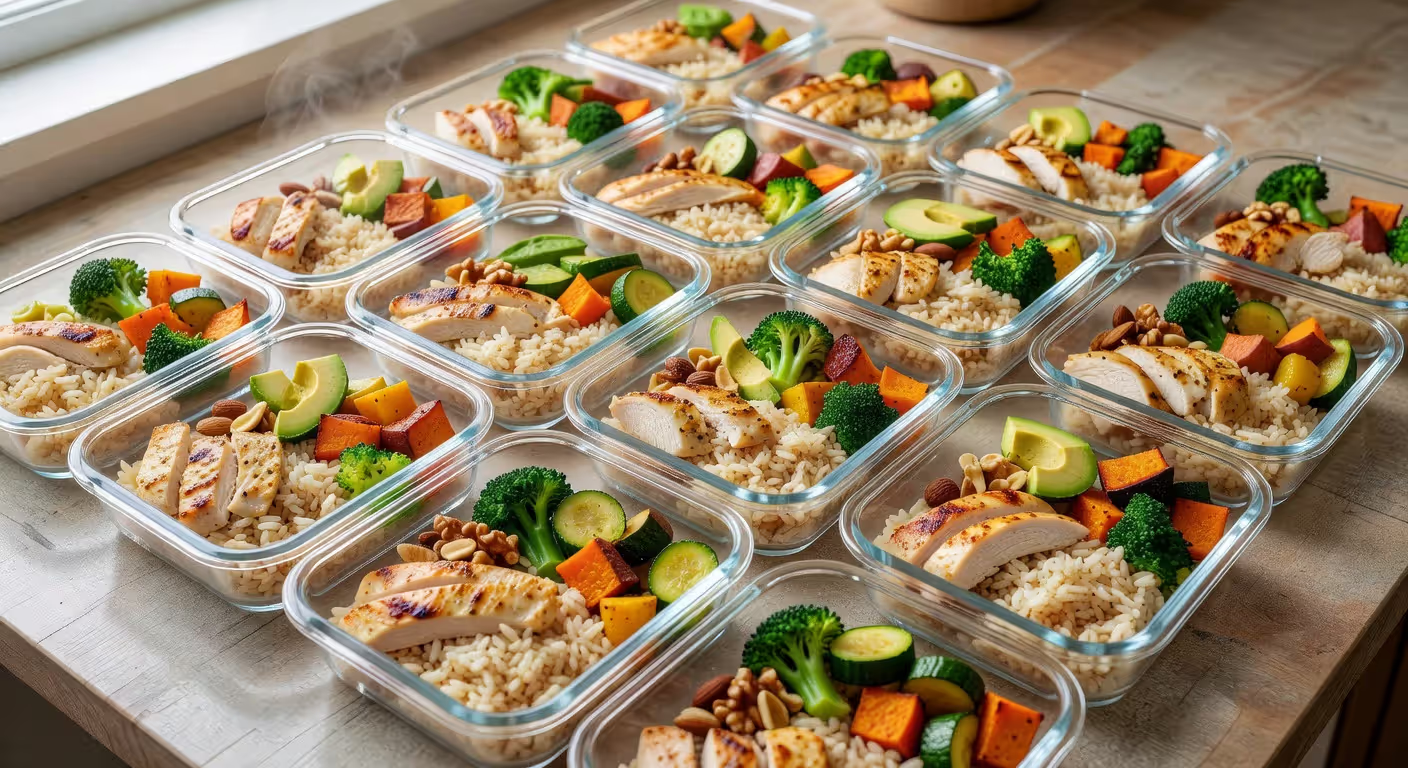
Lean proteins should dominate your plate. Chicken breast, turkey, white fish, egg whites, Greek yogurt, cottage cheese, and lean cuts of beef (93/7 or leaner) deliver protein without excessive calories. Fattier proteins like salmon, whole eggs, and 80/20 ground beef are fine in moderation but make it harder to keep fat intake in check.
Complex carbohydrates provide sustained energy and fiber. Focus on potatoes, sweet potatoes, rice (white or brown), oats, quinoa, and whole grain bread. These digest slower than simple sugars and keep blood sugar stable. Fruit counts too—berries, apples, and bananas offer vitamins and fiber along with their carbs.
Healthy fats support hormones and satiety. Olive oil, avocados, nuts, nut butters, and fatty fish like salmon are your best bets. Fats are calorie-dense (9 calories per gram versus 4 for protein and carbs), so measure them carefully. A tablespoon of olive oil is 120 calories—easy to overpour if you're eyeballing it.
Vegetables are your secret weapon. They're so low in calories that you can eat them almost unlimited. Broccoli, spinach, peppers, zucchini, cauliflower, and leafy greens add volume, fiber, and micronutrients without blowing your calorie budget.
Here's what a sample day might look like for someone eating 2,000 calories (200g protein, 175g carbs, 55g fat):
Breakfast: 3 whole eggs scrambled with spinach and peppers, 1 slice whole grain toast with 1 tsp butter, black coffee
Lunch: 6 oz grilled chicken breast, 1 cup cooked brown rice, large mixed green salad with 1 tbsp olive oil and vinegar
Pre-workout snack: Greek yogurt (non-fat) with 1/2 cup berries
Dinner: 6 oz white fish, 8 oz baked sweet potato, roasted broccoli and zucchini
Evening: 1 scoop protein powder mixed with water
This hits macros, provides plenty of food volume, and includes enough variety to stay interesting. You're not starving on a proper cutting diet—you're just being strategic.
Common Fat Loss Diet Mistakes That Cost You Muscle
The biggest mistake is cutting calories too aggressively. Dropping from 2,500 to 1,500 calories overnight might seem efficient, but your body responds by ramping up hunger hormones, downregulating metabolism, and breaking down muscle for energy. You'll lose weight fast initially, but much of it will be muscle. A 500-calorie daily deficit (1 pound per week) is the sweet spot for most people.
Insufficient protein comes in at a close second. Even if you're in a deficit, your body needs amino acids to maintain muscle tissue. Skimping on protein—say, eating only 100g when you weigh 180 pounds—almost guarantees muscle loss. Prioritize protein at every meal, even if it means spending a bit more on groceries.
Eliminating entire food groups rarely helps unless you have a medical reason. Cutting out all carbs or all fats makes the diet harder to sustain and can impair training performance or hormone production. You need both macronutrients. Balance beats extremes.
Overtraining while under-eating is a recipe for losing muscle and feeling miserable. If you're doing two-hour gym sessions six days a week while eating 1,400 calories, you're digging a recovery hole you can't climb out of. Training should support your diet, not fight against it. Three to five well-structured lifting sessions per week is plenty during a cut.
Ignoring recovery and sleep sabotages everything. Muscle repair happens during rest, and poor sleep elevates cortisol (a catabolic hormone that breaks down muscle). If you're sleeping five hours a night and constantly stressed, you'll struggle to preserve muscle no matter how perfect your diet looks on paper. Aim for 7-9 hours nightly.
Tracking Progress Beyond the Scale
The scale is a liar. Or at least, it's an incomplete storyteller.
Daily weight fluctuates by 2-5 pounds based on water retention, sodium intake, carb consumption, bathroom habits, and hormonal cycles. You can lose a pound of fat over a week and see the scale go up because you're retaining water from a salty meal or your menstrual cycle.
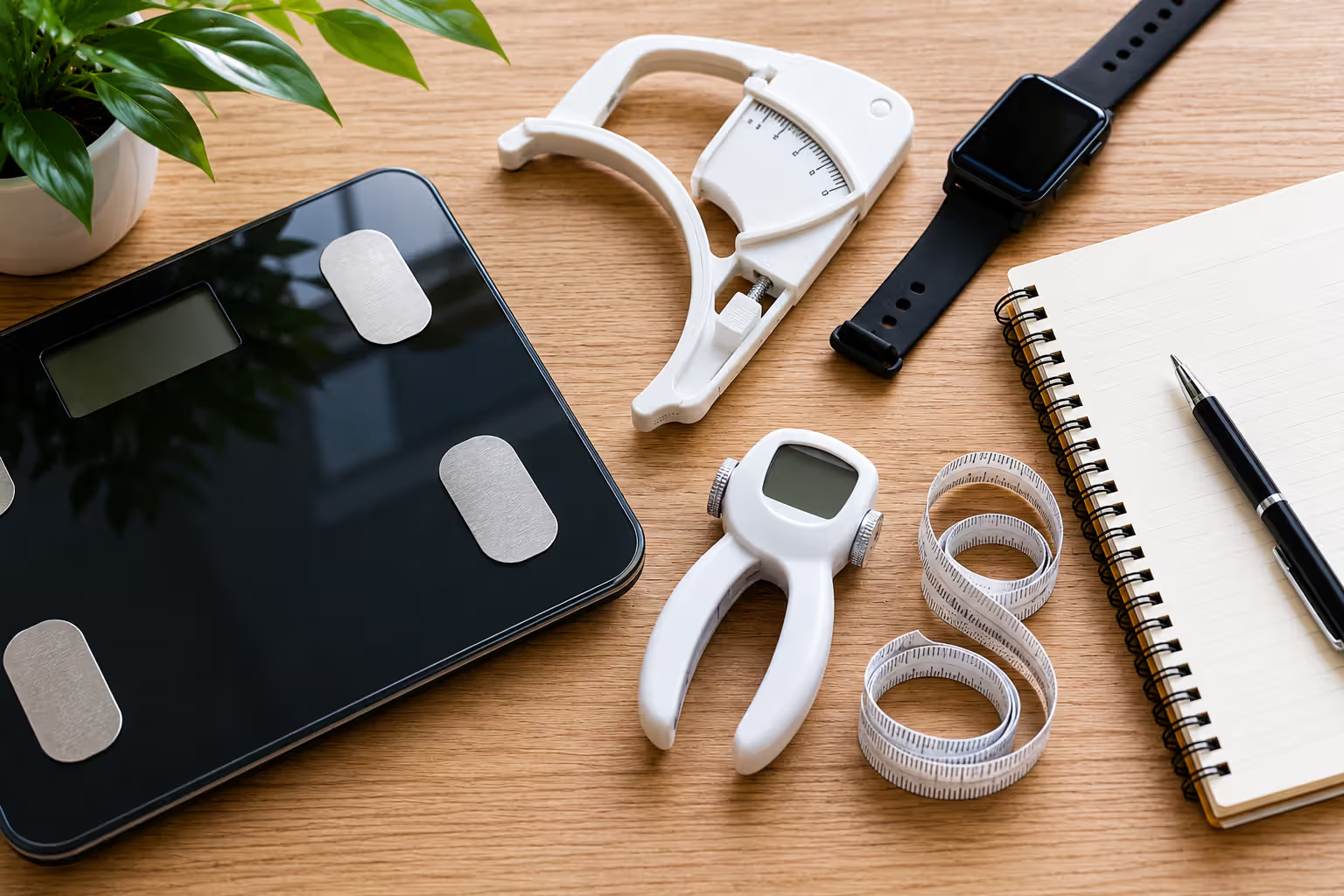
Track weekly averages instead of daily readings. Weigh yourself at the same time each day (morning, after bathroom, before eating) and calculate the weekly average. Compare this week's average to last week's. If the trend is downward by 0.5-1 pound per week, you're on track.
Body measurements tell a better story. Measure waist, hips, chest, arms, and thighs every two weeks. You might maintain the same weight while losing an inch off your waist and gaining half an inch on your arms—that's successful body recomposition. Fat is less dense than muscle, so you can get smaller while staying the same weight.
Progress photos are brutally honest. Take front, side, and back photos every two weeks in the same lighting, same location, same clothing (or minimal clothing). Visual changes often appear before the scale moves. You'll see more definition, better muscle separation, and a leaner overall appearance.
Strength benchmarks matter during a cut. If you're maintaining or even increasing your lifts while losing weight, you're preserving muscle. If your strength tanks—say, your bench press drops 30 pounds—you're likely losing muscle along with fat. This signals you need to eat more, increase protein, or reduce training volume.
How do you adjust based on results? If you're losing more than 1% of body weight per week, you're cutting too hard. Add 200-300 calories, preferably from carbs. If you're not losing anything for three consecutive weeks, drop 200-300 calories or add a bit more activity. If strength is plummeting, increase calories slightly and ensure you're getting 1g+ protein per pound of body weight.
The simpler option usually wins here: make small adjustments, wait two weeks, and reassess. Don't panic and overhaul everything after one bad week.
FAQ: Fat Loss Diet Questions Answered
How much protein do I need to preserve muscle on a fat loss diet?
Aim for 1.0-1.2 grams per pound of body weight daily. If you weigh 170 pounds, that's 170-204 grams. This higher intake (compared to the 0.7-0.8g/lb needed during maintenance) provides amino acids for muscle repair, increases fullness, and has a higher thermic effect. Spread protein across 3-5 meals for best results. If you're very overweight, calculate based on your goal body weight rather than current weight to avoid unnecessarily high targets.
Can I lose fat and build muscle at the same time?
Yes, but it depends on your training status and body composition. Beginners can absolutely achieve body recomposition—they build muscle easily while losing fat. People returning after a break from training can too. Those carrying significant excess body fat have enough stored energy to fuel muscle growth while in a deficit. Advanced lifters who are already lean will find it much harder and might need to choose between focused fat loss phases and dedicated muscle-building phases.
How fast should I lose weight to avoid muscle loss?
Target 0.5-1% of body weight per week. For most people, that's 0.5-2 pounds weekly depending on starting weight. Losing faster than this increases the risk of muscle loss, even with adequate protein. If you're very overweight (30+ pounds to lose), you can sustain slightly faster loss early on. As you get leaner, slow the rate down. The last 10-15 pounds should come off at the slower end of this range.
Do I need to count calories or can I eat intuitively?
It depends on your experience and how much precision you need. Calorie counting provides the most control and works best when you have specific body composition goals. Intuitive eating can work if you're already familiar with portion sizes, naturally gravitate toward whole foods, and don't have much weight to lose. Most people trying to lose fat while preserving muscle benefit from at least tracking protein intake and estimating calories, even if they're not weighing every gram of food.
Should I do cardio or just focus on diet for fat loss?
Diet creates the deficit. Cardio can help expand it or let you eat a bit more food, but it's not required for fat loss. Resistance training is non-negotiable if you want to preserve muscle—lift weights 3-5 times per week. Add cardio if you enjoy it, need the extra calorie burn, or want the cardiovascular benefits. Keep it moderate (2-4 sessions of 20-30 minutes) to avoid interfering with recovery from lifting. Walking is underrated—it burns calories without creating much fatigue.
What's the difference between a cutting diet and a regular diet?
A cutting diet specifically aims to reduce body fat while maintaining muscle mass, which requires higher protein intake, resistance training, and a moderate caloric deficit. Regular diets often focus just on weight loss without distinguishing between fat and muscle loss, and they typically don't emphasize protein or strength training. Cutting diets are common in bodybuilding and fitness contexts where body composition matters more than the number on the scale. The approach is more strategic and performance-focused than general weight loss diets.
Losing fat without sacrificing muscle takes patience and precision, but the payoff is worth it. You'll end your diet looking lean and defined rather than just smaller and softer. Stick to a moderate deficit, prioritize protein at every meal, lift weights consistently, and track the right metrics. The scale will eventually catch up to what you see in the mirror and feel in your clothes. And when you reach your goal, you'll have maintained the metabolic machinery and strength that makes keeping the fat off so much easier long-term.