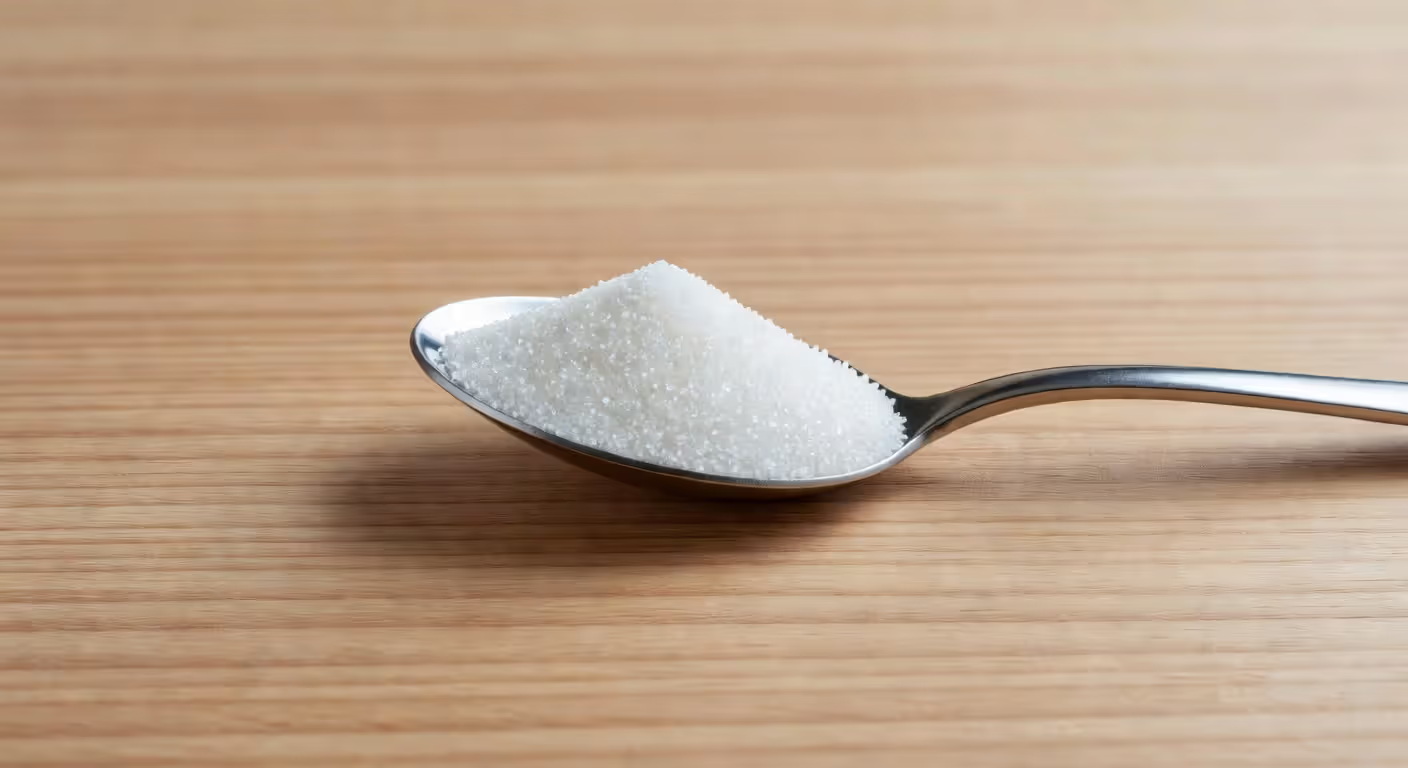
What Does 5 Grams of Sugar Look Like in Your Diet?
Understanding what 5 grams of sugar actually means in your daily diet can feel abstract until you start connecting it to the foods you eat every day. That's about one teaspoon, a single sugar packet, or roughly one sugar cube. Seems small, right? But here's the thing: these small amounts add up fast, and most of us consume them without even realizing it. Learning to spot and measure these increments gives you real control over your sugar consumption and helps you make informed choices about what you're putting in your body.
How Much Sugar Per Day Should You Actually Consume
The FDA sets the Daily Value for added sugars at 50 grams per day, based on a 2,000-calorie diet. That's roughly 12 teaspoons. But the American Heart Association recommends much stricter limits: no more than 25 grams (6 teaspoons) daily for women and 36 grams (9 teaspoons) for men. For children ages 2-18, the AHA suggests keeping added sugars below 25 grams per day.
These numbers refer specifically to added sugars — the sweeteners manufacturers add during processing or that you add yourself. They don't include naturally occurring sugars in whole fruits, vegetables, or plain dairy products. Your body processes these differently because they come packaged with fiber, vitamins, and other nutrients that slow absorption.
So where does 5 grams fit? It's 10% of the FDA's daily value and 20% of the AHA's recommendation for women. One serving with 5 grams might seem manageable, but most people consume sugar in multiple servings throughout the day. Three foods with 5 grams each and you've already hit the women's daily limit.
The pattern I see most often is people focusing on obvious sources like soda while ignoring the 4-5 grams hiding in their salad dressing or yogurt.
Visualizing 5 Grams of Sugar in Common Foods
Five grams equals approximately 1.2 teaspoons of granulated sugar. That's one standard sugar packet you'd find at a coffee shop or one small sugar cube. In your palm, it's about the size of a nickel in volume.
But sugar rarely appears in your diet as loose granules. It's dissolved in drinks, baked into snacks, and mixed into sauces. Here's how 5 grams shows up in real foods:
Half a medium apple (natural sugar)
Two-thirds cup of strawberries (natural sugar)
One tablespoon of ketchup (added sugar)
Half a chocolate chip cookie (added sugar)
Four ounces of flavored yogurt (mix of natural and added)
One-third of a standard granola bar (added sugar)
The difference between natural and added matters for your daily count, but both affect your blood sugar. The advantage of natural sources is they come with beneficial nutrients and fiber.
Food Item
Serving Size
Total Sugar (g)
Type
Medium apple
1/2 fruit
5g
Natural
Plain Greek yogurt
6 oz
5g
Natural (lactose)
Barbecue sauce
2 tablespoons
5g
Added
Honey Nut Cheerios
1/2 cup
5g
Added
Orange juice
3 oz
5g
Natural (concentrated)
Chocolate milk
4 oz
5g
Mix
Dried cranberries
2 tablespoons
5g
Added
Wheat bread
2 slices
5g
Added
This table shows how quickly small portions accumulate. Two slices of bread at breakfast already use up 20% of your recommended limit before you've added jam or honey.
Where 5 Grams of Added Sugar Hides in Processed Foods
Condiments are notorious sugar carriers. Two tablespoons of barbecue sauce, one tablespoon of teriyaki sauce, or two tablespoons of sweet pickle relish each deliver about 5 grams. Salad dressings can pack 3-6 grams per serving, and most people pour more than the listed serving size.
"Healthy" foods often surprise people. Flavored instant oatmeal packets contain 10-12 grams per serving. Protein bars marketed for fitness can have 15-20 grams. Fruit-flavored yogurts typically contain 15-20 grams per 6-ounce container, with at least half coming from added sugars rather than the natural lactose in milk.
Pasta sauces hide 5-8 grams per half-cup. Granola and trail mixes average 6-10 grams per quarter-cup. Even whole grain crackers and bread contribute 2-4 grams per serving, which doubles when you eat a normal portion.
The cumulative effect of 5-gram increments throughout the day is what drives metabolic issues, not necessarily single high-sugar events. When clients start tracking these small amounts, they often discover they're consuming 60-80 grams of added sugar daily without eating any candy or drinking soda.
Decoding Sugar Aliases on Ingredient Lists
Manufacturers use over 60 different names for added sugars. The most common ones you'll spot: cane sugar, cane juice, high fructose corn syrup, corn syrup, agave nectar, honey, maple syrup, molasses, dextrose, fructose, glucose, maltose, sucrose, and fruit juice concentrate.
Here's the trick: ingredients are listed by weight in descending order. If you see three different sugar names in the top eight ingredients, that product is sugar-heavy even if no single sugar tops the list. Manufacturers sometimes split sugars into multiple types to push them lower on the label.
Words ending in "-ose" are sugars. Anything labeled "syrup" is sugar. "Evaporated cane juice" is just sugar with a health halo. Don't be fooled.
The Nutrition Facts panel now lists added sugars separately from total sugars, which makes your job easier. Focus on that added sugars line when deciding if a product fits your daily budget.
Daily Sugar Intake Tracking Methods That Work
You don't need to track forever, but doing it for one or two weeks reveals patterns you'd never notice otherwise. The simpler your method, the more likely you'll stick with it.
Start with a basic notebook or your phone's notes app. Write down everything you eat and the grams of added sugar from the Nutrition Facts label. Don't estimate — actually read the label. For foods without labels (restaurant meals, homemade dishes), use the USDA FoodData Central database or a quick web search.
Apps make this easier. MyFitnessPal, Cronometer, and Lose It all track sugar automatically when you log foods. Most have barcode scanners that pull up nutrition info instantly. The free versions work fine for sugar tracking.
But here's what matters more than the tool: consistency. Track every day for at least a week, including weekends. Most people eat differently on Saturday and Sunday, and those patterns matter.
At the end of each week, calculate your daily average. Compare it to the 25-36 gram recommendations. If you're over, identify your top three sugar sources. Those are your targets for reduction.
Practical Steps for Reducing Sugar Intake Without Deprivation
Cutting sugar cold turkey backfires for most people. Your taste buds need time to adjust, and sudden restriction often leads to cravings and binges.
Try the 20% reduction method instead. If you're currently averaging 50 grams of added sugar daily, aim for 40 grams for two weeks. Then drop to 32 grams. This gradual approach retrains your palate without triggering the deprivation response.
Smart swaps make the biggest difference:
Instead of flavored yogurt (15g): Plain Greek yogurt with fresh berries and a drizzle of honey (6g). You've saved 9 grams and added protein.
Instead of bottled iced tea (20g): Brew your own and add 1 teaspoon of sugar (4g). Saved: 16 grams.
Instead of granola (12g per serving): Plain oats with cinnamon, nuts, and sliced banana (2g). Saved: 10 grams.
Instead of barbecue sauce (5g per tablespoon): Mix mustard with a small amount of honey (2g). Saved: 3 grams per tablespoon.
These aren't deprivation swaps. They're flavor-forward alternatives that happen to contain less sugar.
Meal planning prevents impulse choices. When you're hungry and unprepared, you grab whatever's convenient, which usually means processed foods with hidden sugars. Prep proteins, chop vegetables, and portion out snacks on Sunday. You'll reach for these instead of the granola bar with 12 grams.
One counterintuitive tip: don't eliminate all sweet tastes. Use small amounts of intense flavors like vanilla extract, cinnamon, nutmeg, or cocoa powder to satisfy sweet cravings without adding sugar. A pinch of cinnamon in coffee can reduce the need for sweetener.
FAQ: Understanding Sugar in Your Food
How many teaspoons is 5 grams of sugar?
Five grams equals approximately 1.2 teaspoons of granulated sugar. For practical purposes, you can think of it as just over one level teaspoon. This is also equivalent to one standard sugar packet or one small sugar cube. When you're measuring sugar to add to coffee or recipes, one teaspoon holds about 4 grams, so 5 grams is slightly more than that.
Is 5 grams of sugar a lot for one snack?
It depends on your daily target and what else you're eating. If you're following the AHA's recommendation of 25 grams daily for women, 5 grams represents 20% of your limit. That's reasonable for a snack if it's your only sweet item of the day. But if you're already consuming sugar at breakfast, lunch, and dinner, an additional 5 grams might push you over your limit. The real issue is accumulation — three snacks with 5 grams each totals 15 grams, which is 60% of the recommended maximum.
What's the difference between natural and added sugar?
Natural sugars occur inherently in whole foods like fruits, vegetables, and plain dairy products. Added sugars are sweeteners put into foods during processing or preparation. Your body processes both types similarly, but natural sugars come packaged with fiber, vitamins, minerals, and water that slow absorption and provide nutritional benefits. Added sugars deliver calories without these benefits. Current dietary guidelines only set limits on added sugars, not natural ones, because whole foods with natural sugars haven't been linked to the same health risks as foods high in added sugars.
Does 5 grams of sugar affect blood glucose levels?
Yes, but the impact varies based on what else you eat with it and your individual metabolism. Five grams of sugar from a piece of fruit eaten with nuts will cause a much smaller and slower blood glucose rise than 5 grams from a sugar packet stirred into black coffee. Protein, fat, and fiber all slow sugar absorption. For people without diabetes, 5 grams typically causes a modest, temporary increase that the body handles easily. People with diabetes or insulin resistance should monitor their individual response, as sensitivity varies.
How can I cut 5 grams of sugar from each meal?
Small substitutions add up quickly. At breakfast, choose plain oatmeal instead of flavored packets (saves 10g), or plain yogurt with fresh fruit instead of flavored yogurt (saves 9g). At lunch, replace sugary salad dressing with oil and vinegar (saves 5-8g), or choose mustard instead of ketchup on your sandwich (saves 3-4g). At dinner, make your own tomato sauce instead of jarred versions (saves 6-8g), or skip the dinner roll (saves 2-3g). For beverages throughout the day, water or unsweetened tea instead of sweetened versions saves 20-30g alone.
Are sugar alcohols counted in the 5 grams?
No, sugar alcohols like erythritol, xylitol, and sorbitol appear separately on nutrition labels under "sugar alcohols" and aren't included in the total or added sugar counts. They provide fewer calories than regular sugar and have less impact on blood glucose. However, they can cause digestive discomfort in some people when consumed in amounts over 10-15 grams. When you see a product advertising "5g sugar" but tasting very sweet, check for sugar alcohols in the ingredients — they're often used in "low sugar" products to maintain sweetness.
Taking control of your sugar intake starts with awareness, and understanding what 5 grams looks like gives you a practical measuring stick for daily decisions. You don't need to eliminate sugar entirely or stress over every gram. Focus on identifying your biggest sources, making strategic swaps, and gradually shifting toward whole foods that deliver sweetness along with actual nutrition. Small, consistent changes compound over time into significantly healthier patterns.