What Percent of Calories Should Come from Protein?
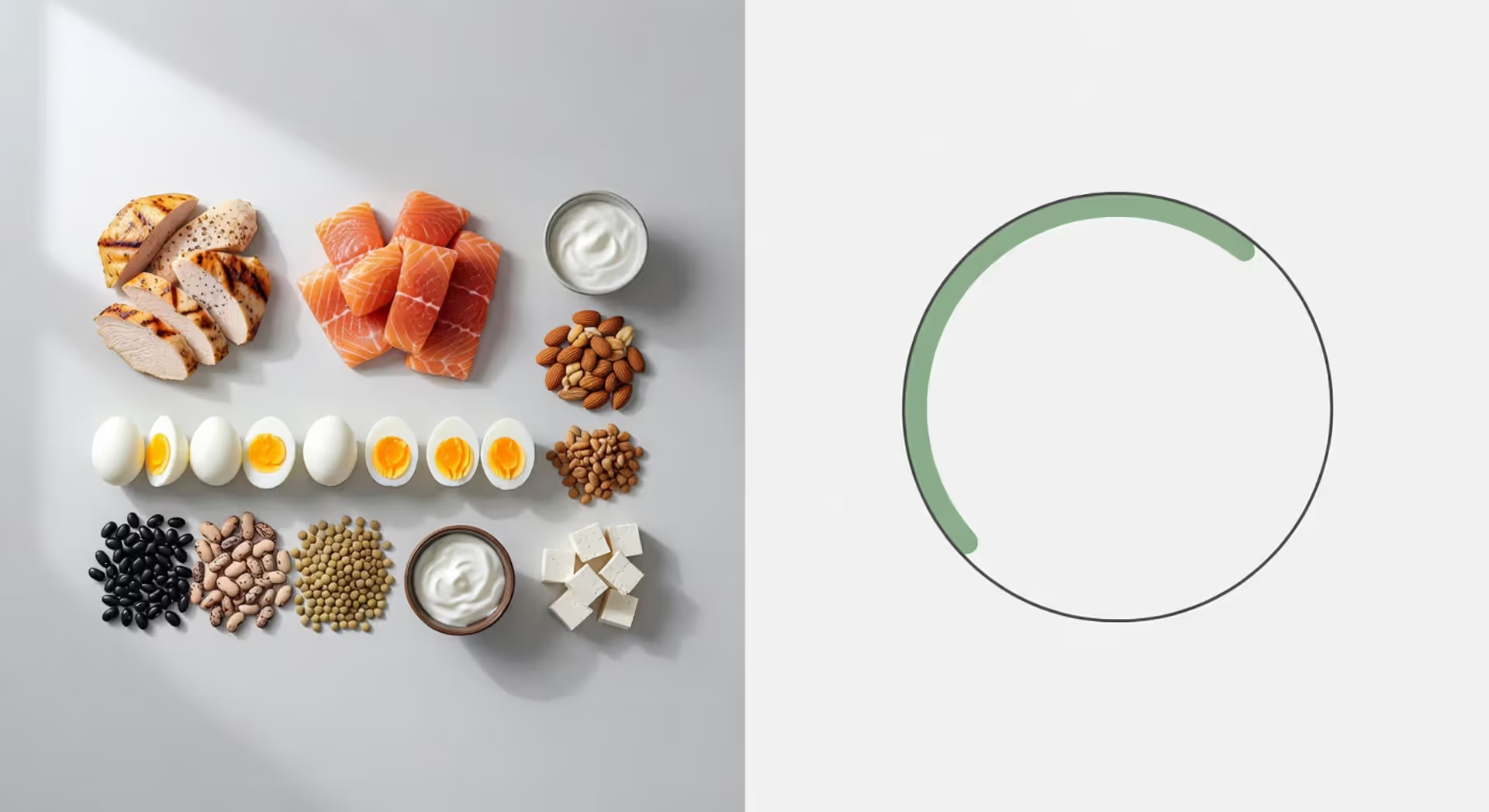
Protein is one of three macronutrients your body needs every day. But figuring out exactly how much can feel confusing. Federal dietary guidelines suggest adults consume between 10–35% of their total daily calories from protein sources. That's a fairly broad spectrum, and your personal target within that range varies based on how active you are, your age, and what you're trying to accomplish with your nutrition.
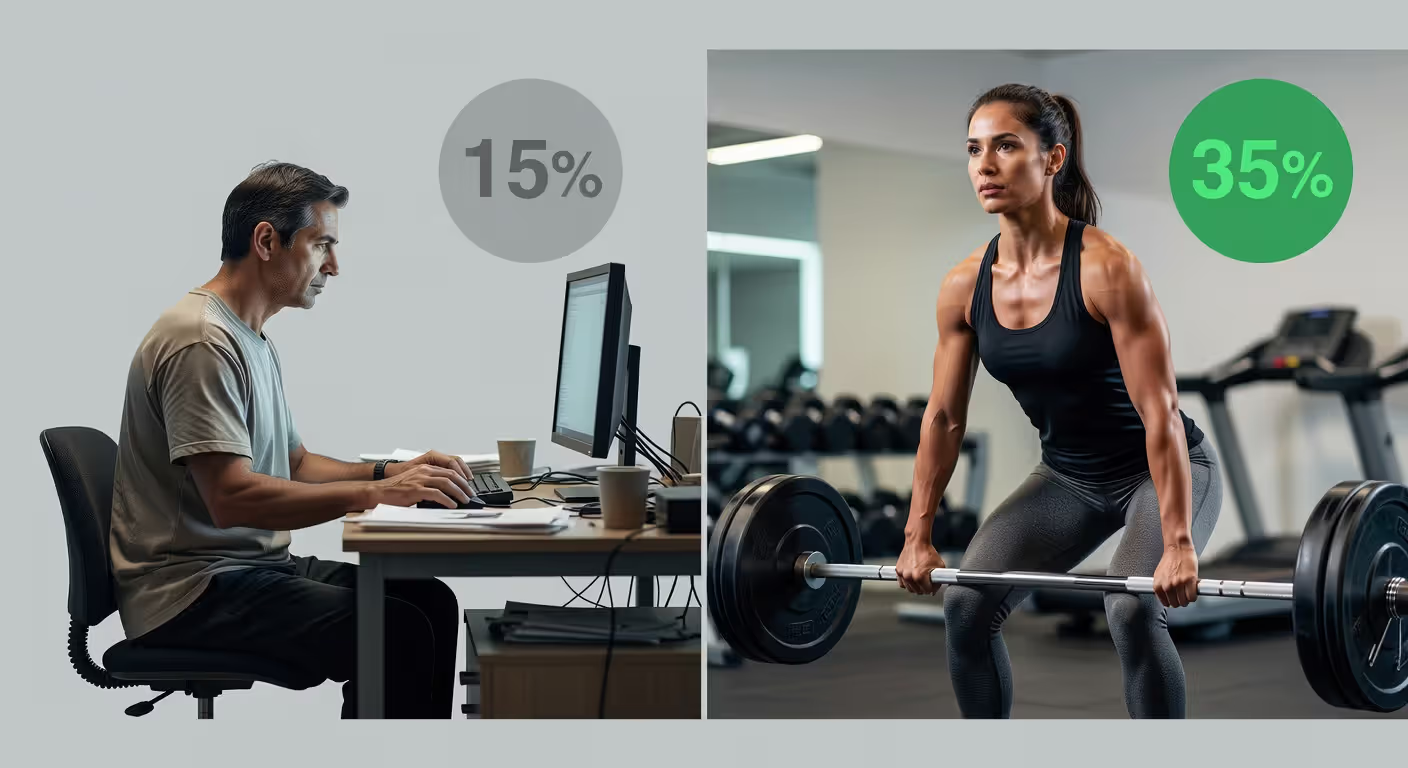
Here's what most people miss: a desk worker and a marathon runner can't follow identical protein recommendations. Your optimal intake might change depending on whether you're working to shed pounds, add muscle tissue, or just keep your current health status. Getting familiar with these ranges—and learning to calculate your personal target—makes food planning simpler without turning every meal into a math problem.
Recommended Protein Intake for Adults
Federal nutrition authorities establish what they call the Acceptable Macronutrient Distribution Range for protein: 10–35% of daily caloric intake for adults. This spectrum represents the safe zone where people typically meet their nutrition protein requirements without consuming excessive amounts.
If you're mostly inactive, the lower boundary—around 10–15%—usually covers fundamental body operations: cellular repair, enzyme production, immune system support. Meeting the minimum doesn't always mean you're hitting the optimal target, though.
Most registered dietitians suggest aiming toward the middle or upper portion of this range—somewhere between 15–25%—for better overall health outcomes. This level promotes greater feelings of fullness, helps you hold onto muscle tissue as the years pass, and supplies your body with adequate building materials for constant cellular turnover.
Understanding protein percentage in body composition adds useful context. Roughly 15–20% of your total body weight consists of protein—concentrated primarily in muscle tissue, internal organs, skin, and hair. These tissues undergo continuous breakdown and reconstruction. Consuming sufficient protein keeps this renewal process functioning properly.
The baseline Recommended Dietary Allowance sits at 0.8 grams per kilogram of bodyweight, or roughly 0.36 grams per pound. Someone weighing 150 pounds would need about 54 grams each day under this guideline. This baseline prevents deficiency but doesn't necessarily optimize health outcomes.
People who exercise regularly, older individuals, and anyone working on improving body composition typically require more. The upper boundary of the acceptable range—30–35%—frequently serves athletes and people following structured training programs.
How to Calculate Your Protein Calories
Figuring out what percent of calories should come from protein requires just two pieces of information: your total daily caloric intake and how many grams of protein you consume. The calculation becomes simple once you understand the basic conversion factor.
Converting Protein Grams to Calories
Protein delivers 4 calories per gram—this conversion factor remains constant regardless of the protein source or your individual metabolism.
Consuming 100 grams of protein in a day means you're getting 400 calories from protein sources (100 multiplied by 4 equals 400).
To determine your percentage, take your protein calories, divide by your total daily calories, then multiply the result by 100.
The formula looks like this: (Protein grams × 4) ÷ Total daily calories × 100 = Your protein percentage
If your daily intake is 2,000 calories and you eat 120 grams of protein, that gives you 480 calories from protein. Dividing 480 by 2,000 gives you 0.24, which equals 24%.
Sample Calculations by Calorie Level
Here's how various protein gram targets convert to percentages across typical daily calorie intakes:
1,500 calories daily:
56 grams protein = 15%
75 grams protein = 20%
113 grams protein = 30%
2,000 calories daily:
75 grams protein = 15%
100 grams protein = 20%
150 grams protein = 30%
2,500 calories daily:
94 grams protein = 15%
125 grams protein = 20%
188 grams protein = 30%
The gram quantities increase proportionally with total calories, while the percentages remain steady. This explains why percentage-based thinking offers more flexibility than fixating on a single gram number.
What I observe most frequently: people naturally land around 15–18% without deliberate planning—but find it challenging to reach higher levels without intentional meal structuring.
Protein Needs Based on Activity Level and Goals
How much you move dramatically changes your protein requirements. A diet high in protein serves specific populations well while potentially being unnecessary for others.
Inactive individuals (minimal or no structured exercise) typically function well at 10–15% of calories from protein sources. This quantity maintains muscle tissue and supports essential bodily functions. On a 2,000-calorie eating plan, that translates to 50–75 grams each day.
Moderately active people (working out 3–4 sessions weekly) see better results from 15–20%. This level supports post-exercise recovery and helps preserve lean body mass. At 2,000 calories, you'd target 75–100 grams.
Highly active individuals (intense training 5+ days weekly) should shoot for 20–25%. Your muscle fibers are undergoing constant repair cycles, making protein increasingly important for proper recovery. That means 100–125 grams on a 2,000-calorie framework.
Competitive athletes and strength trainers frequently reach 25–35%. Research indicates up to 1.6–2.2 grams per kilogram of bodyweight (approximately 0.7–1 gram per pound) benefits those prioritizing muscle development. A 180-pound lifter would consume 126–180 grams daily.
Fat loss objectives shift the calculation too. Higher protein intake—around 25–30%—helps you maintain muscle mass while eating in a calorie deficit. Protein creates stronger satiety signals than carbohydrates or fats, leaving you satisfied despite eating less. Successful weight-reduction programs frequently emphasize this range.
Distance runners and endurance athletes have somewhat different requirements. They often thrive at 15–20% since they're burning enormous calorie quantities and require carbohydrates for sustained energy. Their absolute gram consumption might be substantial, but the percentage stays moderate.
Here's a practical breakdown:
Activity Level
Recommended % of Calories
Grams for 2,000 Calories
Sedentary
10–15%
50–75 g
Moderately Active
15–20%
75–100 g
Very Active
20–25%
100–125 g
Athlete/Bodybuilder
25–35%
125–175 g
Protein requirements vary significantly between individuals. While baseline recommendations prevent deficiency states, most physically active adults and those beyond age 50 see better outcomes with intakes substantially above that floor—typically 1.2 to 1.6 grams per kilogram each day. Distributing this intake evenly across multiple meals optimizes muscle protein synthesis throughout each 24-hour period.
The Benefits of Protein in Your Diet
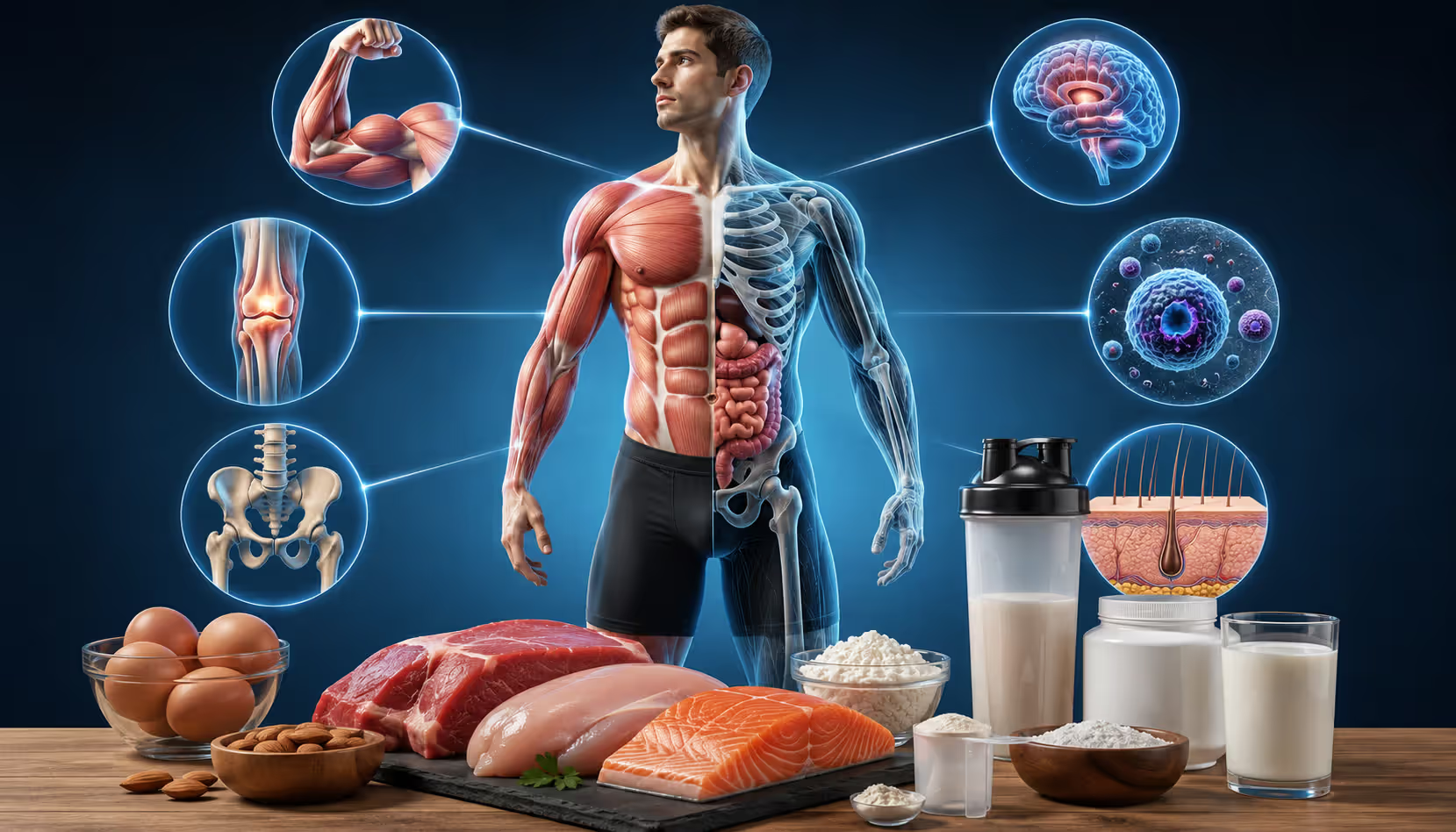
The benefits of protein extend far beyond muscle tissue development. Protein participates in virtually every biological system and process.
Muscle preservation and development represents the most recognized benefit. Muscle tissue consists primarily of protein compounds, and resistance exercise creates microscopic damage that requires repair. Sufficient protein consumption ensures your body possesses the necessary raw materials to rebuild stronger tissue.
Insufficient protein leads to gradual muscle mass loss—a phenomenon called sarcopenia that accelerates past age 30. Maintaining adequate intake slows this deterioration.
Fullness and hunger management is where protein demonstrates remarkable effectiveness. Protein consumption triggers release of satiety hormones like peptide YY and GLP-1. Simultaneously, it suppresses ghrelin production—the hormone responsible for hunger signals.
This explains why protein-rich morning meals help people consume fewer total calories throughout the day. You're not fighting constant cravings—you genuinely feel content longer.
Metabolic advantages include an elevated thermic effect of food. Your body expends approximately 20–30% of protein's calories simply digesting and processing it, compared with 5–10% for carbohydrates and 0–3% for fats. This difference compounds over time.
Protein also helps preserve metabolic rate during calorie restriction. When you reduce food intake, your body naturally decreases energy expenditure to conserve resources. Higher protein consumption partially counteracts this metabolic adaptation.
Skeletal health improves with sufficient protein consumption. Despite outdated concerns, dietary protein doesn't deplete calcium from bones. Actually, protein works synergistically with calcium to preserve bone density, becoming especially critical with advancing age.
Immune system function relies heavily on protein too. Antibodies, immune cells, and cellular signaling molecules all originate from amino acid building blocks. Prolonged inadequate protein intake compromises your immune response capacity.
High-Protein Foods to Meet Your Daily Needs
Meeting your protein grams target doesn't demand supplements or elaborate cooking. Numerous whole foods naturally contain substantial amounts.
Animal-derived sources provide complete proteins containing all nine essential amino acids:
Chicken breast: 31 grams per 3.5 ounces (100g)
Lean beef: 26 grams per 3.5 ounces
Salmon: 25 grams per 3.5 ounces
Eggs: 6 grams per large egg
Greek yogurt: 10 grams per 100g
Cottage cheese: 11 grams per 100g
Plant-derived sources represent things with a lot of protein as well, though you'll typically need to mix different sources to obtain all essential amino acids:
Lentils: 9 grams per half cup cooked
Chickpeas: 7 grams per half cup
Quinoa: 8 grams per cup cooked
Tofu: 10 grams per half cup
Edamame: 9 grams per half cup
Almonds: 6 grams per ounce
Peanut butter: 8 grams per 2 tablespoons
Meal examples that deliver 25–30 grams of protein:
Breakfast: Three-egg omelet with cheese and vegetables
Lunch: Grilled chicken salad with chickpeas and quinoa
Dinner: 5-ounce salmon fillet with roasted vegetables
Snack: Greek yogurt with a handful of almonds
The straightforward approach typically wins. You don't need unusual ingredients—just construct meals around a substantial protein source and you'll reach your targets naturally.
Common Mistakes with Protein Intake
Even people carefully monitoring their nutrition protein make these missteps.
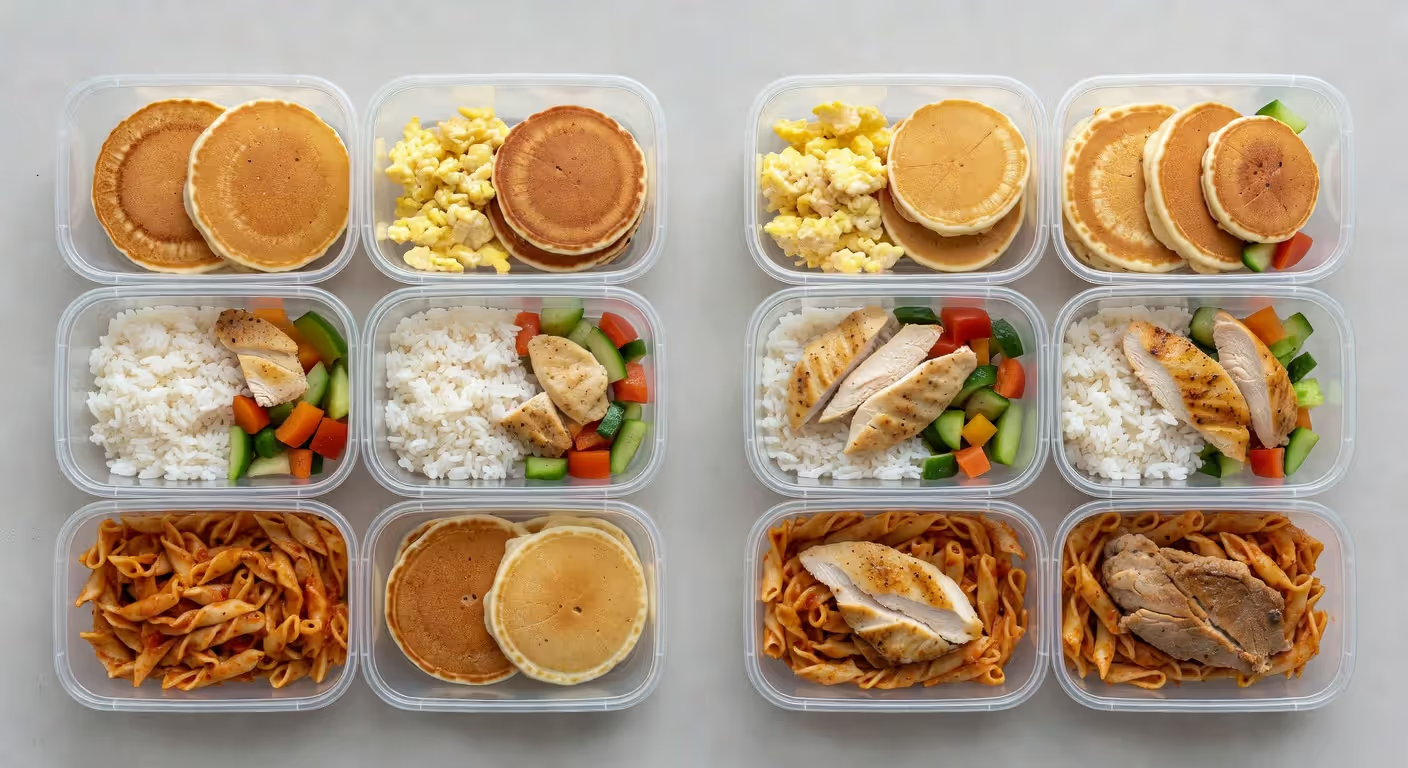
Consuming insufficient protein represents the most frequent error. Many people gravitate toward carbohydrate- and fat-dominant eating patterns without recognizing their protein falls short. This becomes especially apparent during rushed mornings—a bagel with coffee delivers virtually no protein.
The solution: Make protein the foundation of every meal. Target a minimum of 20–30 grams per main eating occasion.
Excessive consumption without purpose occurs too, though less frequently. Some fitness enthusiasts push protein to 40–45% of total calories, believing more automatically means better. Your body can only utilize a certain amount for muscle protein synthesis. Surplus protein gets converted to glucose or oxidized for energy—it doesn't automatically become additional muscle tissue.
Healthy adults eating up to 35% show no documented harm, but you're potentially displacing other essential nutrients. Nutritional balance remains important.
Suboptimal timing and meal distribution undermines potential results. Consuming 100 grams of protein in a single meal doesn't work as effectively as distributing it across three or four eating occasions. Your body can only synthesize roughly 25–40 grams of muscle protein per meal, varying with your size and training status.
Common pattern: minimal protein at breakfast, moderate amounts at lunch, enormous serving at dinner. Better approach: relatively equal quantities throughout the day.
Disregarding protein quality creates another problem. Not all protein sources deliver equivalent benefits. Animal proteins offer complete amino acid profiles with high bioavailability. Most plant proteins lack certain amino acids and show reduced digestibility.
Plant-based eaters should combine complementary sources (rice with beans, hummus with pita) or select complete options like quinoa and soy products. Don't assume 20 grams from any source produces identical physiological effects.
FAQ: Protein Intake Questions Answered
What percentage of the body is made up of protein?
Protein comprises approximately 15–20% of total bodyweight in adults. This includes muscle tissue, internal organs, skin, hair, enzymes, and antibodies. Muscle tissue alone contains roughly 20% protein by weight, with remaining mass consisting of water, glycogen, and mineral content. Individuals with greater muscle mass possess a higher overall body protein percentage. This proportion remains relatively consistent throughout adulthood unless significant muscle loss or gain occurs.
Is 30% protein too much in a diet?
No, 30% protein isn't excessive for most healthy adults. This falls within the acceptable upper range of 10–35% and is frequently utilized by active individuals, competitive athletes, and people pursuing weight reduction or muscle development goals. Scientific research demonstrates no harmful effects for healthy individuals consuming up to 35% of calories from protein sources. However, those with kidney disease or specific metabolic disorders should consult medical professionals before substantially increasing protein consumption. For typical healthy adults, 30% is both safe and often advantageous.
How many grams of protein do I need per day?
Your requirement depends on bodyweight, physical activity patterns, and personal objectives. The baseline recommendation is 0.8 grams per kilogram (0.36 grams per pound) of bodyweight—approximately 54 grams for someone weighing 150 pounds. Active individuals typically perform better with 1.2–2.0 grams per kilogram (0.54–0.9 grams per pound). For fat loss or muscle building goals, target the higher end of this spectrum. A 150-pound active person should aim for 80–135 grams daily. Use percentage-based calculations as verification: consuming 2,000 calories with a 20% protein target means 100 grams.
Can you eat too much protein?
Yes, though this rarely occurs among healthy adults eating whole food sources. Exceptionally high consumption—exceeding 35% or surpassing 2 grams per pound of bodyweight—may cause digestive discomfort, potentially strain kidneys in individuals with pre-existing renal issues, and displace other vital nutrients like dietary fiber and healthy fats. For most individuals, the primary concern is nutritional imbalance rather than toxicity. If you're obtaining 40–45% of calories from protein, you're likely under-consuming fruits, vegetables, and whole grains. Maintaining protein within the 15–35% range ensures nutritional adequacy.
Does protein percentage change with age?
Yes, protein requirements generally rise with advancing age. Adults beyond age 50 benefit from elevated intakes—approximately 1.0–1.2 grams per kilogram of bodyweight—to counteract age-related muscle deterioration. This converts to roughly 20–25% of calories for many older individuals. Muscle protein synthesis efficiency declines with age, requiring greater dietary protein to maintain equivalent muscle mass. Older adults maintaining active lifestyles may require even more, approaching 25–30%. Don't settle for minimum baseline recommendations past age 50—target higher levels to preserve strength and functional mobility.
What happens if you don't get enough protein?
Prolonged inadequate protein consumption leads to muscle tissue loss, compromised immune function, delayed wound healing, and persistent fatigue. You might observe hair thinning, fragile nails, and increased infection frequency. Severe protein deficiency causes edema (fluid accumulation) and a condition called kwashiorkor, though this remains uncommon in developed nations. More typically, people experience subtle indicators: persistent hunger, difficulty recovering from physical training, and progressive strength decline. Your body will catabolize muscle tissue to obtain amino acids required for critical functions, which accelerates sarcopenia and decreases metabolic rate over time.
Discovering your ideal protein percentage isn't about achieving perfection—it's about maintaining consistency and making adjustments based on how you feel and perform. Begin with 20% of your calories and monitor your energy levels, hunger patterns, and recovery quality. Track your intake for one or two weeks, then modify upward or downward as needed. Most individuals discover their optimal range between 20–30%, but your body provides the clearest feedback about what works best for your unique situation.