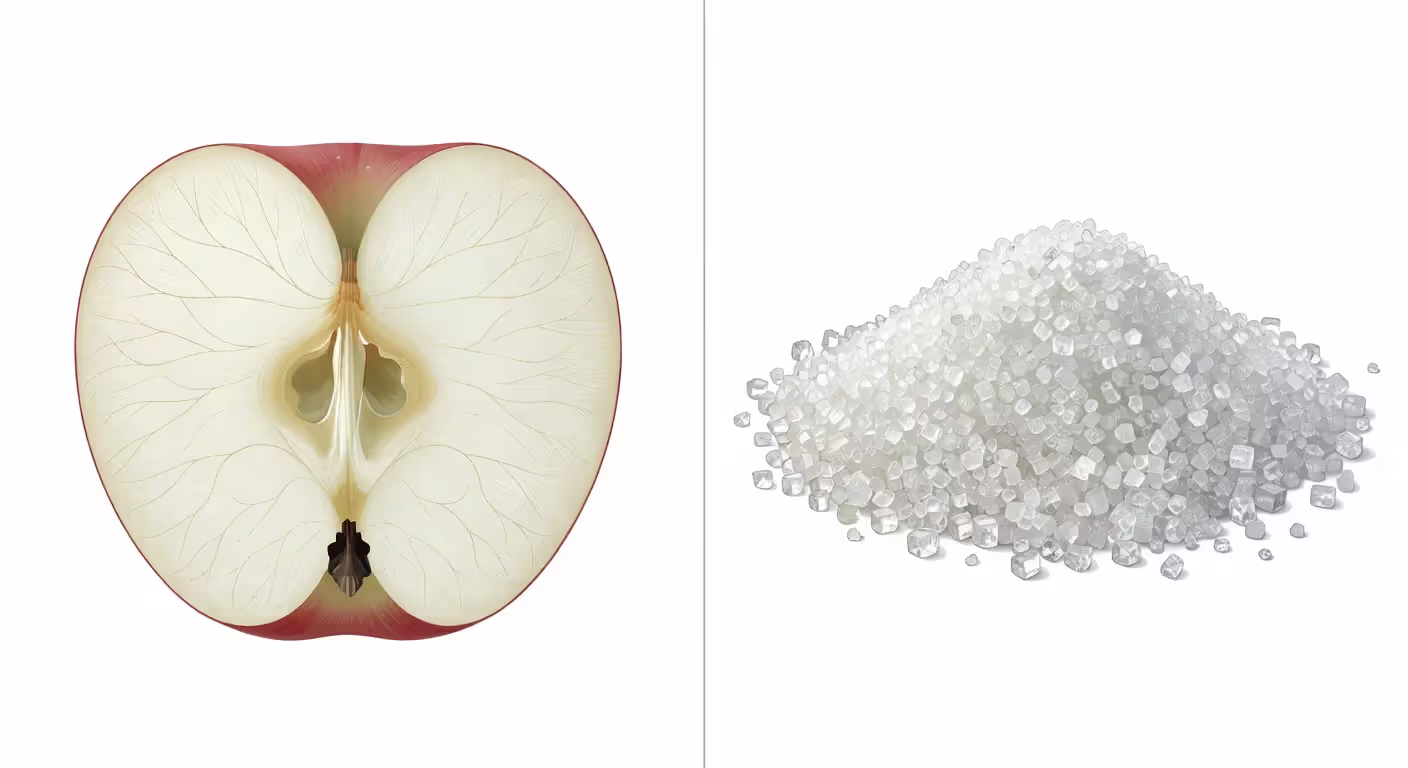
Carbohydrates get blamed for just about everything these days—weight gain, fatigue, brain fog, you name it. Walk into any gym and you'll hear someone swearing off bread forever while another person demolishes a bagel before their workout. The reality? Carbs represent one of three macronutrients your body actually needs to function, and the science behind how they work is way more interesting than the fear-mongering suggests. Your brain burns through about 120 grams of glucose every single day just to keep you thinking clearly. Athletes store hundreds of grams as backup fuel in their muscles. And here's a weird one—fiber counts as a carbohydrate even though your body can't digest it at all. Whether you're curious about the whole "is sugar actually a simple carb" question, wondering how keto and whole food approaches handle carb intake differently, or just trying to figure out why an apple affects you so differently than a candy bar, let's dig into what's actually happening.
What Are Carbohydrates and Why Do They Matter?
Carbohydrates are macronutrients—one of the big three your body needs alongside protein and fat. They're made of carbon, hydrogen, and oxygen atoms stuck together in various patterns. Once you eat them, your digestive system breaks them down into glucose, which becomes the main fuel your cells run on.
Here's why carbs are important: energy demands are real. Your brain alone uses roughly 120 grams of glucose daily. That's 420 calories just keeping your thoughts running, memories forming, and decisions happening. Athletes need even more. Muscles store carbohydrates as glycogen—basically backup fuel—which powers everything from a morning jog to heavy deadlifts.
Cut carbs too low and things get rough fast. Your thinking gets fuzzy. Energy tanks. Workouts feel impossibly hard. Sure, your body can adapt to burning other fuels after a few weeks, but glucose remains the most efficient option for both intense exercise and complex mental work.
I've watched this play out dozens of times: someone drops their carb intake to almost nothing, suffers through two miserable weeks, then decides the whole approach is terrible—when really they just depleted their most accessible energy source.
The Two Main Types of Carbohydrates
Carbohydrates exist on a spectrum based on their molecular structure. Some are tiny—just one or two sugar units. Others are massive chains containing thousands of connected molecules. This size difference controls how quickly your digestive system can process them and release energy into your bloodstream.
Nutritionists split carbs into two categories: simple and complex. Simple varieties have one or two sugar molecules hooked together. Complex versions contain three molecules or more, sometimes forming enormous chains. This structural difference determines digestion speed, how fast your blood sugar rises, and how long you feel full after eating.
Simple Carbohydrates and How Sugar Fits In
Is sugar a simple carbohydrate? Absolutely—it's basically the textbook example.
Simple carbs include monosaccharides (single sugar molecules like glucose and fructose) and disaccharides (two molecules paired up, like sucrose and lactose). Your digestive system tears through these quickly, sometimes dumping them into your bloodstream within minutes.
You'll find simple carbohydrates in:
Table sugar, honey, maple syrup
Fresh fruit with natural fructose
Milk products containing lactose
Candy, soda, packaged desserts
But here's the crucial part: not all simple carbs deserve the same treatment. The fructose in a handful of blueberries comes packaged with fiber, vitamins, minerals, and antioxidants that slow digestion and provide actual nutrition. Meanwhile, the high-fructose corn syrup in a soft drink gives you calories and literally nothing else.
Natural sugars versus added sugars—that's the real distinction. Added sugars are the refined sweeteners manufacturers dump into processed foods. Americans consume about 77 grams of added sugar daily, which is 200-300% above recommended limits depending on whether you're male or female.
Complex Carbohydrates and Their Benefits
Complex carbs are built from long molecular chains that take substantially longer to break down. This means your blood sugar rises gradually and you get steady energy for hours instead of minutes.
Starches and fiber both fall into the complex carbohydrate category. Your digestive enzymes can break starches down into glucose, but fiber passes through your gut mostly intact—which seems weird until you understand what it's doing in there.
You'll get complex carbohydrates from:
Whole grains like steel-cut oats, brown rice, quinoa
Legumes including lentils, chickpeas, black beans
Starchy vegetables like sweet potatoes, butternut squash, corn
Non-starchy vegetables including broccoli, kale, peppers
The benefits stack up fast. Foods rich in complex carbs typically deliver tons of vitamins, minerals, and protective plant compounds. They take longer to digest, so you stay full between meals. Blood sugar climbs steadily instead of spiking hard. The fiber feeds beneficial gut bacteria, which influences everything from immune function to mood.
Common misconception: assuming "complex" automatically means "healthy." White bread technically qualifies as complex, but industrial processing strips out fiber and nutrients, leaving something that acts more like sugar than whole grain in your body.
Surprising Facts About How Carbs Work in Your Body
The relationship between your body and carbohydrates involves some genuinely fascinating mechanisms. These fun facts about carbohydrates show just how sophisticated this whole system really is.
Your brain runs almost exclusively on glucose. Yeah, it can use ketones during extended carb restriction, but glucose is what it prefers. That 120-gram daily requirement isn't optional if you want peak mental performance. Your brain makes up just 2% of your body weight but burns through 20% of your total energy.
Your muscles stockpile carbs as glycogen. You've got storage space for roughly 400-500 grams of glycogen in muscle tissue, plus another 100 grams sitting in your liver. That's around 2,000 calories of ready-to-go fuel. Marathon runners doing "carb loading" before races are basically maxing out these storage tanks.
Fiber is a carbohydrate you can't actually digest. Humans lack the enzymes needed to break fiber molecules apart. Instead, it feeds your gut bacteria, adds bulk to your stool, and slows down how fast you absorb other nutrients. That's why high-fiber foods help control blood sugar despite containing carbs.
Eating carbs affects your serotonin production. When you eat carbohydrates, insulin gets released, which helps shuttle amino acids into cells—except tryptophan. This creates a relative increase in tryptophan reaching your brain, where it converts to serotonin, the "feel-good" neurotransmitter. That's the biological basis for stress-eating carbs.
Carbs don't always provide 4 calories per gram. Textbooks cite this number, but fiber contributes zero usable calories since you can't digest it. Sugar alcohols only give you about 2 calories per gram. These variations matter when you're calculating actual energy content.
Your liver can manufacture glucose from scratch. Through a process called gluconeogenesis, your liver makes glucose from amino acids and glycerol. This metabolic pathway lets you survive on very low carb intake—though it's metabolically expensive and doesn't work equally well for everyone.
Carb needs vary wildly between people. Someone sitting at a desk all day might thrive on 100 grams daily. A cyclist training for hours could need 400-600 grams. Your genetics, activity level, metabolic health, and goals all influence what's optimal for you.
Carbohydrates in Popular Diets
Different eating philosophies treat carbohydrates completely differently. Understanding the reasoning behind various approaches helps you make informed choices instead of just following trends blindly.
Low Carb Whole Food Diets
A low carb whole food diet means cutting out processed carb sources while keeping the nutrient-dense stuff. People following this approach typically aim for 50-150 grams of carbs daily, prioritizing non-starchy vegetables, select fruits, and small amounts of whole grains or legumes.
The philosophy is straightforward: ditch nutritionally empty foods while keeping what actually benefits you. Refined bread, sugary cereals, and packaged snacks get tossed. Sweet potatoes, berries, and leafy greens stay on the menu.
This works well for people wanting better blood sugar control without going full keto. You're eating enough carbs to support moderate exercise and clear thinking while still getting benefits like reduced cravings and stable energy throughout the day.
The "whole food" part matters enormously. A low-carb diet built mostly from processed meats and cheese won't give you the same results as one centered on vegetables, quality proteins, and healthy fats. Nutrient density counts as much as carb quantity.
Ketogenic Nutrition and Carb Restriction
Ketogenic nutrition takes carb restriction to the extreme, usually limiting intake to 20-50 grams daily—sometimes even lower. At these levels, your metabolism shifts away from burning glucose as primary fuel toward producing and using ketones, which your liver makes from fatty acids.
This metabolic state, called ketosis, has legitimate medical applications. Doctors have used it since the 1920s for treating epilepsy, and emerging research suggests possible benefits for certain neurological conditions. Many people also try keto for weight loss, though the mechanism is more about appetite suppression and eating fewer calories than any metabolic magic.
There are real trade-offs. Athletic performance often suffers, especially for high-intensity activities that depend on glycogen availability. The adaptation phase—the dreaded "keto flu"—can be brutal, with fatigue, headaches, and irritability lasting anywhere from days to weeks. Maintaining such strict carb limits requires careful planning and serious discipline.
Ketogenic nutrition produces excellent results for some people. Others feel terrible and perform worse. It's a metabolic tool with specific uses and limitations, not a universal solution or moral imperative.
Common Myths and Misconceptions About Carbs
Several persistent myths about carbohydrates keep circulating despite contradicting solid scientific evidence. Let's tackle these head-on.
Myth: Carbs make you fat. Reality: Eating more calories than you burn makes you gain fat, period. Doesn't matter if those calories come from carbs, protein, or fat. Carbohydrates don't have special fat-storing powers. The actual issue is that many carb-rich foods are calorie-dense, easy to overeat, and don't fill you up much. A plain baked potato with modest toppings won't make you gain weight. An entire bag of chips? That's a different story.
Myth: You need to eliminate carbs to lose weight. Reality: Low-carb approaches can help you lose weight, but so can low-fat diets, Mediterranean eating, and plenty of other strategies. The best diet is whichever one you can actually stick to long-term. If you love bread and pasta, forcing yourself into ketosis probably isn't sustainable. Plenty of people successfully lose weight eating 200+ grams of carbs daily.
Myth: Every carbohydrate source is bad for you. Reality: This claim falls apart immediately. Vegetables are mostly carbs. Fruit is predominantly carbs. Beans and lentils are carb-heavy. These foods deliver fiber, vitamins, minerals, and beneficial plant compounds linked to lower chronic disease risk. Lumping broccoli together with donuts just because both contain carbohydrates is nutritionally absurd.
Myth: Eating carbs at night causes weight gain. Reality: Your metabolism doesn't watch the clock. Total daily calorie intake matters way more than meal timing for body composition. Some research even suggests evening carb consumption might improve sleep quality through increased serotonin production. The real problem is that late-night eating often involves mindless snacking on calorie-dense junk while watching TV.
Myth: Natural sugars get a free pass metabolically. Reality: Your body processes the fructose in honey exactly the same as fructose in table sugar. The meaningful difference is the delivery package—whole fruit includes fiber and micronutrients that moderate the metabolic impact, but the sugar molecule itself isn't fundamentally different. "Natural" doesn't mean you can eat unlimited amounts without consequences.
Long-lasting energy release, steady blood sugar, staying full longer, nutrient delivery
Carbohydrates are not optional nutrients—they're the body's preferred energy source for good reason. The key is choosing quality sources that provide fiber, vitamins, and minerals along with the energy. When patients ask if they should cut carbs, I always redirect the conversation to cutting processed foods instead. That distinction changes everything.
FAQ: Carbohydrate Questions Answered
Are all carbohydrates bad for weight loss?
Not even close. Carbs themselves don't prevent weight loss—eating too many total calories does. Tons of people successfully lose weight while eating 150-250 grams of carbs daily, especially when those carbs come from whole foods like vegetables, fruit, and whole grains. The challenge is that many carb-rich foods pack a lot of calories and are ridiculously easy to overeat. A diet built around fiber-rich complex carbs can actually help weight loss by keeping you full and satisfied on fewer calories.
How much carbohydrate should I consume each day?
Depends completely on your activity level, metabolic health, and what you're trying to achieve. Sedentary folks often do fine with 100-150 grams daily. Moderately active people usually need 150-250 grams. Endurance athletes frequently require 300-600 grams to support their training volume. People with insulin resistance might do better at lower ranges, while metabolically healthy athletes can handle much higher amounts effectively. There's no one-size-fits-all answer—start with moderate intake and adjust based on how you perform and feel.
What distinguishes net carbs from total carbs?
Total carbs include everything: starches, sugars, and fiber all counted together. Net carbs subtract fiber (and sometimes sugar alcohols) from the total, since these components don't significantly impact blood sugar or provide usable calories. If a food has 20 grams total carbs and 8 grams fiber, the net carb value is 12 grams. This calculation is mainly relevant for people following ketogenic diets who need to stay under strict carb limits. For most people, tracking total carbs and fiber separately gives you more useful information.
Can you build muscle on a low-carb diet?
Yes, but it's not ideal for most people. Protein is the critical nutrient for building muscle, and you can definitely gain muscle eating 50-100 grams of carbs daily as long as you're getting enough protein and total calories. That said, carbs help by refilling glycogen stores, supporting training intensity, and stimulating insulin release that helps deliver nutrients to muscle tissue. Most research shows better strength gains and muscle growth with moderate to higher carb intake, particularly for people doing intense resistance training.
Do carbs cause inflammation?
Refined carbs and added sugars can promote inflammation, especially when you eat too much of them. They cause rapid spikes in blood sugar and insulin, which can trigger inflammatory pathways over time. But complex carbs from whole food sources—vegetables, fruit, legumes, whole grains—actually have anti-inflammatory effects thanks to their fiber, antioxidants, and phytonutrients. Carb type and quality matter way more than the macronutrient itself. Blaming all carbs for inflammation is like blaming all fats because trans fats are harmful.
What are the healthiest sources of carbohydrates?
The best carb sources provide energy plus fiber, vitamins, minerals, and beneficial plant compounds. Top choices include non-starchy vegetables (broccoli, spinach, bell peppers), starchy vegetables (sweet potatoes, winter squash), legumes (beans, lentils), whole grains (steel-cut oats, quinoa, brown rice), and fruit (especially berries). These foods give you sustained energy without wild blood sugar swings while delivering nutrients your body genuinely needs. Simple guideline: if it looks like something that grew rather than something manufactured in a factory, you're probably making a good choice.
Carbohydrates don't deserve their villain reputation. They're essential for energy production, critical for brain function, and can absolutely fit into a healthy eating pattern—even when you're trying to lose weight. Carb quality matters way more than quantity, and your individual needs depend on factors like activity level and metabolic health. Instead of fearing carbs or cutting them out completely, focus on choosing whole food sources that provide nutrition alongside energy. That approach actually works long-term.