Is Creatine a Natural Supplement or Synthetic Product?
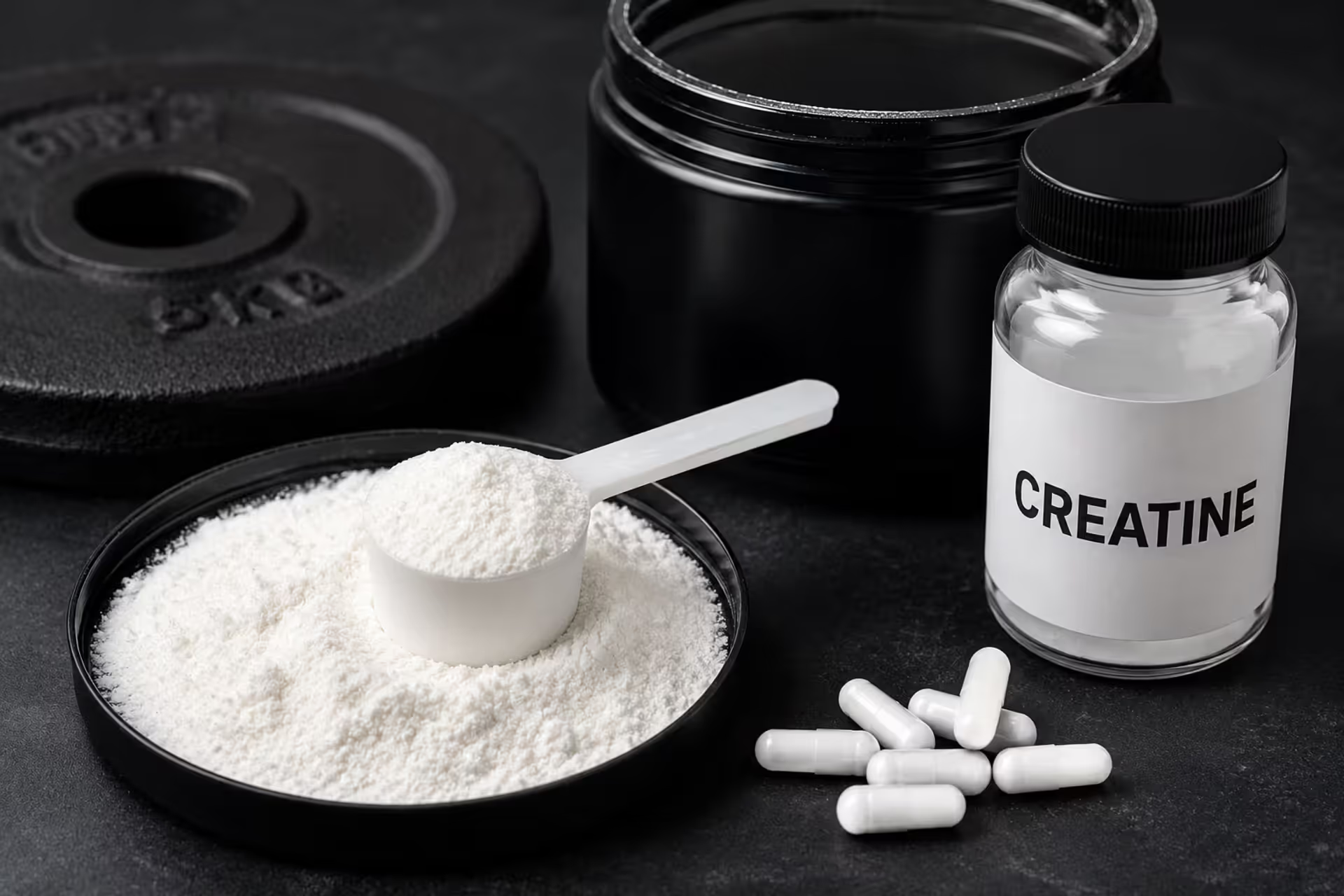
Walk into any nutrition store and you'll find creatine stacked on shelves alongside protein powders and pre-workouts. Here's what makes it different: your body already makes this stuff. You'll also find it in a steak dinner. Yet the tub you're holding? That came from a lab. So which is it—natural or synthetic? Truth is, it's both, and that's exactly what confuses people. Every day, your liver and kidneys churn out about a gram or two of creatine without you thinking about it. Eat some chicken or fish, and you're adding more to your system. But that white powder in supplement form gets manufactured through a chemical process, even though it's identical on a molecular level to what's already sitting in your muscles. Understanding where creatine comes from—and what happens when you add more—helps you decide if it belongs in your routine.
What Is Creatine and How Does It Work in Your Body
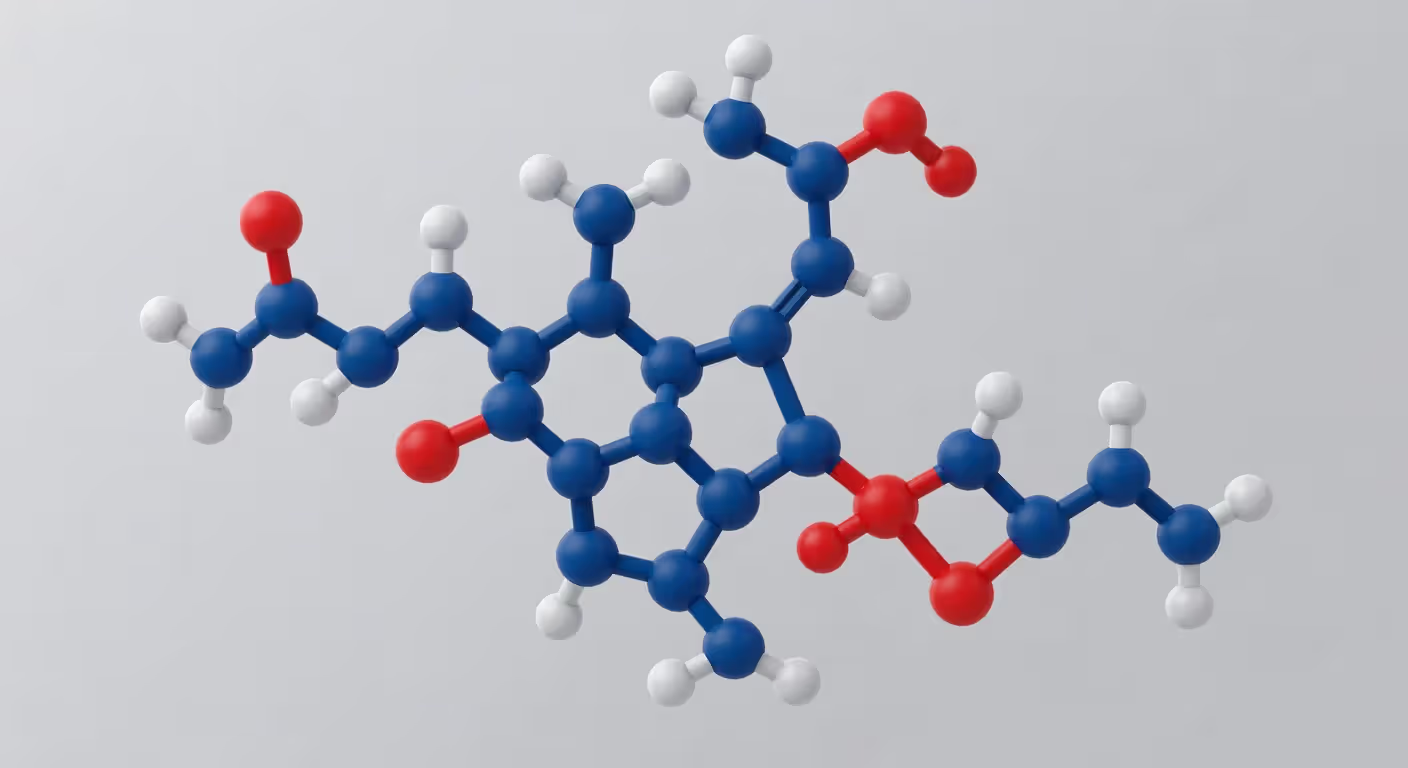
Your body builds creatine from three building blocks: arginine, glycine, and methionine. These amino acids get assembled primarily in your liver and kidneys, then shipped through your bloodstream straight to your muscles, where about 95% of your creatine supply lives.
Once it reaches muscle tissue, creatine latches onto phosphate molecules. This creates phosphocreatine, which matters a lot when you need quick bursts of power. Think about what happens during a heavy deadlift or an all-out sprint. Your muscles burn through ATP—adenosine triphosphate—which is basically how your cells store energy. ATP releases that energy by dropping one of its phosphate groups, turning into ADP (adenosine diphosphate).
That's where phosphocreatine steps in. It hands its phosphate back to ADP, rebuilding ATP almost instantly.
This system works great for about 10 seconds of maximum effort. After that, your phosphocreatine tank starts running dry, and your body switches to other fuel sources that work slower but last longer.
Most people walk around with roughly 120 grams of creatine stored in their muscles. If you eat meat regularly, you'll typically have more than someone who doesn't. Your body makes enough for basic survival, but that doesn't mean you're maxed out for performance purposes.
Spanish speakers call it "creatina"—same molecule, different language. The chemistry doesn't change based on what you call it.
Natural Sources of Creatine in Food
You don't need pills or powders to get creatine. Animal products contain varying amounts, with red meat and certain fish leading the pack.
Here's what you'll actually find in common foods:
Food Source
Serving Size
Creatine Content (grams)
Beef (cooked)
3.5 oz (100g)
0.9–1.4
Salmon (cooked)
3.5 oz (100g)
0.9–1.1
Tuna (cooked)
3.5 oz (100g)
0.8–1.0
Pork (cooked)
3.5 oz (100g)
0.7–0.9
Chicken (cooked)
3.5 oz (100g)
0.4–0.5
Notice the word "cooked" in that table? Heat breaks down creatine molecules, converting them into creatinine—basically a waste product your kidneys filter out. Rare or medium-rare meat preserves more creatine, though obviously you shouldn't undercook food just to save a few milligrams.
Someone eating a standard American diet with meat at most meals gets maybe 1–2 grams of creatine daily from food. That maintains baseline levels but falls way short of the 3–5 grams research shows will fully saturate your muscles and boost performance.
Plant foods? Basically zero creatine. Vegetarians and vegans rely entirely on what their bodies produce, which is why they often see bigger improvements when they start supplementing—they're starting from a lower baseline.
How Creatine Supplements Are Made
Browse the supplement aisle and you'll see dozens of creatine products. Most contain creatine monohydrate, which has the most research behind it.
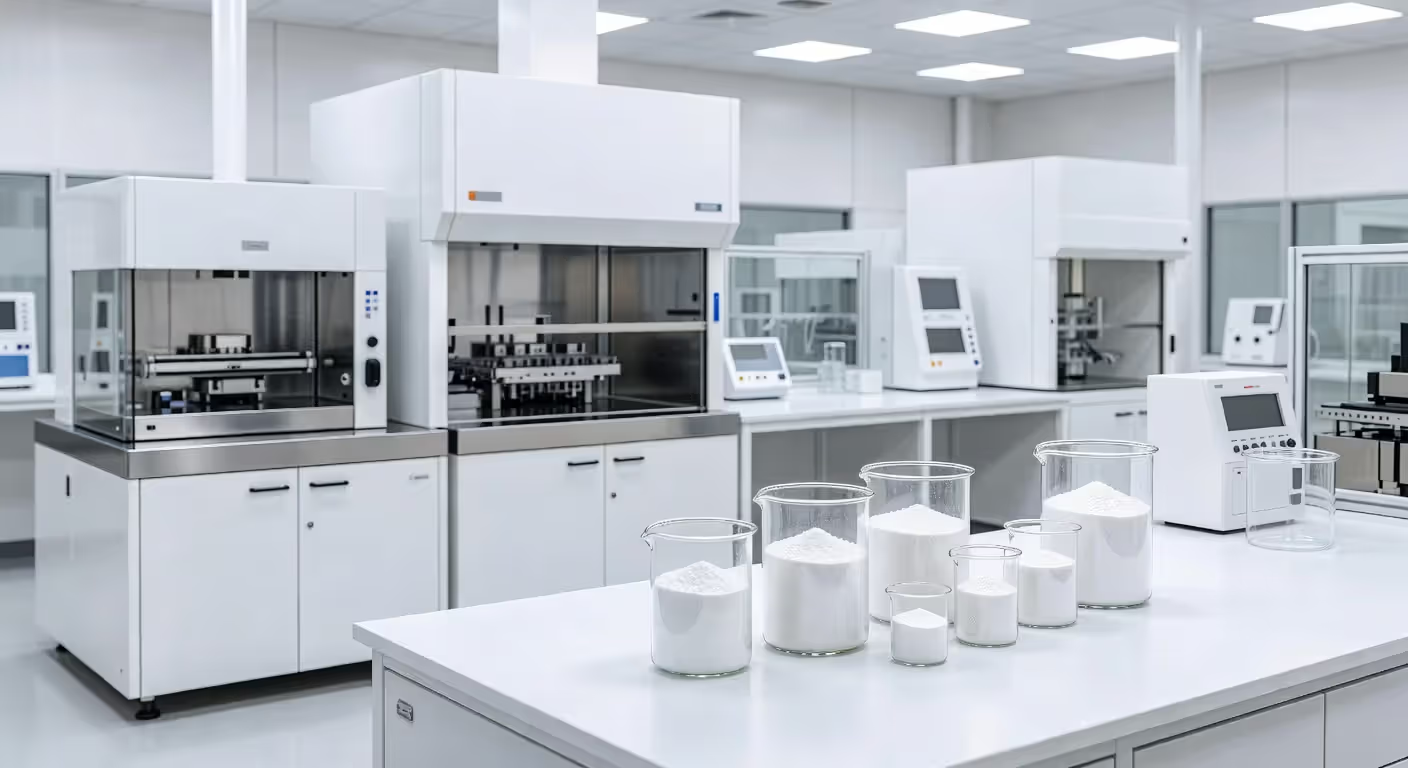
Manufacturers don't grind up steaks to make these supplements. Creating creatine monohydrate involves chemical synthesis in controlled lab settings. Companies combine sarcosinate (which comes from glycine) with cyanamide under specific conditions. This reaction produces creatine, which then gets purified, crystallized, and ground into powder.
This happens in pharmaceutical facilities, not slaughterhouses. Technically speaking, supplement creatine is synthetic—made in a lab rather than extracted from nature.
Here's the interesting part: the end product is molecularly identical to creatine found in your body and in food. Your muscles can't tell the difference between creatine from a ribeye and creatine from a scoop of powder. Same molecule, different origin story.
Quality matters more than source. Reputable manufacturers follow Good Manufacturing Practices (GMP) and test for contaminants. High-quality creatine monohydrate supplements contain just one ingredient: pure creatine monohydrate. No fillers, no additives, nothing extra.
Some brands use Creapure®, a trademarked form made in Germany that undergoes rigorous purity testing. It costs a bit more, but you're paying for quality control and peace of mind.
Creatine Monohydrate vs Other Supplement Forms
The supplement industry loves creating new versions of popular products. You'll find creatine ethyl ester, buffered creatine, creatine hydrochloride, and plenty more.
Creatine mono hydrate remains the gold standard. It's been studied in over 1,000 research papers since the early 1990s. We know it works, we know it's safe, and it's cheap—often less than 10 cents per serving.
Other forms claim better absorption or less bloating. Research doesn't back this up. A 2021 review in the Journal of the International Society of Sports Nutrition found no evidence that alternative forms outperform standard creatine monohydrate for muscle uptake or performance benefits.
Creatine hydrochloride (HCl) dissolves better in water, which some people prefer. You can take smaller doses because it's more concentrated. But gram-for-gram, it doesn't work better than monohydrate.
Buffered creatine (Kre-Alkaline) supposedly reduces conversion to creatinine in your stomach. Studies show this doesn't translate to better results in actual athletes doing actual training.
The most common mistake? Overthinking which type to buy. Unless you have specific digestive issues with monohydrate, there's no good reason to pay extra for fancy versions.
Does Creatine Help Build Muscle Naturally
This is why creatine became famous. Unlike testosterone or growth hormone, it doesn't directly build muscle tissue. Instead, it increases your ability to do the work that builds muscle.
Taking creatine to build muscle increases your phosphocreatine stores. This lets you squeeze out extra reps on heavy sets, recover faster between sprint intervals, or maintain power output during intense training.
Those extra reps add up. Studies consistently show that people taking creatine supplements gain more muscle mass during resistance training compared to placebo groups—typically 2–4 additional pounds over 8–12 weeks.
A 2023 meta-analysis of 150 studies found that creatine supplementation combined with resistance training increased lean body mass by an average of 1.4 kg beyond training alone. The effect was strongest in younger subjects and those doing high-intensity workouts.
Two common approaches exist for dosing. Loading phase: take 20 grams daily (split into 4 doses) for 5–7 days to quickly saturate your muscles. Maintenance phase: drop to 3–5 grams daily to keep stores elevated.
Or skip loading entirely and just take 3–5 grams daily from day one. You'll reach the same saturation point in 3–4 weeks. Some people prefer this to avoid the temporary water weight that comes with loading.
Creatine is one of the most effective and safe ergogenic supplements available. It's naturally found in the diet, particularly in meat and fish, and the body produces it endogenously. Supplementation simply elevates muscle creatine stores above normal levels, which enhances the capacity to perform high-intensity exercise.
Both natural and enhanced athletes benefit from creatine, across all ages and both sexes. Women sometimes avoid it because they're worried about bloating, but research shows they get similar benefits to men—they just need slightly lower doses based on having less muscle mass.
Safety and Side Effects of Creatine Supplements
Creatine ranks among the most thoroughly studied supplements available. The safety record is excellent.
Short-term use (up to 30 grams daily for 5 years) shows no harmful effects on kidney function, liver health, or cardiovascular markers in healthy people. Long-term studies following athletes who've supplemented for 10+ years reach the same conclusion: safe when used properly.
The most common "side effect" isn't really a problem—it's water retention in muscle tissue. Creatine pulls water into muscle cells, which can add 2–4 pounds during the first week. Some people freak out about this, but it's not fat gain or bloating in the traditional sense. Your muscles are literally holding more water, which is part of how creatine works.
Some people report stomach cramping or diarrhea, usually during loading phases with high doses. Taking smaller amounts with meals typically fixes this. Micronized creatine dissolves better and may cause fewer digestive issues.
The kidney damage myth won't die despite evidence to the contrary. Creatine supplementation does increase creatinine levels—a breakdown product of creatine metabolism. Doctors sometimes use creatinine as a marker of kidney function, so elevated levels might look concerning on a blood test. But in healthy people taking creatine, higher creatinine doesn't mean kidney damage. It just means you're metabolizing more creatine.
That said, people with existing kidney disease should talk to their doctor before supplementing. Same goes if you're taking medications that affect kidney function.
Hydration becomes more important. Creatine increases your muscles' water needs, so drink more water—aim for at least 8–10 glasses daily while supplementing.
Who should avoid it? People with kidney disease, anyone under 18 (not enough long-term safety data for developing bodies), and anyone whose doctor has told them to limit protein or amino acids.
Frequently Asked Questions About Creatine
Is creatine naturally found in the human body?
Yes. Your liver, kidneys, and pancreas team up to produce around 1–2 grams every day. Your body builds it from three amino acids—arginine, glycine, and methionine—that come from protein in your diet. About 95% ends up in your skeletal muscles, where it helps produce energy during intense exercise. The remaining 5% goes to your brain, kidneys, and liver for various metabolic jobs.
Can vegetarians get enough creatine without supplements?
People who don't eat animal products get zero creatine from their diet since only animal tissues contain it. They rely completely on what their bodies produce—usually enough for basic health but potentially not enough for optimal athletic performance. Research shows vegetarians typically have lower muscle creatine levels than meat-eaters, which explains why they often see bigger improvements when they start supplementing. A vegetarian athlete would likely benefit more from creatine supplements than someone who regularly eats meat.
Is creatine monohydrate considered a natural supplement?
Depends on how you define "natural." Supplement creatine is made in a lab through chemical synthesis rather than extracted from food, so technically it's synthetic. But it's molecularly identical to the creatine your body makes and the creatine in food. Your muscles can't tell the difference between sources. If "natural" means "chemically identical to what occurs in nature," then yes. If it means "extracted directly from natural sources," then no. Functionally, it works exactly like the creatine already in your body.
What's the right creatine dose for building muscle?
The standard effective dose is 3–5 grams daily for maintenance. You can optionally do a loading phase of 20 grams daily (split into 4 separate doses) for 5–7 days to saturate your muscles faster, then drop to maintenance. Both approaches work equally well long-term—loading just speeds things up. The muscle-building benefits come from being able to train harder and recover better, not from creatine directly building tissue. You still need consistent resistance training and adequate protein for best results.
Are creatine supplements safe for long-term use?
Studies tracking athletes who've supplemented with creatine for over a decade show no adverse health effects. Research supports daily doses up to 30 grams for periods exceeding 5 years without harm to kidney, liver, or heart health in healthy individuals. Sports nutrition experts widely consider creatine one of the safest and most effective supplements available. People with pre-existing kidney conditions or those taking medications affecting kidney function should check with their doctor first. Otherwise, long-term use appears safe for healthy adults.
Does cooking destroy creatine in food?
Heat breaks down creatine molecules. When you cook meat at high temperatures, some of the creatine converts to creatinine, a waste product that gets filtered out in urine. Longer cooking times and higher temperatures mean more creatine loss. Rare or medium-rare cooking preserves more creatine than well-done preparations. That said, food safety matters more than creatine preservation—cook meat to safe temperatures. Getting enough creatine from food alone would require eating undercooked meat in large quantities, which isn't practical or safe. This is why supplements make more sense for athletes trying to optimize creatine levels.
So is creatine a natural supplement? It's both natural and synthetic at the same time. Your body makes it, food contains it, and supplements provide a lab-made version that's molecularly identical to both. Whether it's "natural" or "synthetic" matters less than whether it works and whether it's safe—and creatine excels at both. If you're training hard and want to maximize performance and muscle gains, taking 3–5 grams daily will probably help you more than any other legal supplement you can buy.