Your body produces co-enzyme Q10 on its own—every single cell depends on it for energy generation. The problem? Natural synthesis reaches maximum output in your early twenties, then begins a long, steady descent. By middle age, you're manufacturing substantially less. Once you hit sixty, cellular concentrations can fall to half of what they were decades earlier.
This decline explains why CoQ10 has become a focal point in cardiovascular research and longevity studies. The molecule serves an essential function in mitochondria—those microscopic powerhouses that keep your cells running. When CoQ10 levels drop, mitochondrial efficiency follows.
The benefits extend beyond cellular fuel production. CoQ10 functions as a robust antioxidant, safeguards cardiac tissue, and appears to counteract adverse effects from specific prescription drugs. The real question isn't about its importance—that's well established. What matters is whether your current levels are adequate, and if adding a supplement would serve your health goals.
What Is Co-Enzyme Q10 and How Does It Work?
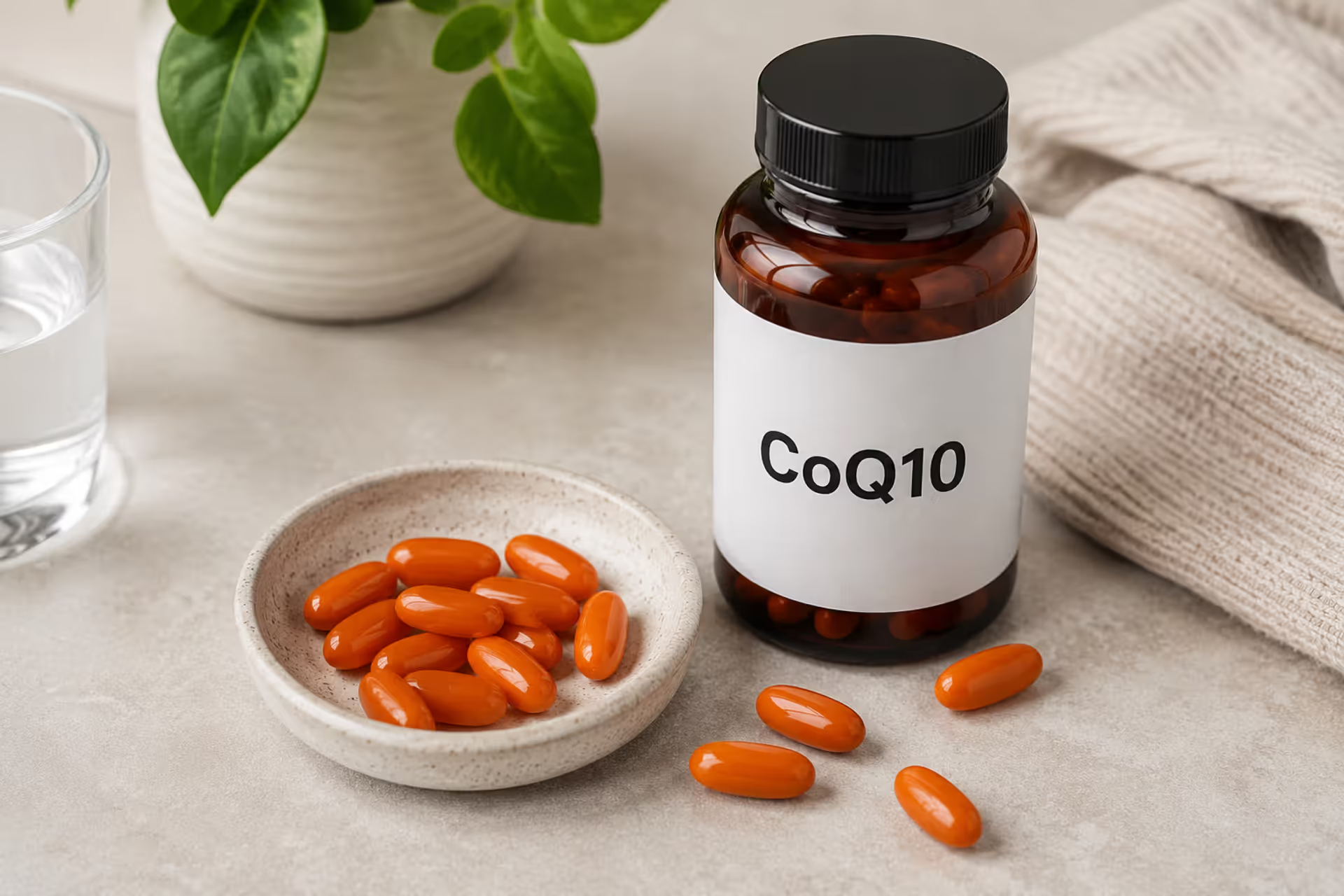
Coenzyme Q10—commonly abbreviated as CoQ10—is a lipid-soluble molecule present throughout your body's tissues. You'll find the densest concentrations in organs with the highest energy demands: cardiac muscle, liver tissue, kidneys, and skeletal muscles.
What is CoQ10's actual job? It operates as an essential component in the electron transport chain, the biochemical sequence that transforms nutrients into ATP—your cells' primary energy currency. Picture it as the ignition system that keeps your cellular machinery firing.
This compound appears in two primary forms: ubiquinone and ubiquinol. Ubiquinone represents the oxidized state, which your body then transforms into ubiquinol, the biologically active antioxidant version. Both deliver results, though they vary in how readily your body can use them and what they cost. We'll examine that distinction in detail later.
Your system manufactures CoQ10 from tyrosine through an elaborate seventeen-step synthesis requiring at least eight different vitamins. Production diminishes with advancing years, specific pharmaceuticals (statins being the primary culprit), and medical conditions including cardiovascular disease and diabetes.
Dietary sources encompass organ meats, oily fish varieties, and whole grain products. Yet you'd need to consume approximately sixteen ounces of sardines every single day to match what a typical supplement provides. That's simply not feasible for the average person.
The most common assumption I encounter is that regular meals supply sufficient amounts. They almost never do.
Health Benefits of CoQ10
Research into CoQ10 benefits concentrates predominantly on heart and vascular health. Cardiac muscle operates continuously without rest, creating enormous energy requirements. CoQ10 levels in heart tissue rank among your body's highest.
Clinical investigations demonstrate that supplementation can alleviate symptoms in congestive heart failure patients. A 2014 multicenter investigation revealed that subjects consuming 100 mg three times daily experienced significantly fewer cardiovascular incidents across a two-year period versus those receiving placebo.
Hypertension represents another therapeutic area showing promise. Systematic reviews indicate reductions in systolic readings up to 17 mm Hg and diastolic measurements up to 10 mm Hg among hypertensive individuals. The timeline for these changes typically spans four to twelve weeks.
Outside cardiovascular applications, CoQ10's antioxidant capacity helps neutralize reactive oxygen species. This mechanism matters because oxidative damage accelerates aging processes, drives inflammation, and contributes to chronic illness development. Ubiquinol specifically shields membrane lipids from oxidative injury.
Migraine patients may experience meaningful relief. Evidence suggests CoQ10 decreases both headache frequency and intensity, presumably by enhancing mitochondrial performance in neural tissue.
Reproductive health shows benefits across both sexes. Male supplementation improves sperm concentration and movement. Female patients may see enhanced oocyte quality, particularly valuable for women beyond age thirty-five attempting conception.
Athletic performance receives a moderate boost as well. Some competitors supplement with CoQ10 to minimize oxidative stress during vigorous training cycles, though individual responses differ considerably.
A frequent error: anticipating rapid changes. CoQ10 accumulates progressively in tissues. Overnight transformations don't happen.
Who Should Consider Taking CoQ10 Supplements?
Age by itself provides reasonable justification. Past forty, endogenous production drops sufficiently that supplementation can restore concentrations closer to youthful levels.
Anyone taking statins should give this serious consideration. These cholesterol medications block the identical metabolic pathway your body uses for both cholesterol synthesis and CoQ10 production. This explains why muscular discomfort and exhaustion rank among the most frequent statin complaints. Adding a coenzyme Q10 supplement can mitigate these problems.
For patients on statin therapy, I routinely recommend CoQ10 supplementation at 100 to 200 mg daily. The evidence supporting its role in reducing muscle-related side effects is compelling, and the safety profile is excellent. It's one of the few supplements I consider nearly essential for this population.
Individuals managing cardiac conditions—particularly heart failure, rhythm disturbances, or previous myocardial infarction—frequently present with diminished CoQ10 concentrations. Supplementation may bolster heart function and enhance daily quality of life.
Chronic fatigue syndrome and fibromyalgia patients occasionally report symptom improvement, although scientific evidence remains inconsistent. The hypothesis centers on mitochondrial dysfunction contributing to these syndromes.
Deficiency indicators aren't always straightforward. Persistent tiredness, muscular weakness, and prolonged exercise recovery can all suggest low CoQ10, but these symptoms overlap with numerous other conditions. Serum testing can quantify levels, though physicians rarely order it routinely.
Anyone over fifty, currently using statins, or managing heart disease should discuss supplementation with their healthcare provider.
CoQ10 Dosage and How to Take It
CoQ10 dosage spans a wide spectrum based on your objectives. General health maintenance usually involves 100 to 200 mg per day. Therapeutic applications for specific conditions range from 200 to 600 mg, frequently divided across multiple doses.
The following table organizes recommendations by intended use:
Health Objective
Standard Daily Amount
Key Considerations
Baseline wellness
100–200 mg
Maintains foundational energy metabolism and antioxidant defense
Cardiovascular support / Heart failure
200–400 mg
Typically split into multiple daily doses; upper range for moderate to advanced disease
Statin medication users
100–200 mg
Counteracts CoQ10 reduction caused by statin therapy
Migraine prophylaxis
300–400 mg
Requires 8–12 weeks before frequency reduction becomes apparent
Reproductive enhancement
200–600 mg
Clinical research protocols frequently employ higher doses for both partners
Hypertension management
200–300 mg
Measurable changes usually appear after 2–3 months
Dosage Recommendations by Health Goal
Heart failure protocols in research settings commonly employ 300 mg daily as baseline. Some cardiologists recommend higher amounts—approaching 600 mg—for advanced cases.
Migraine prophylaxis typically begins at 300 mg. Results don't appear quickly. Plan on waiting two to three months before headache patterns shift.
Fertility enhancement regimens frequently use 200 to 600 mg, adjusted for age and baseline gamete quality. Women past thirty-five attempting pregnancy often benefit from upper-range dosing.
Statin-associated muscle symptoms respond favorably to 100 to 200 mg. Excessive amounts aren't necessary for this application.
Best Practices for Absorption
CoQ10 requires dietary fat for optimal uptake. Consuming it alongside meals containing lipids significantly improves bioavailability. A serving of nuts, half an avocado, or extra virgin olive oil accomplishes this effectively.
Dividing your total daily amount enhances absorption efficiency. Rather than taking 300 mg once, consider 100 mg three times daily with meals. Your digestive system can only process a finite quantity at any single time.
Ubiquinol demonstrates superior bioavailability compared to ubiquinone, particularly for individuals past fifty or those with digestive challenges. The price premium exists, but you may achieve results with lower doses.
Regular timing improves outcomes. Establish a consistent schedule—same time daily. Morning administration with breakfast suits most people, though some prefer evening dosing for muscle recovery applications.
Late-night intake deserves caution. Occasional users report mild sleep disruption, likely attributable to increased energy production.
Choosing a Quality Coenzyme Q10 Supplement
Supplement quality varies dramatically across brands. The chemical form, production methods, and additional ingredients all influence how much actually enters your bloodstream and reaches target tissues.
Your first decision involves ubiquinone versus ubiquinol. This comparison clarifies the distinction:
Characteristic
Ubiquinone
Ubiquinol
Chemical state
Oxidized version requiring metabolic conversion
Reduced form ready for immediate biological use
Absorption efficiency
Moderate; depends on individual conversion capacity
Superior; bypasses conversion step entirely
Ideal candidates
Adults under forty with robust metabolic function
Individuals over fifty, those with absorption challenges, or therapeutic applications
Price point
More economical option
Premium pricing, typically 20–40% higher
Chemical stability
Maintains potency well in capsule formulations
Requires specialized encapsulation to prevent degradation
Effective dose
May require higher amounts to achieve equivalent tissue levels
Lower quantities often produce comparable results
For healthy adults under forty, ubiquinone performs adequately. Your metabolic machinery converts it efficiently. The cost savings make sense.
Past fifty? Ubiquinol represents the smarter investment. Conversion capacity declines with age, and you'll achieve better tissue saturation with the pre-converted form.
Seek third-party verification. Products carrying USP, NSF, or ConsumerLab certifications have undergone independent analysis confirming purity and labeled potency. This distinction matters because CoQ10 manufacturing involves significant expense, tempting some producers to cut corners.
Softgel capsules generally outperform tablets for absorption. The oil-based matrix in softgels complements CoQ10's fat-soluble nature.
Examine ingredient lists for additives. Certain formulations incorporate black pepper extract (piperine) or vitamin E to boost uptake. These additions can help but aren't mandatory if you're consuming the supplement with fatty foods.
A straightforward approach typically works best. Select a clean ubiquinol softgel from an established manufacturer, consume it with a fat-containing meal, and you've covered the essentials.
Side Effects and Safety Considerations
Most people tolerate CoQ10 remarkably well. Even doses reaching 500 mg daily rarely produce adverse reactions in clinical studies.
When problems do surface, they're typically minor. Gastrointestinal disturbances—queasiness, loose stools, or abdominal discomfort—represent the most frequent complaints. Consuming supplements with meals generally eliminates these issues.
Sleep disturbances or restlessness affect some users, especially with higher doses or late-day administration. Shifting intake to morning hours typically resolves the problem.
Skin reactions occur infrequently but warrant attention. Any rash development should prompt immediate discontinuation and medical consultation.
Medication interactions present more significant concerns. CoQ10 can interfere with warfarin and similar anticoagulants. The compound's structural similarity to vitamin K may diminish anticoagulant effectiveness, elevating clot risk. Anyone on warfarin must obtain medical clearance before starting CoQ10.
Certain chemotherapy agents, doxorubicin particularly, may interact as well. Some research suggests CoQ10 might compromise treatment efficacy, while other studies indicate protective benefits. Oncologist consultation is mandatory.
Antihypertensive medications might produce additive blood pressure reduction when combined with CoQ10. This isn't inherently problematic—it could allow medication reduction—but requires professional monitoring.
Few absolute contraindications exist. Pregnancy and lactation lack adequate safety research, prompting most clinicians to recommend avoidance unless specific medical circumstances warrant use under supervision.
Diabetic patients should increase glucose monitoring when initiating CoQ10, as it may enhance insulin response and reduce blood sugar.
Medical consultation becomes essential if you're taking prescription medications, managing chronic illness, or considering doses exceeding 300 mg daily.
Frequently Asked Questions About CoQ10
Can I get enough CoQ10 from food alone?
Dietary sources alone rarely provide therapeutic quantities. The most concentrated food options—beef heart and liver—deliver approximately 3 to 5 mg per three-ounce portion. Sardines and mackerel provide 2 to 4 mg. Reaching the 100 to 200 mg range used in clinical research would require consuming unrealistic volumes daily. Supplementation remains the only practical method for achieving evidence-based dosing levels.
How long does it take for CoQ10 supplements to work?
Timeline varies considerably depending on your target outcome. Some individuals notice improved energy within two to four weeks for general wellness applications. Cardiovascular benefits typically require two to three months of consistent supplementation. Migraine frequency reduction may demand even longer—up to twelve weeks in some cases. Blood concentrations reach steady state around four weeks, but complete tissue saturation requires additional time. Sustained use produces optimal results.
Should I take CoQ10 if I'm on statins?
Most cases warrant supplementation. Statins inhibit HMG-CoA reductase, the same enzyme pathway required for CoQ10 biosynthesis. This enzymatic blockade contributes to muscular pain and fatigue—two of the most commonly reported statin side effects. Supplementing with 100 to 200 mg daily helps restore depleted levels and frequently reduces these symptoms. Many cardiologists now include this recommendation as standard practice for statin-treated patients.
Is CoQ10 safe during pregnancy?
Current research doesn't provide sufficient evidence to confirm safety during pregnancy or nursing. Limited animal studies haven't demonstrated harm, but human data remains sparse. Most healthcare practitioners advise against supplementation unless compelling medical justification exists and close monitoring is available. For women attempting conception, CoQ10 may enhance fertility outcomes, but discontinuation is typically recommended once pregnancy is confirmed unless your physician specifically advises continuation.
What's the difference between ubiquinone and ubiquinol?
Ubiquinone represents the oxidized, metabolically inactive form requiring enzymatic conversion into ubiquinol, which serves as the active antioxidant. Younger individuals convert ubiquinone efficiently, making either form effective. After age forty, conversion capacity diminishes, making ubiquinol preferable for bioavailability. Ubiquinol commands higher prices but may deliver equivalent results at lower doses. For therapeutic applications in older populations, ubiquinol generally represents the superior choice.
Does CoQ10 interact with medications?
Several significant interactions exist, particularly with warfarin and related anticoagulants. CoQ10's chemical structure resembles vitamin K, potentially reducing warfarin effectiveness and increasing thrombotic risk. Blood pressure medications may produce enhanced hypotensive effects when combined with CoQ10, potentially necessitating dose adjustments. Certain chemotherapy protocols may interact as well. Always disclose CoQ10 supplementation to your physician, especially when taking prescription medications.
CoQ10 distinguishes itself as among the minority of supplements supported by substantial scientific evidence—particularly for cardiovascular applications, statin-related complications, and age-associated decline. While it won't reverse disease processes, it effectively supports your body's inherent energy production systems and antioxidant mechanisms. Anyone over forty, using statins, or addressing cardiovascular concerns should initiate a discussion with their healthcare provider. Begin with a reputable ubiquinol or ubiquinone product, consume it with dietary fats, and allow adequate time for tissue saturation to occur.