Hericium Erinaceus Mushroom Guide for Brain Health
Chinese doctors have prescribed hericium erinaceus for stomach problems and general weakness since at least the Ming Dynasty. Western scientists? They basically ignored it until the 1990s. Now labs across Japan, South Korea, and the United States are racing to understand how this shaggy white fungus affects human brain tissue.
You've probably seen it called lion's mane—a name that makes perfect sense once you spot one growing on a dead oak trunk. The thing looks like a white waterfall frozen mid-cascade. But forget the Instagram-worthy appearance for a second. What matters is what happens inside your skull when you take it regularly.
The molecules in this mushroom can actually cross the blood-brain barrier. That's rare. Most substances in your bloodstream never make it past that protective membrane surrounding your brain. The compounds that do get through appear to stimulate production of nerve growth factor—a protein your neurons need to survive and form new connections.
If you're shopping for something to support your memory or focus, you'll see lion's mane mentioned constantly. It's become the poster child for cognitive mushroom supplements. And unlike a lot of wellness trends, this one has actual peer-reviewed studies behind it—not just influencer testimonials.
What Is Hericium Erinaceus Mushroom?
People call it different things depending on where you are. Lion's mane in English-speaking countries. Yamabushitake in Japan. Hou tou gu in China. Bearded tooth fungus if you're being technical. The scientific name breaks down simply: "hericium" means hedgehog, "erinaceus" means spiny. Both refer to the thousands of tooth-like spines covering the underside.
You'll find it growing on dying hardwood trees—oak, maple, beech, walnut. It shows up across North American forests, throughout Europe, and all over Asia. A mature mushroom can get huge. I've seen specimens bigger than a basketball, though most top out around 6-8 inches. The spines start bright white, then fade to cream, and eventually turn yellowish-brown as the mushroom ages.
Traditional Chinese medicine texts describe using it for stomach ulcers, inflammation, and general weakness. The historical record goes back at least 400 years, possibly longer. Japanese Buddhist monks made tea from dried specimens before long meditation sessions. They believed it helped maintain concentration. The Japanese name "yamabushitake" literally translates to "mountain monk mushroom"—the cascading spines supposedly resembled the decorative pom-poms on traditional monk garments.
Here's something most people don't expect: it tastes good. Really good. Most medicinal mushrooms taste like dirt or tree bark. Reishi is incredibly bitter. Chaga tastes like charcoal. But lion's mane has a mild, slightly sweet flavor with a texture similar to crab or lobster when cooked properly. Chinese and Japanese chefs have used it in soups and stir-fries for centuries.
The brain health angle is relatively new. That research didn't really take off until the early 2000s.
How Hericium Erinaceus Supports Brain Function
The nerve growth factor connection isn't marketing hype. Multiple research teams have confirmed it in laboratory settings. NGF is a protein your body produces naturally to help neurons grow, survive, and maintain their connections. Your brain makes less of it as you age. That declining production may contribute to age-related memory problems and cognitive slowdown.
Lion's mane doesn't contain NGF itself—the molecule is too large to survive digestion. Instead, it contains compounds that stimulate your brain to produce more NGF on its own. That's a crucial distinction.
Key Active Compounds in Lion's Mane
Two families of molecules do most of the heavy lifting: hericenones and erinacines.
Hericenones concentrate in the fruiting body—the visible mushroom part you'd pick off a tree. Scientists have identified at least 11 different hericenone variants so far. Erinacines are found in the mycelium, the underground thread network that spreads through soil and wood. Researchers have catalogued 15 types of erinacines to date.
Both groups stimulate NGF production, but they work through different cellular pathways. The erinacines are particularly interesting because they're small enough to cross the blood-brain barrier. That membrane surrounding your brain blocks about 98% of potential drug molecules. Very few natural compounds can penetrate it. The erinacines can.
Beyond NGF stimulation, you're also getting beta-glucans (complex sugars that support immune function), antioxidants that may protect brain cells from oxidative damage, and anti-inflammatory compounds that reduce neural inflammation.
Research on Cognitive Performance
A 2019 study in Biomedical Research followed 30 adults with mild cognitive impairment. Half received 1,000 mg of lion's mane extract daily for 16 weeks. The other half got placebo pills. The treatment group showed measurable improvements in cognitive function tests compared to placebo. Benefits started appearing around week 8.
Another double-blind trial from 2020 examined healthy adults aged 50-80. After 12 weeks of taking 1,000 mg daily, participants demonstrated faster processing speed and better attention compared to the control group. The pattern is consistent across studies—you need at least 4-8 weeks of daily use before noticing changes.
Animal studies show even more dramatic results. Mice given lion's mane extract performed better on memory tests and showed less anxiety-related behavior. Some research suggests it might slow or prevent neurodegenerative disease progression, though human trials addressing Alzheimer's or Parkinson's remain limited.
One important note: virtually all published studies used concentrated extracts standardized to specific compounds. Not just ground-up mushroom powder. That matters when you're shopping.
Hericium Erinaceus vs Other Medicinal Mushrooms
Lion's mane isn't your only option. Reishi, cordyceps, turkey tail, and several others have legitimate research supporting their use. But they do different things.
Immune support, digestive health, cancer therapy support
Lion's mane stands alone for direct nervous system effects. No other medicinal mushroom shows comparable evidence for cognitive enhancement and neuroprotection.
Some practitioners recommend combining mushrooms strategically. Pairing reishi with lion's mane addresses both stress and cognition. Just make sure you're not doubling up on compounds or exceeding recommended doses.
The neuroprotective properties of Hericium erinaceus represent one of the most exciting frontiers in mycology. We're seeing evidence that these compounds don't just protect existing neurons — they may actually stimulate the regeneration of neural pathways that have been damaged.
How to Choose Quality Hericium Erinaceus Supplements
Quality varies wildly. I've tested products claiming 1,000 mg of "lion's mane" that turned out to be mostly rice flour. The supplement industry has minimal oversight, so you need to know what to look for.
First decision: fruiting body or mycelium? Fruiting body extracts come from the actual mushroom—the part that emerges from wood. Mycelium products use the root-like underground network, usually grown on grain substrates like rice or oats.
Here's the problem with mycelium products: many contain huge amounts of the grain substrate itself, not just pure mycelium. Independent lab testing has revealed products with 60-70% grain starch and only 30-40% actual fungal material. You're basically paying mushroom prices for rice powder.
Fruiting body extracts generally deliver higher compound concentrations. For lion's mane specifically, fruiting bodies contain more hericenones while mycelium provides more erinacines. Unless you have specific reasons to choose mycelium, fruiting body extracts are usually the better bet.
Extraction method matters enormously. Mushroom cell walls are made of chitin—the same material in insect exoskeletons. Your stomach can't break it down efficiently. Hot water extraction bursts those cell walls open and concentrates water-soluble compounds like polysaccharides. Alcohol extraction captures different compounds, including triterpenes. Dual extraction uses both methods to get the full spectrum of bioactive molecules.
What to Look for on Supplement Labels
Quality products clearly state several key details:
Beta-glucan percentage. Look for at least 20-30%. Some companies list "polysaccharides" instead, but that's less specific—it could include starches from grain fillers.
Extraction ratio. A 10:1 ratio means 10 pounds of raw mushroom were concentrated into 1 pound of extract. Higher isn't automatically better, but it indicates actual concentration rather than just ground powder.
Fruiting body vs. mycelium. The label should explicitly say which part was used. Watch for phrases like "mycelium on grain" or "myceliated grain"—those indicate substrate inclusion.
Organic certification. Not mandatory, but USDA organic certification confirms no synthetic pesticides or fertilizers were used during cultivation.
Third-party testing. Look for mentions of independent testing for heavy metals, pesticides, and microbial contamination. Premium brands publish Certificates of Analysis on their websites.
Major red flag: proprietary blends that don't disclose individual ingredient amounts. You can't verify you're getting adequate lion's mane when the label just says "mushroom blend 500mg" without breaking down what's actually in there.
Recommended Dosage and Timing
Studies showing cognitive benefits typically used 500-1,000 mg of extract once or twice daily. That's extract, not whole mushroom powder—you'd need 3-5 grams of powder to get equivalent compound levels.
Timing seems flexible based on available research. Some people take it in the morning to support daytime focus. Others prefer evening doses. No strong evidence favors either approach.
Consistency matters way more than timing. The neurological benefits build gradually over weeks. It's not like caffeine where you feel it in 30 minutes.
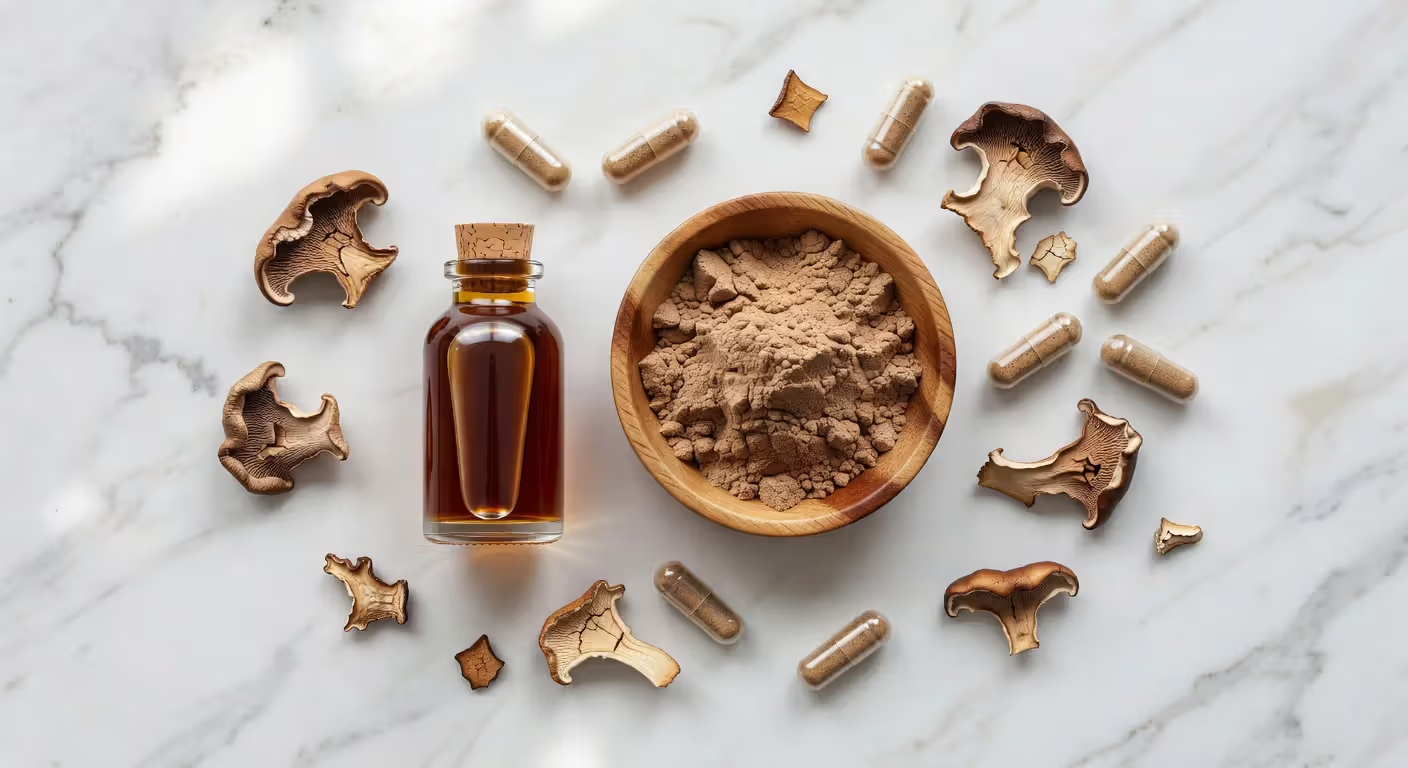
Supplements come as capsules, powders, or liquid tinctures. Capsules are convenient with precise dosing. Powders mix easily into coffee, smoothies, or whatever you're drinking. Tinctures allow flexible dosing but often taste pretty earthy.
Common Mistakes When Buying Mushroom Supplements
The mushroom supplement market has exploded in the last five years. Not every company selling these products is honest about what's inside.
Mistake #1: Buying the cheapest option. Quality extraction costs money. When a product costs half what competitors charge, there's usually a reason—lower concentration, grain fillers, or mycelium products marketed as fruiting body extracts.
Mistake #2: Ignoring extraction ratios. Some products are just ground mushroom powder in capsules. Nothing inherently wrong with that, but it's fundamentally different from extracts. You'd need much larger amounts to get equivalent active compounds, and some compounds need extraction to become bioavailable at all.
Mistake #3: Falling for vague marketing. Terms like "super concentrated" or "maximum potency" mean nothing without actual numbers. Look for specific beta-glucan percentages and extraction ratios.
Mistake #4: Skipping third-party testing verification. Mushrooms absorb heavy metals from soil and growing substrates. Lead, cadmium, and arsenic contamination is a legitimate concern. Responsible manufacturers test every batch and make results available.
Mistake #5: Assuming all medicinal mushrooms are interchangeable. Different species provide different primary benefits. Cordyceps won't give you the cognitive benefits of lion's mane, even though both qualify as "medicinal mushrooms."
I've seen people buy products labeled "mushroom complex" or "10 mushroom blend" thinking more variety equals better results. But if you specifically want brain health benefits from lion's mane, you need products where it's the primary ingredient, not one of ten mushrooms included in tiny amounts.
Who Should Consider Hericium Erinaceus Supplements
Lion's mane isn't for everyone, but certain groups might benefit more than others.
Older adults concerned about memory. The strongest evidence we have addresses mild cognitive impairment in older populations. If you're noticing subtle memory changes or reduced mental sharpness, it's worth discussing with your doctor.
Students and professionals needing sustained focus. It won't replace sleep or proper nutrition, but some users report improved concentration and mental clarity after several weeks of consistent use. The effects are subtle, not stimulant-like.
People with family history of neurological diseases. The neuroprotective properties make it appealing for prevention strategies, though we lack long-term human studies confirming it prevents Alzheimer's or Parkinson's.
Anyone pursuing natural cognitive support. If you already take fish oil, B vitamins, or other brain health supplements, lion's mane fits naturally into that regimen with a favorable safety profile.
Now, certain people should be cautious or skip it entirely. Anyone allergic to mushrooms should obviously avoid it. Safety data for pregnant or breastfeeding women is limited, so most practitioners recommend avoiding it during those periods. People with bleeding disorders or taking blood thinners should consult their doctors first—certain mushroom compounds may have mild blood-thinning effects.
If you're scheduled for surgery, stop taking lion's mane at least two weeks beforehand for the same reason. People on immunosuppressant medications should also check with their doctors, since immune-modulating effects could theoretically interfere with treatment.
Safety profile looks good for most people. Studies report minimal side effects—occasional digestive upset or skin reactions in sensitive individuals. But individual responses vary considerably.
Frequently Asked Questions About Hericium Erinaceus
Is hericium erinaceus safe to take daily?
Daily use appears safe for most people based on available research. Clinical studies have used daily doses of 500-1,000 mg for up to 16 weeks without significant adverse effects. Traditional use in Asian cultures spans centuries with good safety records. That said, long-term studies beyond several months are limited, so we don't have data on continuous use for multiple years. If you notice any unusual symptoms, stop taking it and consult a healthcare provider. People with mushroom allergies, bleeding disorders, or taking immunosuppressant drugs should get medical clearance before starting.
How long does it take to notice benefits from lion's mane supplements?
Most people who experience cognitive improvements notice them after 4-8 weeks of consistent daily use. Unlike fast-acting stimulants like caffeine, the mechanisms involve gradual support for nerve growth factor production and neural health. Some individuals report subtle focus or clarity improvements within 2-3 weeks, but clinical trials showing measurable cognitive enhancements used protocols of at least eight weeks. If you haven't noticed anything after 12 weeks of proper dosing with a quality extract, lion's mane may not produce particularly noticeable effects for you. Responses vary significantly between individuals.
Can I take hericium erinaceus with other medications?
Lion's mane has relatively few documented drug interactions, but several considerations exist. It may have mild blood-thinning effects, so combining it with anticoagulants like warfarin could theoretically increase bleeding risk. The immune-modulating properties might interact with immunosuppressant drugs prescribed after organ transplants or for autoimmune conditions. Some practitioners suggest it could enhance diabetes medication effects, potentially causing low blood sugar. If you take any prescription medications—especially those mentioned—discuss supplementation with your doctor or pharmacist first. Bring the actual supplement bottle so they can review the specific formulation and dosage.
What's the difference between eating fresh lion's mane and taking supplements?
Fresh lion's mane provides nutrition and tastes great, but you'd need to eat large quantities consistently to match compound concentrations in extracts. A typical serving of cooked lion's mane might be 50-100 grams, while supplements deliver concentrated extracts equivalent to several grams of dried mushroom. Cooking can also degrade certain bioactive compounds. Supplements use extraction methods—hot water, alcohol, or both—that concentrate specific compounds while improving bioavailability. If you enjoy cooking with fresh lion's mane, it contributes valuable nutrition, but for targeted cognitive support, standardized extracts provide consistent, measurable amounts of the compounds linked to brain health benefits in research.
Does hericium erinaceus have side effects?
Side effects are generally mild and uncommon. The most frequently reported issues involve digestive symptoms—mild nausea, stomach discomfort, or loose stools—typically when starting supplementation or taking higher doses on an empty stomach. Some people experience skin itching or rashes, potentially indicating sensitivity or allergic reaction. Very rarely, breathing difficulties occur, suggesting allergic reaction requiring immediate discontinuation. In clinical trials, side effect rates were similar to placebo groups. Starting with lower doses and taking with food can minimize digestive complaints. If you have known mushroom allergies or sensitivities, start with a very small amount to test your tolerance.
How should I store mushroom supplements?
Store mushroom supplements in cool, dry locations away from direct sunlight and moisture. Heat and humidity degrade active compounds over time. Bathroom medicine cabinets actually make poor storage spots because of temperature and humidity swings from showers. Kitchen cupboards away from the stove or bedroom drawers work better. Keep containers tightly sealed between uses. Most supplements maintain potency for 1-2 years when stored properly, but check the expiration date on your specific product. Powders are more susceptible to moisture than capsules, so consider adding desiccant packets if you live somewhere humid. Tinctures are more stable due to alcohol content but still benefit from protection against heat and light.
Research on lion's mane for brain health keeps evolving, but existing evidence has convinced many healthcare practitioners to recommend it as part of comprehensive cognitive wellness approaches. If you decide to try it, choose a quality extract from a reputable manufacturer, take it consistently for at least eight weeks, and pay attention to how you respond. Effects tend to be subtle rather than dramatic for most users, which is typical for natural compounds supporting long-term brain health rather than providing immediate stimulation.