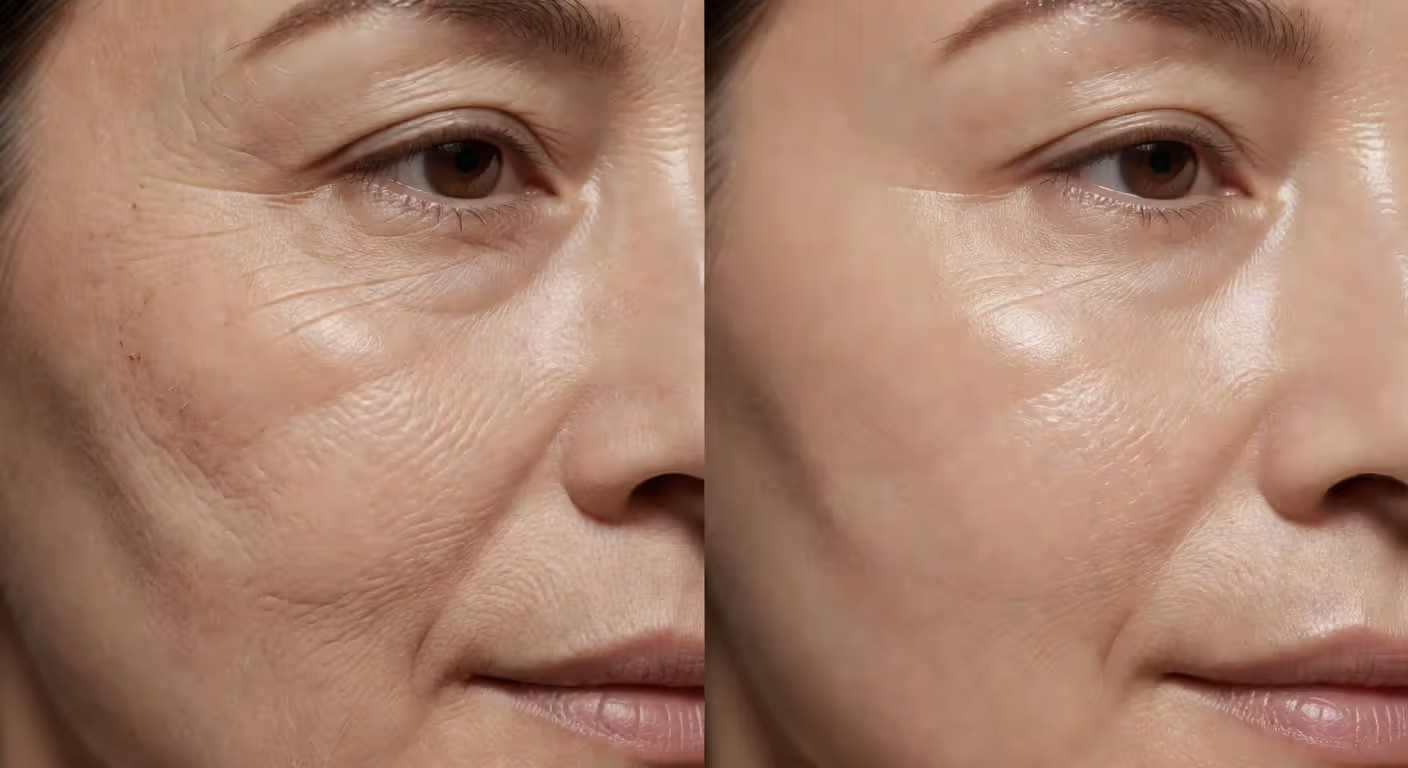
Browse the skincare aisle at Target or scroll through Instagram beauty posts, and you'll notice one ingredient showing up everywhere: hyaluronic acid. It's in $12 drugstore moisturizers and $200 luxury serums. Your dermatologist recommends it. Your mom's orthopedist injects it into her knees. But does it actually work, or is this just another wellness trend that'll disappear in two years? Here's what the research actually says about this molecule—and more importantly, whether it makes sense for your specific skin or joint concerns.
Understanding Hyaluronic Acid's Structure and Function
Think of hyaluronic acid as your body's internal moisture magnet. It's a glycosaminoglycan—basically a long sugar chain that your cells naturally produce.
The chemistry here is pretty straightforward. Each molecule grabs onto water molecules—up to 1,000 times its weight. That's not marketing speak; it's actual lab-measured behavior. The structure consists of repeating pairs: D-glucuronic acid bonded to N-acetyl-D-glucosamine. These pairs link together into chains of different lengths, which scientists measure in kilodaltons (kDa).
Your body makes this stuff constantly. About half of it sits in your skin, with the rest distributed through your eyes, joints, and connective tissues. It works like a microscopic sponge, pulling moisture into tissues while creating a gel that cushions and lubricates.
When people ask what's in hyaluronic acid from a chemical perspective, the answer is simple: carbon, hydrogen, oxygen, and nitrogen arranged as a polysaccharide. No proteins, no fats—just sugar molecules with impressive water-holding capacity.
Here's where it gets interesting: molecular size dramatically affects performance. Large molecules (800–2,000 kDa) stay on your skin's surface, forming protective films. Smaller versions (50–300 kDa) can penetrate deeper layers. Each size range does different things, which matters when you're choosing products.
The Body's Daily Use of This Molecule
Your body relies on hyaluronic acid for several jobs that happen whether you think about them or not.
First up: keeping tissues hydrated. It maintains moisture in your skin, eyes, and other tissues. As you age, levels naturally drop—research shows skin concentrations decline about 50% between ages 20 and 60. You can literally measure this decrease.
Second: lubricating your joints. Your synovial fluid (the stuff that fills joint spaces) contains concentrated hyaluronic acid. This creates a slippery surface between cartilage during movement. Think of it as your body's built-in WD-40.
Third: maintaining skin structure. Beyond just hydration, it helps organize collagen and elastin fibers in your skin's extracellular matrix. This scaffolding keeps skin firm and flexible.
Fourth: healing wounds. When you cut yourself, hyaluronic acid concentrations spike at the injury site. It regulates inflammation and signals cells to start rebuilding tissue. It's part of your repair mechanism.
Here's a common mistake: thinking hyaluronic acid only hydrates. That's like saying your car only needs gas. The molecule also provides structure, protection, and cell signaling that goes way beyond moisture.
The catch? Your body breaks down and rebuilds about one-third of its hyaluronic acid every single day. This rapid turnover means you need constant production to maintain levels. Aging, UV exposure, pollution, and inflammation all mess with this production cycle.
Skin Benefits: What Actually Happens
Let's talk about what hyaluronic acid really does for skin, minus the Instagram filter claims.
Topical products work within limits. When you apply a serum, the molecule can't travel deep into your skin—it's too large. But that's actually fine. High-molecular-weight forms create a breathable film on the surface, preventing water loss and boosting hydration in your stratum corneum (outermost layer).
Studies consistently show that regular topical use reduces the appearance of fine lines and wrinkles within 2–8 weeks. The improvement comes from increased moisture, which plumps the skin and makes surface wrinkles less visible. You're not reversing aging—you're optimizing hydration.
Smaller molecular weight versions penetrate better and can actually stimulate your skin's own hyaluronic acid production. A 2025 study found that serums with 0.1–0.5% low-molecular-weight hyaluronic acid increased dermal thickness by 12% after 12 weeks of daily use.
Oral supplements work differently. When you swallow hyaluronic acid, digestive enzymes break it into smaller fragments. These enter your bloodstream and distribute throughout your body, reaching your skin along with other tissues. Studies from 2024–2025 show that oral doses of 120–240 mg daily improve skin moisture, reduce wrinkle depth, and enhance elasticity over 8–12 weeks.
In my practice, I've observed that patients who combine topical and oral hyaluronic acid see more pronounced improvements in skin hydration and fine line reduction than those using either approach alone. The topical application provides immediate surface benefits, while oral supplementation supports deeper dermal hydration and may stimulate endogenous production.
The combination approach makes sense. Surface products address the outer layers; oral supplements work systemically from within. You're tackling skin health from both directions.
One mistake I see constantly: applying hyaluronic acid to bone-dry skin. The molecule needs available water to bind to. If you apply it to parched skin in low humidity, it can actually pull moisture from deeper layers to the surface, where it evaporates. Apply to damp skin or layer a moisturizer over it to lock in hydration.
Joint Health Applications and Evidence
The joint benefits of hyaluronic acid rest on decades of clinical use, particularly for osteoarthritis.
Normal synovial fluid maintains 2.5–4 mg/mL hyaluronic acid concentration. Osteoarthritis significantly reduces this, compromising lubrication and shock absorption. The result? Pain, stiffness, reduced mobility.
Injections directly into joints (intra-articular) have been standard medical practice since the 1990s. These viscosupplementation treatments typically involve 3–5 injections over several weeks. Clinical data shows they can reduce knee pain and improve function for 3–6 months per treatment cycle.
The benefits go beyond simple lubrication. Hyaluronic acid injections also reduce inflammation, protect cartilage cells, and potentially stimulate joints to produce their own hyaluronic acid. A 2025 meta-analysis of 47 studies concluded that hyaluronic acid injections provided moderate pain relief and functional improvement in knee osteoarthritis, with effectiveness comparable to corticosteroid injections but longer duration.
Oral supplementation for joint health shows promise but works differently than injections. Taking hyaluronic acid orally doesn't directly refill joint fluid—supplements can't reach the joint space that way. Instead, absorbed fragments may reduce systemic inflammation and support cartilage health across multiple joints.
Research on oral hyaluronic acid for joints typically uses doses of 80–200 mg daily. A 2024 randomized controlled trial found that 200 mg daily reduced knee pain and improved mobility in people with mild to moderate osteoarthritis after 12 weeks. The improvements were modest but statistically significant.
The practical approach usually wins: if you have mild joint discomfort, try oral supplements first. If you have diagnosed osteoarthritis with significant pain, discuss injections with your doctor. Injections are more invasive but deliver concentrated doses exactly where needed.
Surprising fact: hyaluronic acid for joints works best when combined with regular movement. Joint motion helps distribute the molecule throughout joint spaces and promotes cartilage health. Injections or supplements alone can't compensate for a completely sedentary lifestyle.
Comparing Sodium Hyaluronate to Standard Forms
These terms get used interchangeably in marketing, but there's a technical difference that affects how products perform.
Sodium hyaluronate is the sodium salt form of hyaluronic acid. When manufacturers stabilize hyaluronic acid for products, they typically convert it to sodium hyaluronate. They're chemically related—sodium hyaluronate just has better stability and easier formulation properties.
The main difference is molecular size. Sodium hyaluronate typically has lower molecular weight than standard hyaluronic acid. This means better skin penetration and better solubility in water-based formulas. Most eye drops, serums, and injectables use sodium hyaluronate because it's more practical to manufacture.
Which is better? For topical use, sodium hyaluronate often wins due to its smaller size and better penetration. For oral supplements, both forms get broken down by digestion anyway, so the starting form matters less.
Quick breakdown: high-molecular-weight hyaluronic acid (1,000+ kDa) stays on skin surfaces for barrier protection. Low-molecular-weight sodium hyaluronate (50–300 kDa) penetrates into epidermal layers and possibly upper dermal regions. Ultra-low-molecular-weight forms (under 50 kDa) penetrate deepest but can occasionally trigger inflammation in sensitive skin.
Don't stress too much about which form is listed on product labels. Focus instead on molecular weight (if disclosed) and product type. Serums benefit from mixed molecular weights. Eye drops typically use sodium hyaluronate. For injections, your doctor will choose the appropriate formulation.
Where to Get It: Sources and Supplement Options
Getting meaningful amounts of hyaluronic acid from food is basically impossible, but you can support natural production through diet—and supplementation is available.
Food sources are limited. Bone broth contains some hyaluronic acid from animal connective tissue. Some root vegetables and soy products provide nutrients that support hyaluronic acid synthesis. But concentrations are too low to meaningfully impact your levels through diet alone.
Supplementation is the practical route. Oral hyaluronic acid supplements come from bacterial fermentation (vegan-friendly) or rooster comb extraction (animal-derived). Bacterial sources have become the industry standard recently.
Here's how different supplement forms compare:
Form
How Well It Absorbs
Typical Daily Amount
Best Used For
Cost Per Month
Pills/capsules
Fair (15–30% reaches bloodstream)
80–200 mg
Skin and joint support
$15–$40
Liquid supplements
Fair to good
50–150 mg
Faster absorption, skin focus
$25–$60
Topical serums
Surface only
0.1–2% concentration
Direct skin hydration
$10–$100 per bottle
Medical injections
Direct to joint
20–60 mg per injection
Osteoarthritis treatment
$300–$1,000 per series
Dosing depends on your goals. Skin improvement studies typically use 120–240 mg daily orally. Joint support studies usually use 80–200 mg daily. Results generally appear after 4–12 weeks of consistent use.
Bioavailability is a limitation. Oral hyaluronic acid gets broken down by digestion into smaller fragments. About 15–30% reaches your bloodstream. But these absorbed fragments still provide benefits—they don't need to stay intact to work.
Timing is flexible. Take supplements with food or without, morning or evening—consistency matters more than timing. Some people prefer taking with meals to avoid occasional mild digestive upset, though this is rare.
Quality varies between brands. Look for supplements that disclose molecular weight and provide third-party testing verification. Molecular weight should typically be in the 800–1,500 kDa range for oral products. Avoid products that don't specify hyaluronic acid content in milligrams.
Common Questions People Ask
Can I use hyaluronic acid every day without problems?
Yes, daily use is safe for both topical and oral forms. Since it's naturally produced by your body, you're not introducing a foreign substance. Topical products can be applied once or twice daily without concern. Oral supplements at doses up to 240 mg daily have shown safety in studies lasting 12 months or longer. Pregnant and breastfeeding women should check with their healthcare provider before starting oral supplements, though topical use is generally considered safe.
When will I notice results from using hyaluronic acid?
Topical products provide immediate but temporary hydration—you'll feel softer, more hydrated skin within hours. However, structural improvements like reduced wrinkle depth take 4–8 weeks of consistent daily use. Oral supplements for skin benefits typically need 8–12 weeks to show measurable improvements in hydration and elasticity. For joint pain relief, oral supplements may take 8–12 weeks, while injections often provide relief within 2–4 weeks that lasts 3–6 months.
Is it possible to get enough hyaluronic acid from what I eat?
Not really. Food sources don't provide sufficient amounts. Bone broth made from animal connective tissue contains some, but concentrations are too low to significantly impact your levels. Your best dietary strategy is eating foods rich in magnesium, zinc, and vitamin C—nutrients that support your body's own hyaluronic acid production. These include leafy greens, nuts, seeds, citrus fruits, and sweet potatoes. For therapeutic amounts, supplementation is the realistic option.
What's different about applying it to skin versus taking it orally?
Topical application works on the surface and shallow layers, providing direct hydration and a protective barrier. It can't penetrate to deeper tissues or reach other body systems. Oral supplements enter your bloodstream after digestion and distribute throughout your body, potentially benefiting your skin, joints, eyes, and other tissues. Topical products give faster, more visible skin effects. Oral supplements provide whole-body benefits but take longer to show results. Many people use both approaches together for combined benefits.
Will hyaluronic acid actually help my knee pain?
It depends on severity and delivery method. Injections directly into the knee joint have strong clinical evidence for reducing pain and improving function in osteoarthritis, with benefits lasting 3–6 months. Oral supplements show moderate benefits for mild to moderate knee pain, typically requiring 8–12 weeks at 80–200 mg daily. Severe knee pain from confirmed osteoarthritis responds better to injections. For general joint health or minor discomfort, oral supplements are worth trying first.
What side effects should I watch for?
Side effects are uncommon and usually mild. Some people experience digestive upset, nausea, or headaches when starting oral supplements, though these typically resolve within a few days. Topical products occasionally cause skin irritation or redness, especially in sensitive individuals—always patch test new products. Joint injections carry a small risk of infection, injection site pain, or temporary swelling. People with allergies to bird proteins should avoid rooster-derived supplements and choose bacterial fermentation sources instead. If you take blood thinners, consult your doctor before starting oral supplements.
Hyaluronic acid isn't a miracle cure, but it's one of the few ingredients with solid scientific backing for both skin and joint benefits. Whether you choose topical serums, oral supplements, or medical injections depends on your specific goals and how severe your concerns are. Start with realistic expectations, give it enough time to work, and pay attention to how your body responds. You won't see dramatic overnight changes, but consistent use over weeks to months can produce noticeable improvements in hydration, comfort, and overall tissue health.