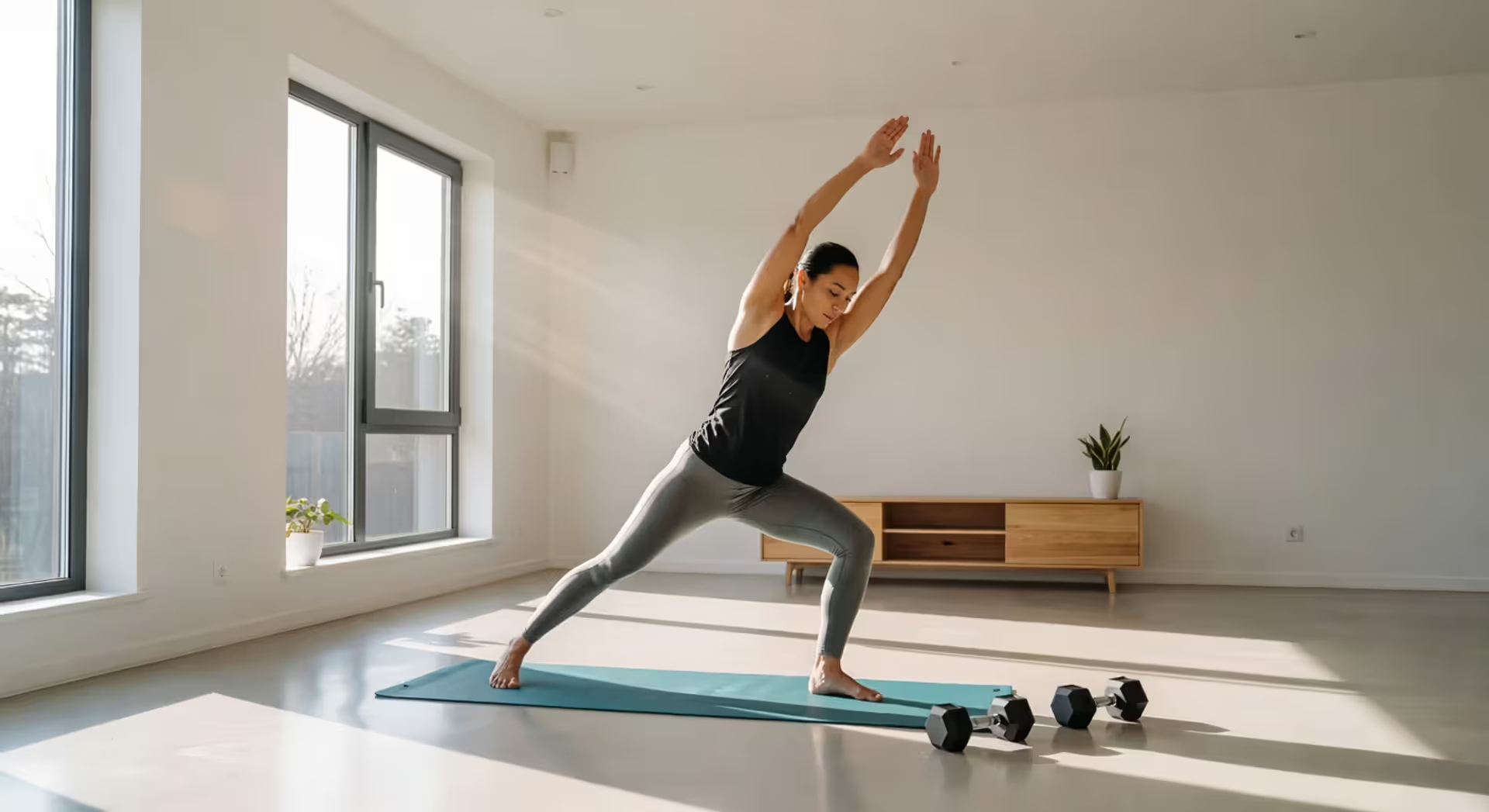
Working out at home isn't just a backup plan anymore. It's become the primary fitness strategy for millions of people who've discovered they don't need a gym membership to see real results. Whether you're dodging crowded facilities, saving money, or just prefer the privacy of your living room, at home workouts deliver when you approach them with the right mindset and structure. The challenge isn't whether home training works—it absolutely does—but how to build a sustainable routine that keeps you progressing without the external accountability of a gym environment.
Why Working Out at Home Works for Most People
The flexibility alone changes everything. You can knock out a session at 6 AM before the kids wake up or squeeze in 20 minutes during lunch. No commute time. No waiting for equipment. No gym hours dictating your schedule.
Cost savings add up fast. The average gym membership runs $50–70 monthly in most US markets. That's $600–840 yearly, and many people pay for memberships they barely use. With in home workouts, you're looking at zero ongoing costs if you stick to bodyweight exercises, or a one-time investment of $100–300 for basic equipment that lasts years.
Privacy matters more than people admit. Beginners often feel self-conscious learning new movements in front of experienced gym-goers. At home, you can stumble through your first burpees without an audience. You can grunt, sweat, and fall over without worrying about judgment.
The accessibility factor is huge for parents, caregivers, or anyone with mobility constraints. You're never more than 30 seconds from your workout space. Bad weather? Doesn't matter. Gym closed for holidays? Not your problem.
But here's what I see most often: people who switch to home training actually work out more consistently because they've removed the friction. The barrier to starting is so low that it's harder to make excuses.
What You Need to Start Your Home Workout Routine
You need less than you think. A space about 6 feet by 6 feet gives you enough room for most exercises. Hardwood or carpet both work fine, though a yoga mat adds cushioning for floor work.
For clothing, anything that doesn't restrict movement works. You don't need special gear. Old t-shirts and shorts do the job. Supportive shoes matter if you're doing high-impact cardio, but many people train barefoot or in socks for strength work.
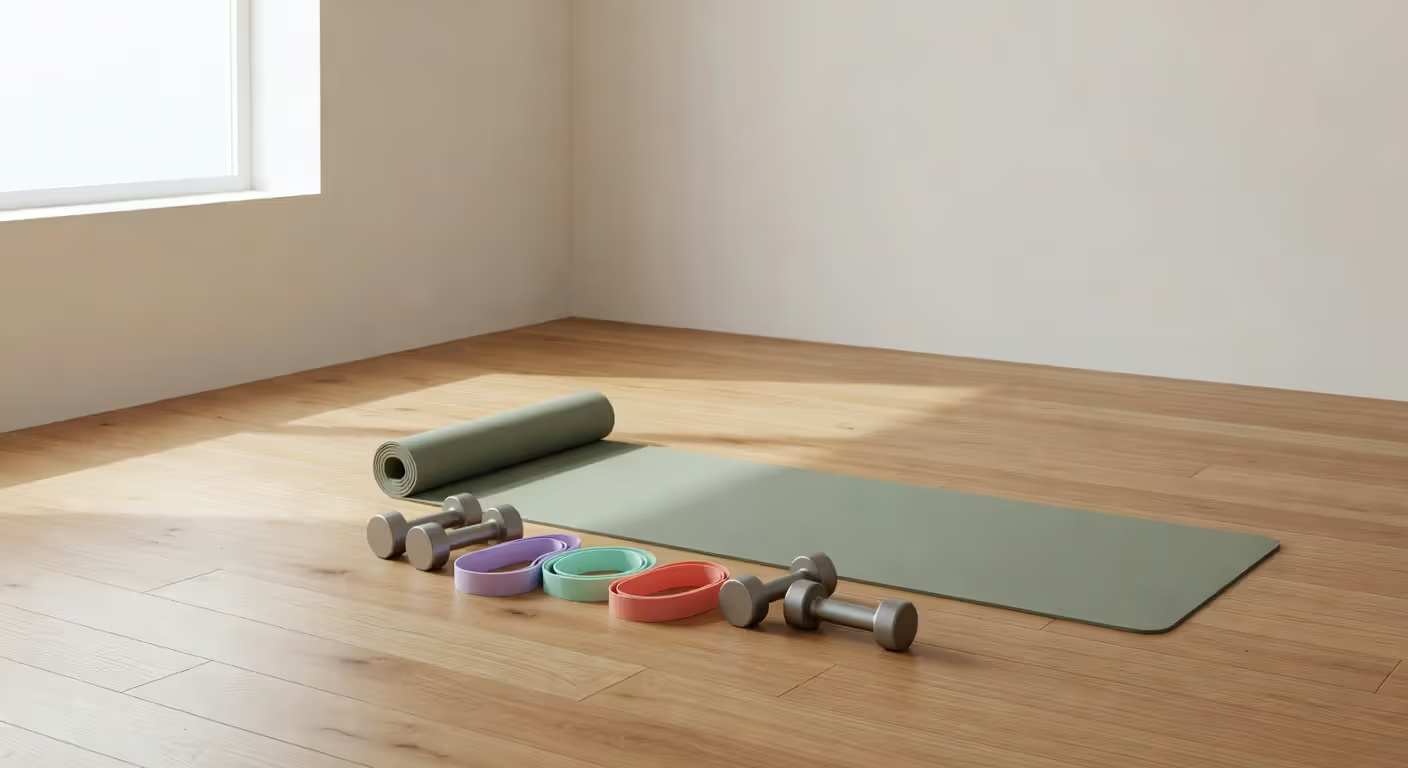
The minimal equipment starter kit:
Yoga mat ($15–30)
Resistance bands set ($20–40)
Set of dumbbells or adjustable dumbbells ($50–150)
That's genuinely all you need for a complete workout routine at home that can challenge you for years. The dumbbells are the only significant investment, and adjustable ones save space while giving you weight options from 5 to 50+ pounds.
Optional additions that expand your options:
Pull-up bar ($25–50)
Kettlebell ($30–60)
Jump rope ($10–15)
Stability ball ($20–30)
Don't buy everything at once. Start with bodyweight exercises and add equipment as you identify what you actually enjoy and will use. Most people overestimate what they need and end up with equipment gathering dust.
How to Create a Home Workout Plan Based on Your Goals
Your home workout plan needs to match what you're actually trying to achieve. Generic routines fail because they ignore individual goals and preferences.
Strength Training at Home
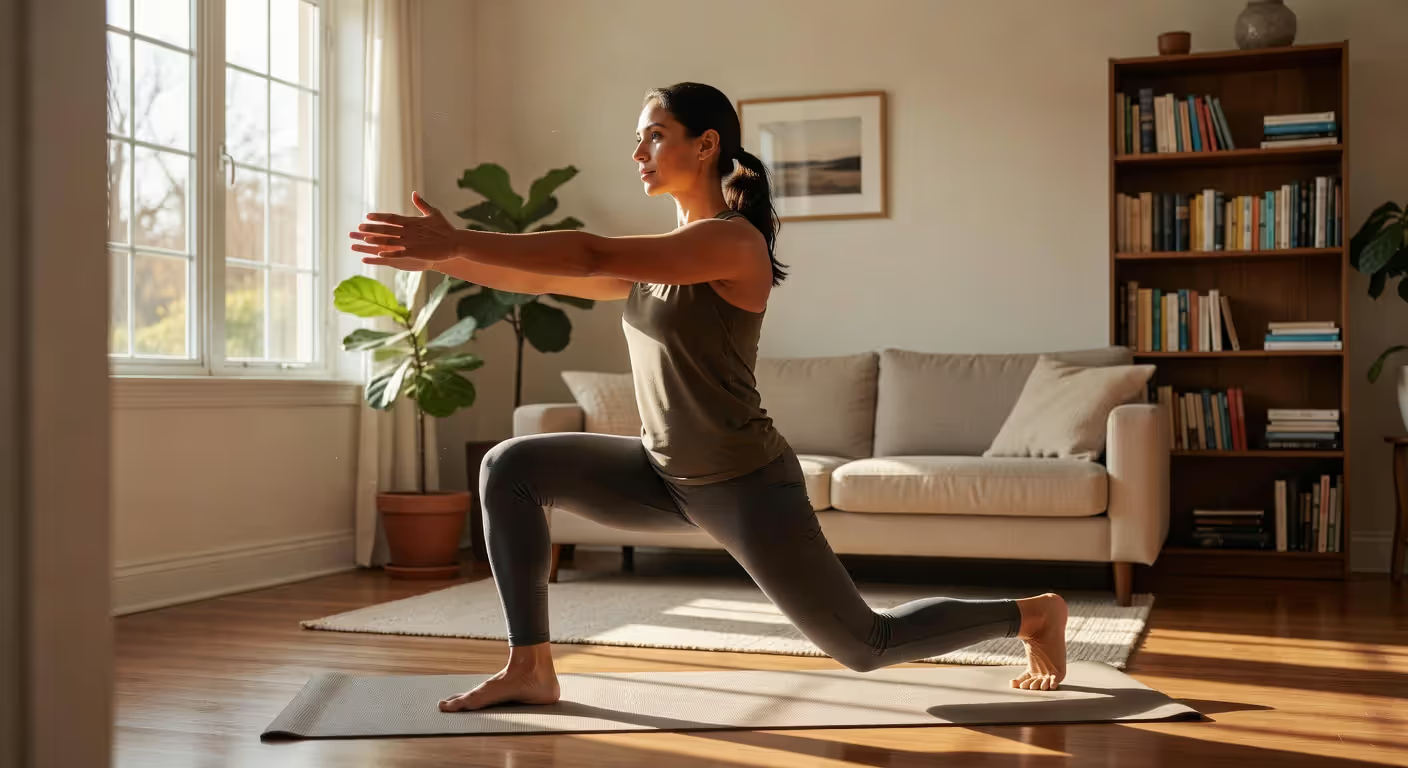
Building muscle and strength at home centers on progressive overload—gradually increasing difficulty over time. Bodyweight exercises work brilliantly for beginners and intermediates. Push-ups, squats, lunges, planks, and glute bridges form the foundation.
The progression path looks like this: start with standard versions, then increase reps, slow down the tempo, add pauses, progress to harder variations. A regular push-up becomes a diamond push-up, then an archer push-up, eventually one-arm push-ups.
With dumbbells, you can train every major muscle group:
Chest: dumbbell press, flyes
Back: rows, pullovers
Shoulders: overhead press, lateral raises
Legs: goblet squats, Romanian deadlifts, Bulgarian split squats
Arms: curls, tricep extensions
Structure strength sessions around compound movements that work multiple muscles. Three to four exercises per session, three to four sets each, 8–15 reps per set. Rest 60–90 seconds between sets.
The mistake people make: jumping to advanced variations before mastering basics. If you can't do 20 solid bodyweight squats with perfect form, you're not ready for pistol squats.
Cardio Without Equipment
You don't need a treadmill or bike. Bodyweight cardio gets your heart rate up just as effectively.
High-intensity interval training (HIIT) works perfectly at home. Short bursts of maximum effort followed by brief recovery periods. Think 30 seconds of burpees, 30 seconds rest, repeated for 10–20 minutes.
Effective cardio exercises:
Jumping jacks
Mountain climbers
High knees
Burpees
Jump squats
Shadow boxing
The key is intensity. Moderate-paced exercises for 30–45 minutes burn calories. High-intensity intervals for 15–20 minutes can deliver similar or better results in less time.
Low-impact options exist for joint concerns or apartment living. Step-ups on stairs, walking lunges, fast-paced yoga flows, or dance-based workouts keep your heart rate elevated without jumping.
Flexibility and Mobility Work
This is the component most people skip, and it shows. Tight hips, stiff shoulders, and limited range of motion reduce performance and increase injury risk.
Dedicate 10–15 minutes to mobility work, either as a warm-up or standalone sessions. Focus on movements, not static stretching before workouts. Dynamic stretches prepare your body for exercise. Save static stretching for after workouts or separate flexibility sessions.
Essential mobility exercises:
Cat-cow stretches
Hip circles and 90/90 stretches
Shoulder dislocations with a band or towel
Deep squat holds
Thoracic spine rotations
Yoga and Pilates fit perfectly into home workout routines. Both improve flexibility, core strength, and body awareness. A 20-minute yoga flow counts as a legitimate training session, not just "recovery."
Sample Home Workout Routines for Beginners to Advanced
Here are three complete home workout routines tailored to different experience levels. Each includes specific exercises, sets, reps, and weekly structure.
Beginner Routine (3 days per week, full body each session):
Day 1, 2, 3 (Monday/Wednesday/Friday):
Bodyweight squats: 3 sets × 10–12 reps
Push-ups (knees if needed): 3 sets × 8–10 reps
Dumbbell rows or bent-over rows: 3 sets × 10 reps each arm
Plank: 3 sets × 20–30 seconds
Glute bridges: 3 sets × 12 reps
Jumping jacks: 2 sets × 30 seconds
Rest 90 seconds between sets. Total workout time: 30–35 minutes.
Intermediate Routine (4 days per week, upper/lower split):
Day 1 (Monday) – Upper Body:
Push-ups: 4 sets × 12–15 reps
Dumbbell rows: 4 sets × 12 reps
Dumbbell shoulder press: 3 sets × 10 reps
Dumbbell curls: 3 sets × 12 reps
Tricep dips on chair: 3 sets × 10–12 reps
Day 2 (Tuesday) – Lower Body + Cardio:
Goblet squats: 4 sets × 12 reps
Romanian deadlifts: 4 sets × 10 reps
Walking lunges: 3 sets × 10 each leg
Calf raises: 3 sets × 15 reps
HIIT circuit: 15 minutes (burpees, mountain climbers, high knees)
Day 3 (Thursday) – Upper Body:
Decline push-ups: 4 sets × 10–12 reps
Single-arm dumbbell rows: 4 sets × 10 each arm
Lateral raises: 3 sets × 12 reps
Hammer curls: 3 sets × 12 reps
Overhead tricep extension: 3 sets × 12 reps
Day 4 (Saturday) – Lower Body + Core:
Bulgarian split squats: 4 sets × 10 each leg
Single-leg deadlifts: 3 sets × 10 each leg
Jump squats: 3 sets × 10 reps
Plank: 3 sets × 45 seconds
Russian twists: 3 sets × 20 total reps
Rest 60 seconds between sets. Total workout time: 40–50 minutes.
Advanced Routine (5–6 days per week, push/pull/legs split):
Day 1 – Push:
Archer push-ups: 4 sets × 8 each side
Pike push-ups: 4 sets × 10 reps
Dumbbell bench press: 4 sets × 8–10 reps
Dumbbell flyes: 3 sets × 12 reps
Overhead press: 4 sets × 8 reps
Tricep dips: 3 sets × 12–15 reps
Day 2 – Pull:
Pull-ups or resistance band pull-downs: 4 sets × 8–10 reps
Dumbbell rows: 4 sets × 10 reps
Reverse flyes: 3 sets × 12 reps
Face pulls with band: 3 sets × 15 reps
Bicep curls: 4 sets × 10–12 reps
Hammer curls: 3 sets × 12 reps
Day 3 – Legs:
Pistol squats (assisted if needed): 4 sets × 6 each leg
Bulgarian split squats with dumbbells: 4 sets × 10 each leg
Romanian deadlifts: 4 sets × 10 reps
Jump lunges: 3 sets × 8 each leg
Single-leg calf raises: 3 sets × 12 each leg
Day 4 – Push (variation):
Diamond push-ups: 4 sets × 10–12 reps
Dumbbell shoulder press: 4 sets × 10 reps
Lateral raises: 4 sets × 12 reps
Front raises: 3 sets × 12 reps
Overhead tricep extension: 4 sets × 12 reps
Day 5 – Pull + Core:
Chin-ups or band-assisted chin-ups: 4 sets × 8 reps
Single-arm rows: 4 sets × 10 each arm
Dumbbell pullovers: 3 sets × 12 reps
Bicep curls (tempo): 4 sets × 10 reps
Hanging knee raises or lying leg raises: 4 sets × 12 reps
Plank variations: 3 sets × 45–60 seconds
Day 6 – Legs + Conditioning:
Goblet squats (heavy): 4 sets × 8 reps
Single-leg deadlifts: 4 sets × 8 each leg
Walking lunges with dumbbells: 3 sets × 12 each leg
HIIT circuit: 20 minutes high-intensity intervals
Rest 45–60 seconds between sets. Total workout time: 50–65 minutes.
Level
Days/Week
Split Type
Session Duration
Intensity
Beginner
3
Full Body
30–35 minutes
Moderate, focus on form
Intermediate
4
Upper/Lower
40–50 minutes
Moderate-High, progressive overload
Advanced
5–6
Push/Pull/Legs
50–65 minutes
High, varied intensity techniques
The most effective home workout routine is the one you'll actually do consistently. I've trained clients who achieved remarkable transformations with nothing but bodyweight exercises and a pair of dumbbells, simply because they showed up four days a week without fail. Equipment and fancy programs matter far less than consistency and progressive challenge.
Common Mistakes That Sabotage In Home Workouts
Lack of structure kills progress faster than anything else. People approach home training too casually, doing random exercises whenever they feel like it. That's activity, not training. You need a plan with specific exercises, sets, reps, and progression built in.
Skipping warm-ups seems harmless until you pull something three weeks in. Five to ten minutes of movement preparation isn't optional. Your body needs to transition from rest to work mode. Cold muscles and joints don't perform well and get injured easily.
Poor form compounds over time. Without mirrors or trainers watching, bad movement patterns become habits. Record yourself occasionally. Compare your form to instructional videos. One set with perfect form beats three sets with sloppy technique.
The pattern I see most often: people start strong for two weeks, then life happens and they disappear for a month. Inconsistency guarantees you'll spin your wheels. Three workouts weekly for six months beats six workouts weekly for one month every time.
No progression means no results after the initial adaptation period. Your body adapts to the stress you place on it, then stops changing unless you increase the challenge. Add reps, add sets, slow down tempo, reduce rest periods, progress to harder variations, or add weight. Something has to increase over time.
Neglecting rest and recovery is the flip side problem. Some people think more is always better and train six or seven days weekly with high intensity. Your muscles grow during recovery, not during workouts. Most people need at least one or two complete rest days per week.
How to Stay Consistent With Your Workout Routine at Home
Schedule your workouts like appointments. Put them in your calendar with specific days and times. "I'll work out when I have time" means you won't work out. Decide in advance: Monday 6 AM, Wednesday 6 AM, Friday 6 AM, Saturday 9 AM. Non-negotiable.
Prepare your space the night before. Lay out your mat, set out your dumbbells, have your workout clothes ready. Reduce friction. The easier you make it to start, the more likely you'll actually do it.
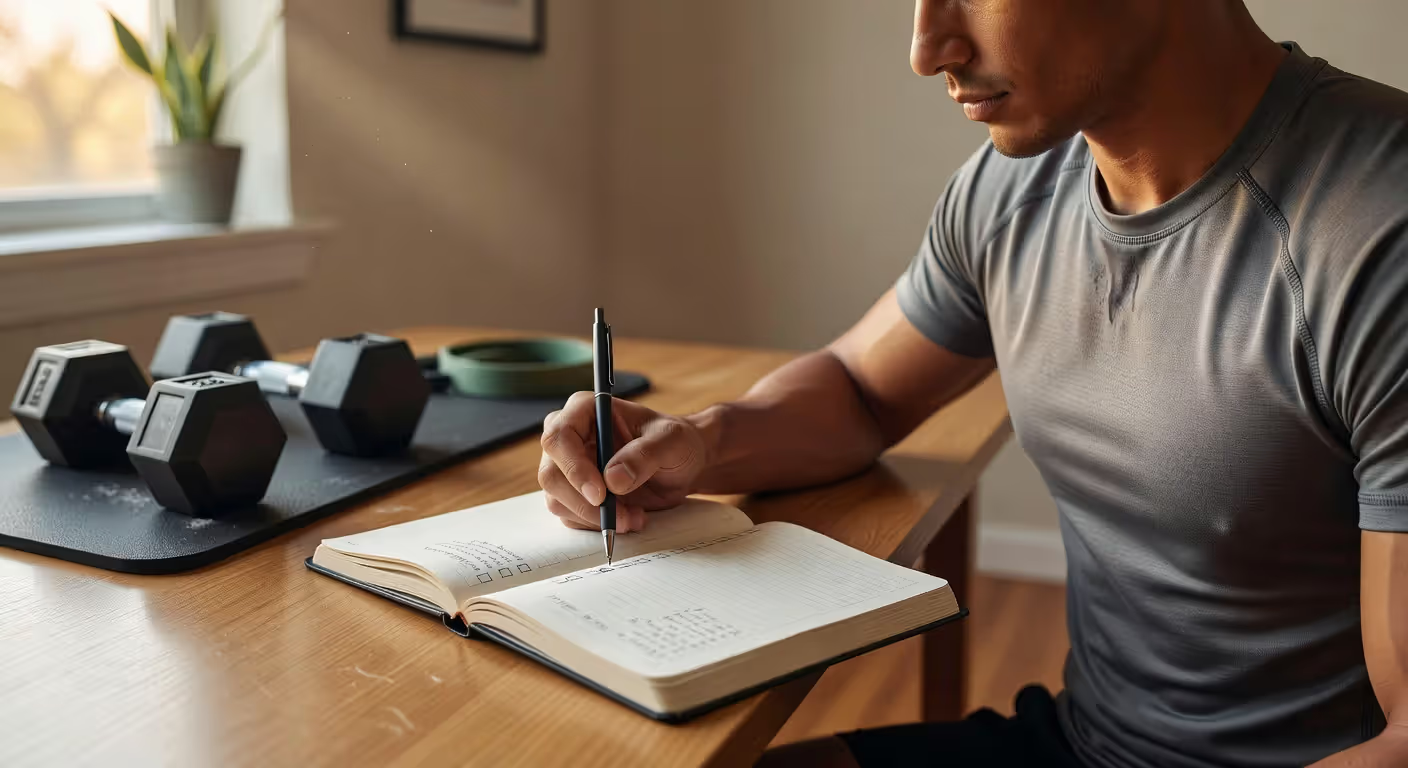
Accountability mechanisms help tremendously. Tell someone your schedule. Join online communities. Track your workouts in an app or journal. The act of recording creates commitment. Missing a scheduled session feels different when you have to mark it as skipped.
Start smaller than you think you should. Twenty-minute sessions you actually complete beat hour-long sessions you skip half the time. You can always add more later, but starting too aggressively leads to burnout.
Deal with distractions proactively. Put your phone in another room. Tell family members you're unavailable for 30 minutes. Close the door. Treat it like you would a meeting or appointment—because it is.
Track progress beyond the scale. Take measurements, photos every four weeks, or track performance metrics. Did you add two reps to your push-ups? That's progress. Did you increase your plank hold by 15 seconds? That counts. Visible progress fuels motivation.
Build in variety without abandoning structure. You can swap exercises within the same category (different push-up variations, different squat types) to keep things interesting while maintaining your overall plan. The structure stays consistent; the specific exercises can rotate.
FAQ: At Home Workouts Questions Answered
How long should an at home workout be?
Most effective sessions run 30–60 minutes including warm-up and cool-down. Beginners can see great results with 30-minute workouts three to four times weekly. More advanced training might push 60–75 minutes if you're doing higher volume or complex splits. The duration matters less than the quality and consistency. A focused 30-minute session beats a distracted 90-minute one every time. If you're short on time, 20-minute high-intensity sessions still deliver results when done consistently.
Can you build muscle with home workouts?
Absolutely. Muscle growth requires progressive overload and adequate protein—not a gym membership. Bodyweight exercises build muscle effectively for beginners and intermediates. Once you add dumbbells or resistance bands, you can challenge your muscles sufficiently for growth at any level. People have built impressive physiques with home training. The limitation isn't the location; it's whether you're progressively challenging your muscles and eating enough protein to support growth. Most people can train at home for years before equipment limitations become a real issue.
Do I need equipment for a home workout routine?
No equipment is required to start. Bodyweight exercises like push-ups, squats, lunges, planks, and burpees provide a complete workout. You can progress for months or even years on bodyweight alone by using harder variations. That said, a basic set of dumbbells and resistance bands dramatically expands your options and makes progressive overload easier to manage. If you're serious about long-term home training, investing $100–200 in basic equipment is worthwhile, but it's not necessary to begin or see initial results.
How many days a week should I work out at home?
Three to five days per week works for most people depending on goals and experience level. Beginners should start with three days of full-body workouts with rest days between. Intermediate and advanced people often train four to six days using split routines that allow muscle groups to recover while training others. The minimum effective dose is probably three sessions weekly. More than six high-intensity sessions weekly often leads to overtraining for most people. Quality and recovery matter more than sheer frequency.
What's the best time of day for home workouts?
The best time is whenever you'll actually do it consistently. Morning workouts work great for people who want to get it done before life interferes. Energy levels are high, and you start the day with an accomplishment. Evening workouts suit people who need time to wake up or prefer to decompress after work. Some research suggests slight performance advantages in late afternoon when body temperature peaks, but the difference is minimal compared to the consistency factor. Pick a time that fits your schedule and energy patterns, then stick with it.
How do I track progress without a gym?
Keep a workout journal or use a fitness app to log exercises, sets, reps, and weights used. Track performance improvements: more reps, heavier weights, shorter rest periods, or harder exercise variations. Take body measurements (chest, waist, hips, arms, thighs) and progress photos every four weeks—these often show changes the scale misses. You can also track how your clothes fit or use simple performance benchmarks like max push-ups or plank hold time. The method matters less than doing it consistently so you have objective data showing whether you're progressing.
Building effective at home workouts comes down to structure, consistency, and progressive challenge. You don't need a gym to get strong, lose fat, or improve your fitness—you need a plan you'll actually follow and the discipline to show up regularly. Start with the basics, focus on form, track your progress, and gradually increase the difficulty. The results will follow.