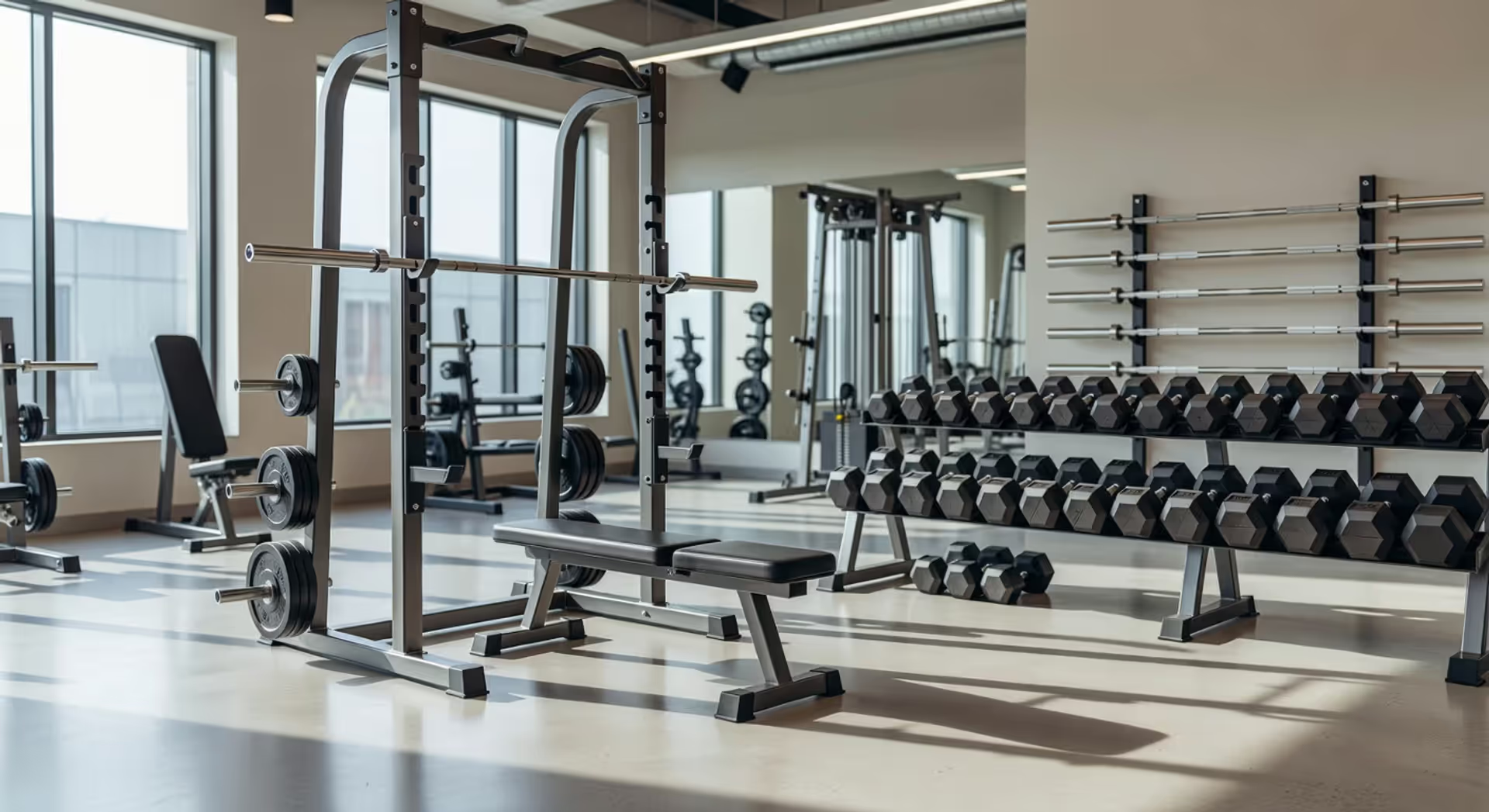
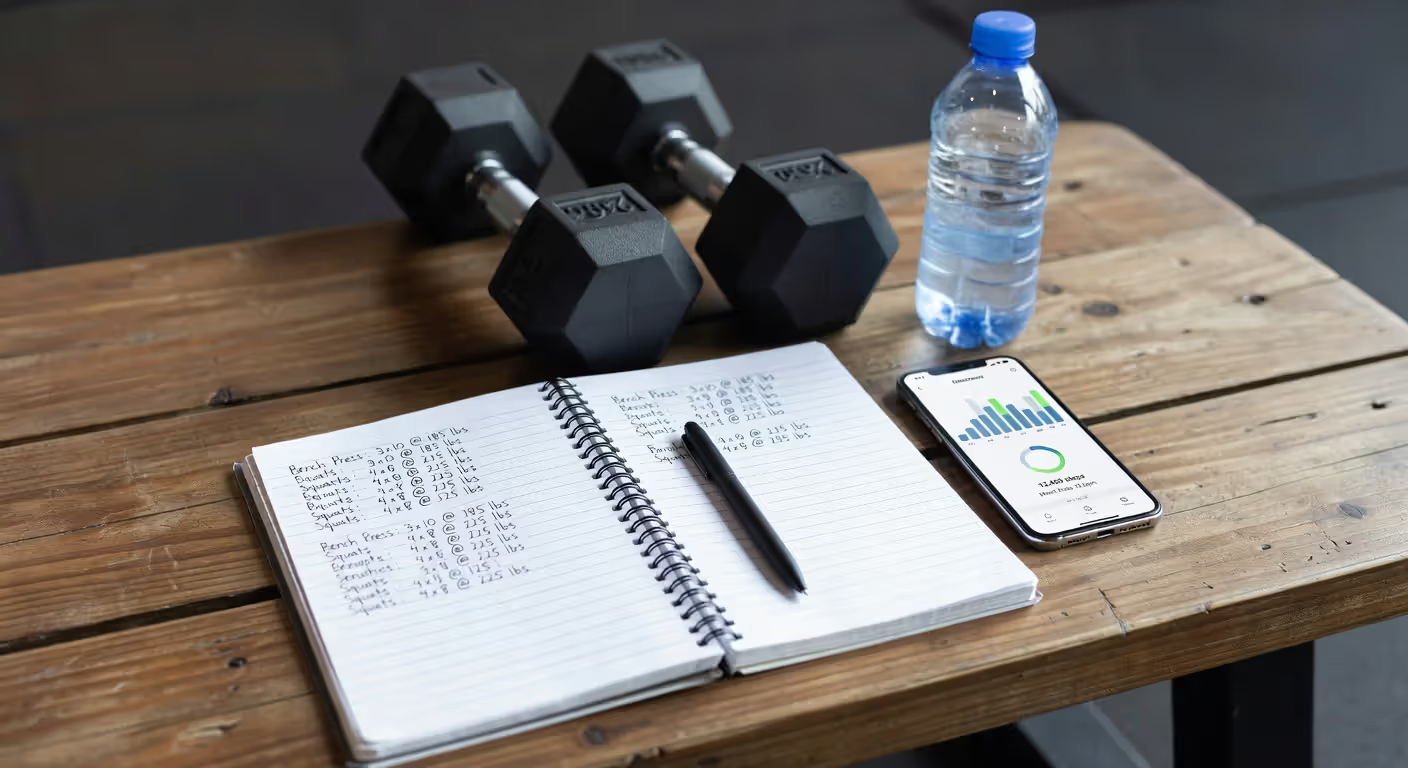
Ever walked into a gym, grabbed a few dumbbells, tried out whatever machine wasn't occupied, then left feeling like you accomplished...something? Most people train this way for months without seeing their body change. Meanwhile, someone else transforms completely in half that time. What separates these outcomes? Usually one simple thing: an actual structured plan. I'm going to show you how to design a gym workout routine that aligns with your specific goals, meshes with your real-world schedule, and delivers measurable progress you can track.
Understanding Workout Splits and Training Frequency
Your gym workout split functions as your training architecture—deciding which muscles work during each session and the frequency they're stimulated throughout the week.
Full body workouts target every major muscle group within a single training session. Chest, back, legs, shoulders, arms—everything gets worked each time you train. This approach excels for newcomers or anyone limited to three weekly sessions. Hitting muscles three times weekly creates frequent growth stimulation that accelerates beginner adaptation remarkably well.
Upper/lower splits separate training into upper body sessions and lower body sessions. A common setup: train upper body Monday and Thursday, hit lower body Tuesday and Friday. You're completing four weekly workouts with each muscle receiving attention twice. This structure works so effectively that many lifters maintain it for years.
Push/pull/legs splits organize training around movement patterns. Push sessions target chest, shoulders, and triceps together. Pull sessions work back and biceps. Leg sessions focus exclusively on lower body. Advanced lifters often run through this cycle twice weekly for six total training days. Each muscle group receives concentrated work with adequate recovery built in.
Bro splits assign complete workouts to individual muscle groups—chest gets Monday (as tradition dictates), back takes Tuesday, legs dominate Wednesday, shoulders own Thursday, arms finish Friday. This dominated bodybuilding culture throughout the 1980s and 1990s. Reality check: beginners typically struggle here because training each muscle once weekly doesn't provide enough frequent stimulus for optimal development.
Frequency matters considerably. Current research demonstrates that stimulating each muscle 2-3 times weekly produces superior strength and size gains compared to once-weekly training. Full body and upper/lower approaches often outperform traditional bro splits for this exact reason, particularly during your initial training years.
Core Gym Exercises Every Routine Should Include
Structure your gym exercises around compound movements—lifts engaging multiple joints and muscle groups simultaneously. These movements deliver maximum training efficiency.
Upper Body Exercises
Bench press dominates chest development. Whether using barbells or dumbbells, flat or inclined angles—every version builds pecs, front delts, and triceps. Rotating between flat, incline, and decline angles ensures complete chest development across all regions.
Rows provide essential balance against pressing movements. Barbell rows, dumbbell rows, cable rows, machine rows—choose what feels right. All variations build back thickness while heavily involving biceps. Every weekly gym routine requires at least one rowing pattern to maintain shoulder health and postural balance.
Overhead press constructs powerful shoulders. Standing barbell presses, seated dumbbell presses, machine variations—they're all effective. Pressing weight overhead also demands intense core stabilization throughout each rep.
Pull-ups and lat pulldowns create back width and that coveted V-taper. Can't manage pull-ups yet? That's completely normal—lat pulldowns build necessary strength for progression. Both movements crush lats while providing substantial arm work.
Dips demolish triceps and lower chest. Bodyweight dips prove deceptively challenging—far harder than appearance suggests. Assisted dip machines help build toward full bodyweight performance.
Lower Body Exercises
Squats establish the foundation for serious leg development. Back squats, front squats, goblet squats—select the variation matching your mobility and objectives. This single movement develops quads, glutes, hamstrings, and core simultaneously.
Deadlifts might represent the most functional exercise available. The movement pattern—lifting heavy objects from the ground—translates directly to real-world activities. Conventional, sumo, trap bar variations all build total-body strength with particular emphasis on your posterior chain.
Lunges and split squats train legs independently, correcting strength imbalances between sides. Walking lunges, reverse lunges, Bulgarian split squats—each deserves inclusion in comprehensive gym training routines.
Leg press permits moving substantial weight with reduced injury risk. It doesn't replace squats, but serves as valuable supplementary work after primary leg movements.
Hamstring curls and leg extensions deliver targeted isolation. These shouldn't dominate your leg training, but they complete overall leg development.
Core and Stabilization Movements
Planks develop anti-extension strength—your ability to resist lower back arching under load. Front planks, side planks, and progressive variations should appear weekly.
Dead bugs and bird dogs train core stability during dynamic movement. They appear ridiculously simple but demand serious motor control.
Cable rotations and Pallof presses build anti-rotation strength. Your core's primary function isn't crunching—it's preventing unwanted motion during other movements and activities.
Hanging leg raises work abs through complete range of motion. These prove considerably more challenging than floor crunches while delivering superior results.
The best gym workout routine is the one you'll actually follow consistently for months. Progressive overload—gradually increasing weight, reps, or volume over time—matters far more than finding the perfect exercise selection. I've seen simple programs executed with discipline beat fancy programming done half-heartedly every single time.
Sample Weekly Gym Routines by Goal
Let's examine specific examples. Here are complete weekly gym routines designed for various experience levels and objectives.
Beginner Full Body Routine (3 days/week)
Monday, Wednesday, Friday:
Goblet squats: 3 x 10 repetitions
Dumbbell bench press: 3 x 10 repetitions
Lat pulldowns: 3 x 10 repetitions
Dumbbell shoulder press: 2 x 12 repetitions
Single-arm dumbbell rows: 3 x 10 repetitions each side
Plank holds: 3 x 30 seconds
This full body gym workout stimulates everything three times weekly. Perfect for learning fundamental movement patterns while establishing your strength foundation. Schedule at least one complete rest day between training sessions.
Muscle Building Upper/Lower Split (4 days/week)
Monday (Upper Focus):
Barbell bench press: 4 x 8 repetitions
Barbell bent-over rows: 4 x 8 repetitions
Incline dumbbell press: 3 x 10 repetitions
Seated cable rows: 3 x 12 repetitions
Dumbbell lateral raises: 3 x 15 repetitions
EZ-bar bicep curls: 3 x 12 repetitions
Cable tricep pushdowns: 3 x 12 repetitions
Tuesday (Lower Focus):
Barbell back squats: 4 x 8 repetitions
Romanian deadlifts: 3 x 10 repetitions
Leg press machine: 3 x 12 repetitions
Lying leg curls: 3 x 12 repetitions
Standing calf raises: 4 x 15 repetitions
Thursday (Upper Focus):
Barbell overhead press: 4 x 8 repetitions
Wide-grip pull-ups: 4 sets until failure
Flat dumbbell bench press: 3 x 10 repetitions
Cable face pulls: 3 x 15 repetitions
Incline dumbbell flyes: 3 x 12 repetitions
Alternating dumbbell hammer curls: 3 x 12 repetitions
Overhead dumbbell tricep extension: 3 x 12 repetitions
Friday (Lower Focus):
Conventional deadlifts: 4 x 6 repetitions
Barbell front squats: 3 x 10 repetitions
Bulgarian split squats: 3 x 10 repetitions per leg
Machine leg extensions: 3 x 15 repetitions
Seated calf raises: 4 x 12 repetitions
Strength Training Push/Pull/Legs (3 days/week)
Monday (Push Movements):
Flat barbell bench press: 5 x 5 repetitions
Standing barbell overhead press: 4 x 6 repetitions
Incline dumbbell press: 3 x 8 repetitions
Parallel bar dips: 3 x 10 repetitions
Cable lateral raises: 3 x 12 repetitions
Wednesday (Pull Movements):
Barbell deadlifts: 5 x 5 repetitions
Weighted pull-ups: 4 x 6 repetitions
Pendlay rows: 4 x 8 repetitions
Rope face pulls: 3 x 15 repetitions
Standing barbell curls: 3 x 10 repetitions
Friday (Leg Movements):
Barbell back squats: 5 x 5 repetitions
Romanian deadlifts: 3 x 8 repetitions
Angled leg press: 3 x 10 repetitions
Seated leg curls: 3 x 12 repetitions
Hanging knee raises: 3 x 10 repetitions
How to Structure Your Gym Training Sessions
Every productive gym workout follows strategic organization. Here's how to sequence each session for optimal performance while minimizing injury risk.
Warm-up (5-10 minutes) prepares your body for intense work. Begin with 5 minutes of light cardio—rowing machine, bike, or brisk walking. Continue with dynamic mobility: leg swings in multiple directions, controlled arm circles, air squats. Complete progressively heavier sets of your first main lift.
Exercise order follows specific hierarchy. Attack your most demanding compound lifts first while you're mentally fresh and physically energized. Squats, deadlifts, bench press, overhead press—these require maximum energy and sharp focus. Save isolation movements for later. You can effectively curl when fatigued—you absolutely cannot safely squat heavy when exhausted.
Sets and reps align with your specific goal. Maximum strength development requires 1-6 reps with heavy loads and 3-5 minute rest intervals. Muscle hypertrophy thrives on 6-12 reps with moderate loads and 60-90 second rest periods. Muscular endurance demands 12-20+ reps with lighter loads and brief 30-60 second rest intervals.
Most gym exercises need 3-4 working sets after warm-ups. Beginners can start with 2-3 sets per exercise and gradually increase volume as work capacity improves.
Rest periods vary by exercise complexity. Large compound movements demand longer recovery—minimum 2-3 minutes between sets. Smaller isolation exercises recover faster—60-90 seconds works fine. Don't rush this. Cutting rest too short just means you'll lift lighter weights and accumulate less quality work.
Workout duration typically runs 45-75 minutes. This encompasses your warm-up routine, all working sets, and cool-down activities. Sessions under 30 minutes rarely provide enough volume for growth unless you're doing very high-intensity protocols. Sessions exceeding 90 minutes often contain wasted time or excessive exercises. Quality beats quantity every time.
Common Gym Workout Mistakes to Avoid
Even experienced lifters make these errors. Catching them early prevents months of spinning your wheels.
Overtraining occurs when your training volume exceeds your recovery capacity. Warning signs include chronic fatigue, declining performance, sleep disturbances, persistent soreness. More volume doesn't automatically equal better results. Muscle tissue actually grows during recovery periods, not during the training session. Hitting each muscle group hard 2-3 times weekly with proper nutrition provides sufficient stimulus.
Poor form runs rampant in commercial gyms. Ego lifting—choosing weights too heavy for control—creates injury risk while reducing muscle activation. Common example: using momentum instead of muscular tension. That partial-range bench press with excessive bounce off your chest isn't building your pecs effectively. Control the weight through its complete range.
Skipping muscle groups creates imbalances. The guy training chest three times weekly while neglecting back work is building a recipe for shoulder problems. Your gym training routine should address opposing muscles equally. Balance every push with a pull. Match quad work with hamstring work.
No progression plan means you're maintaining current fitness rather than improving. Handling identical weights for identical reps month after month? You're not building muscle or strength—you're treading water. Log your workouts. Systematically add weight or reps. That's what drives adaptation.
Inadequate recovery sabotages training efforts. Sleep quality, nutrition, and rest days matter as much as your gym workout itself. Training seven days weekly while sleeping poorly and eating inadequately won't build your ideal physique. It'll burn you out and potentially cause injury.
Tracking Progress and Adjusting Your Routine
You can't improve what you don't measure. Systematic tracking transforms vague impressions into actionable data.
How to measure results extends beyond scale weight. Take progress photos every 4 weeks from consistent angles in identical lighting. Record body measurements—chest, waist, arms, thighs. Document your gym workout performance: specific weights, reps completed, total sets. Strength improvements often appear before visible physique changes, making detailed lift logging essential.
Many people experience scale stagnation while their strength skyrockets and their clothes fit completely differently. That's real progress. Scale weight alone never tells the full story.
When to change exercises depends on your goals and current progress. If an exercise consistently causes joint pain (different from normal muscle soreness), replace it immediately. If you've plateaued on a specific lift for 4-6 weeks despite proper effort and recovery, try a similar variation. Don't change exercises just because you're bored though. Real mastery requires extended practice.
Practical guideline: keep exercises producing continued progress, modify those that have stalled. If your bench press keeps climbing steadily, keep benching. If your overhead press hasn't budged in two months, experiment with a different pressing variation.
Progressive overload principles drive all physical adaptation. The demands on your muscles need to increase over time. This happens through several mechanisms:
Adding weight to the bar
Completing more reps with identical weight
Increasing sets in your gym workout
Decreasing rest intervals while maintaining quality
Improving exercise technique and movement control
Simplest method: when you successfully complete all prescribed sets and reps with solid form, add 5 pounds to upper body lifts or 10 pounds to lower body movements. Can't complete all reps with the increased weight? That's normal—you'll build up to it through consistent effort.
Deload weeks every 4-8 weeks prevent accumulated fatigue and burnout. Cut your training volume or intensity by roughly half for one full week. This isn't laziness—it's strategic recovery letting your body fully adapt to accumulated stress. You'll return noticeably stronger after proper deloading.
Between three and five sessions weekly works effectively for most goals. New lifters thrive with three full body sessions each week. Intermediate lifters typically train four days using an upper/lower split. Advanced trainees might train five or six days with push/pull/legs or bro split patterns. Your recovery capacity, schedule constraints, and specific goals determine optimal frequency. More frequent training doesn't automatically produce better results—quality and consistency outweigh sheer quantity. If you can realistically commit to three days weekly, a properly designed full body gym workout generates excellent progress.
What separates full body routines from split routines?
Full body gym workouts target every major muscle group during each session—you'll work chest, back, legs, shoulders, and arms every gym day. You typically train three times weekly with rest days between. Split routines distribute muscle groups across different days. Upper/lower splits separate upper body training from lower body sessions. Push/pull/legs splits organize workouts into pushing movements, pulling movements, and leg-focused training. Splits permit greater volume per muscle group each session but require more weekly gym visits to stimulate everything twice.
How long should each training session last?
Most productive sessions run 45-75 minutes. This encompasses your warm-up protocol, all working sets, and cool-down routine. Sessions under 30 minutes rarely provide enough volume for muscle growth unless you're using very high-intensity protocols. Sessions exceeding 90 minutes often contain wasted time or excessive exercises. If your gym training routine regularly surpasses 90 minutes, assess whether you're resting excessively between sets or performing too many exercises. Training efficiency matters—you want concentrated work, not endless gym marathons.
Should beginners use full body or split routines?
Beginners gain most effectively from full body routines performed three days weekly. You're developing movement skills, building work capacity, and adapting to training demands. Full body workouts let you practice each exercise multiple times per week, accelerating motor learning and skill development. You'll also experience faster strength gains since you're stimulating each muscle three times weekly rather than once. Save split routines for after you've built a solid foundation—typically after 6-12 months of consistent training. One exception: if you can only train twice weekly, an upper/lower split produces better results than two full body sessions.
When's the right time to modify my current routine?
Modify your routine when progress plateaus despite proper effort, adequate recovery, and appropriate nutrition. If your strength hasn't increased for 4-6 weeks and you're managing everything correctly—sleeping enough, eating adequate calories, implementing progressive overload—it's time to adjust something. This doesn't require completely overhauling everything. Often small changes work effectively: swapping one exercise for a comparable variation, adjusting your rep ranges, or restructuring your weekly organization. Also change if an exercise consistently produces joint discomfort or if your goals shift. Don't change simply because you're bored though—meaningful results demand consistency sustained over months, not constant novelty.
Can I combine cardio and weights in the same workout?
Absolutely, but sequencing matters depending on your primary goal. If strength development or muscle building represents your main objective, complete weight training first while you're fresh, then do cardio afterward. Attempting heavy squats after a long run creates poor performance and injury risk. If cardiovascular endurance represents your priority, do cardio first. For most people combining both, 20-30 minutes of moderate-intensity cardio after lifting works well. It doesn't significantly compromise recovery while improving conditioning. Just avoid combining intense cardio and heavy leg training on the same day—your legs need adequate recovery. Practical solution: lift weights three days, do cardio two or three days, and schedule at least one complete rest day weekly.
Building an effective gym workout routine doesn't require complexity, but it does demand thoughtful planning and consistent execution. Start with a training split matching your experience level and weekly availability, emphasize compound exercises engaging multiple muscle groups, and implement progressive overload by systematically increasing weights or reps. Log your sessions, eat enough to support your goals, and give your body sufficient recovery time. The routine you can maintain consistently for months will always outperform the "optimal" program you abandon after three weeks. Pick your approach, commit to it fully, and adjust based on measurable results. That's how real transformation happens.