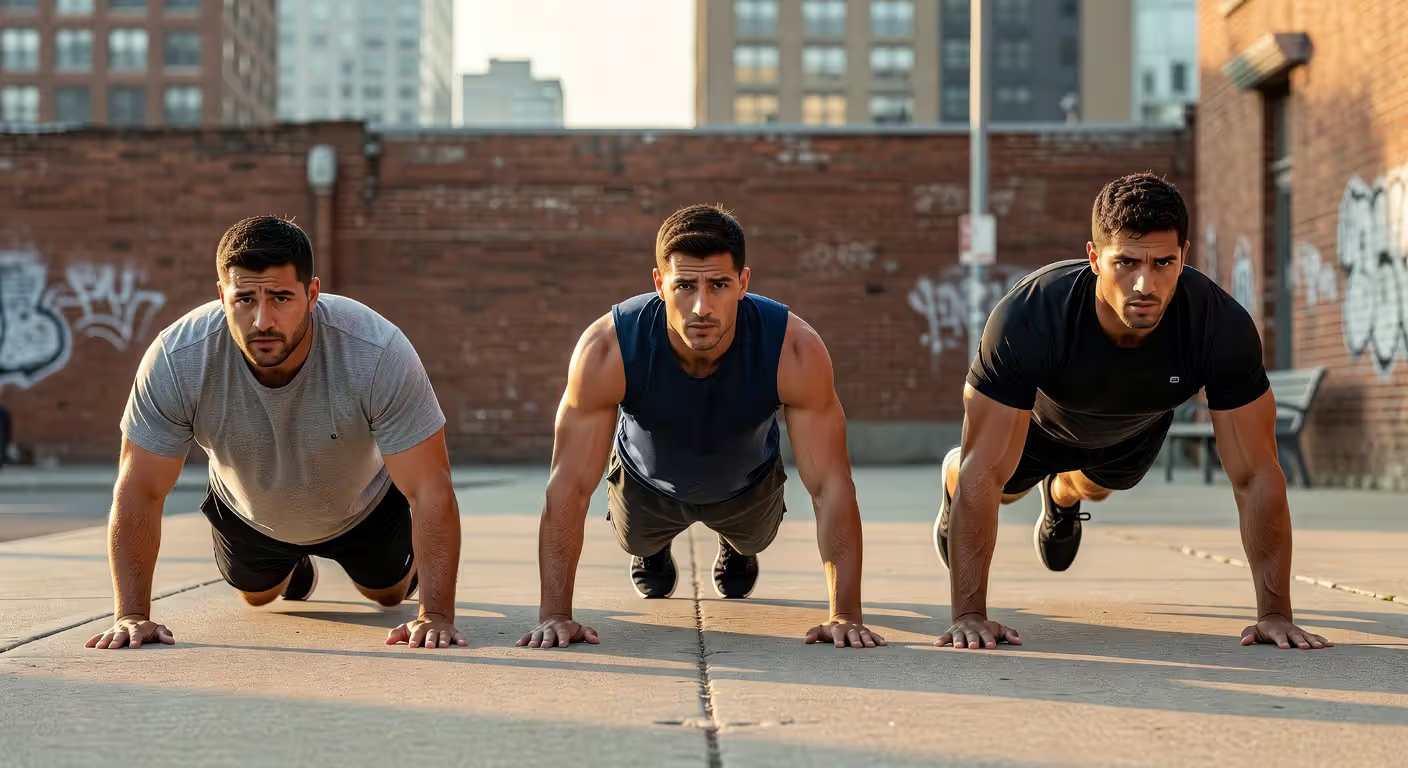
Bodyweight training isn't new—ancient Greek soldiers, medieval knights, and 20th-century gymnasts all built strength without barbells. But right now? Calisthenics is having a moment. Walk into any park and you'll see people cranking out muscle-ups on playground equipment. Scroll social media and you'll find athletes holding impossible-looking static poses. Why the surge? Because you don't need a $60 monthly membership or a garage full of equipment. Just floor space and determination. I've watched complete beginners go from struggling with knee push-ups to knocking out sets of 20 clean reps in three months. I've seen office workers in their 40s learn their first pull-up after years of thinking it was impossible. Calisthenics exercises work anywhere—your bedroom at 6 AM, a hotel room during business trips, or that random playground near your kid's soccer practice.
Let's break down everything from basic concepts to designing your own routine, plus the mistakes that'll stall your progress.
What Is a Calisthenics Workout?
A calisthenics workout uses your body weight as resistance. That's it. No dumbbells, no cables, no fancy machines. The term comes from Greek—"kalos" (beauty) and "sthenos" (strength). Fitting, considering how these movements build functional, athletic physiques.
Instead of loading a barbell, you're controlling your own mass through space. This isn't just about moving from point A to point B. You're balancing, stabilizing, and coordinating multiple muscle groups simultaneously. Try holding a plank versus lying on a leg press machine—one demands total-body tension, the other lets you zone out.
Progressive overload still applies, just differently. You can't add five pounds to your body every week. Instead, you change leverage. A regular push-up becomes a diamond push-up. Then you elevate your feet. Eventually, you're working toward one-arm variations. Each step increases the challenge without touching a weight plate.
Here's where calisthenics training diverges from traditional lifting. Weight training builds absolute strength—how much external load you can move. Calisthenics develops relative strength—your power compared to your body weight. A 200-pound guy benching 300 pounds is strong. A 170-pound athlete doing freestanding handstand push-ups? Also incredibly strong, just measured differently. You probably won't deadlift 600 pounds doing only calisthenics. But you might achieve a front lever or planche—skills that require strength-to-weight ratios most gym-goers never approach.
Benefits of Calisthenics Training
The perks go way beyond saving money (though let's be honest, that's nice).
You can train literally anywhere. I've done calisthenic workouts in airport terminals during layovers, on beaches during vacations, and in tiny apartment bedrooms. A pull-up bar helps, sure. But you can build serious strength with just floor space. Zero commute time, zero excuses about crowded facilities.
The strength transfers to real life. Bodyweight exercises calisthenics mimic natural human movement. Getting up off the floor without using your hands? That's basically a pistol squat progression. Lifting your kid overhead? Similar mechanics to a handstand push-up. Compare that to being able to leg press 400 pounds but struggling to climb stairs without getting winded.
Your joints usually feel better. I'm not claiming calisthenics prevents all injuries—poor form still causes problems. But moving through natural ranges of motion, without heavy external loads compressing your spine, tends to be easier on connective tissue. Especially if you're over 35 and your joints have some mileage on them.
You gain mobility while getting stronger. Deep squats require and build hip and ankle flexibility. Full-range pull-ups demand shoulder mobility. An L-sit forces hamstring flexibility. You're not just getting strong in shortened positions—you're developing usable strength through complete ranges of motion.
Anyone can start, regardless of fitness level. Can't do a regular push-up yet? Start against a wall. Pull-ups impossible? Use a resistance band or do negatives. Elite athlete? Chase planche progressions or one-arm pull-up variations. The same fundamental movements scale across every fitness level imaginable.
Calisthenics is the most honest form of training. Your body can't lie about what it can and can't do. Either you can perform the movement or you can't—there's no hiding behind machines or assistance.
Workouts are fast. Thirty to forty-five minutes covers a complete session. You eliminate the entire process of commuting, parking, changing in locker rooms, and competing for equipment access. Just you and the work.
Essential Calisthenics Exercises to Master
These are your bread-and-butter movements. Master these before chasing fancy Instagram skills.
Upper Body Calisthenic Exercises
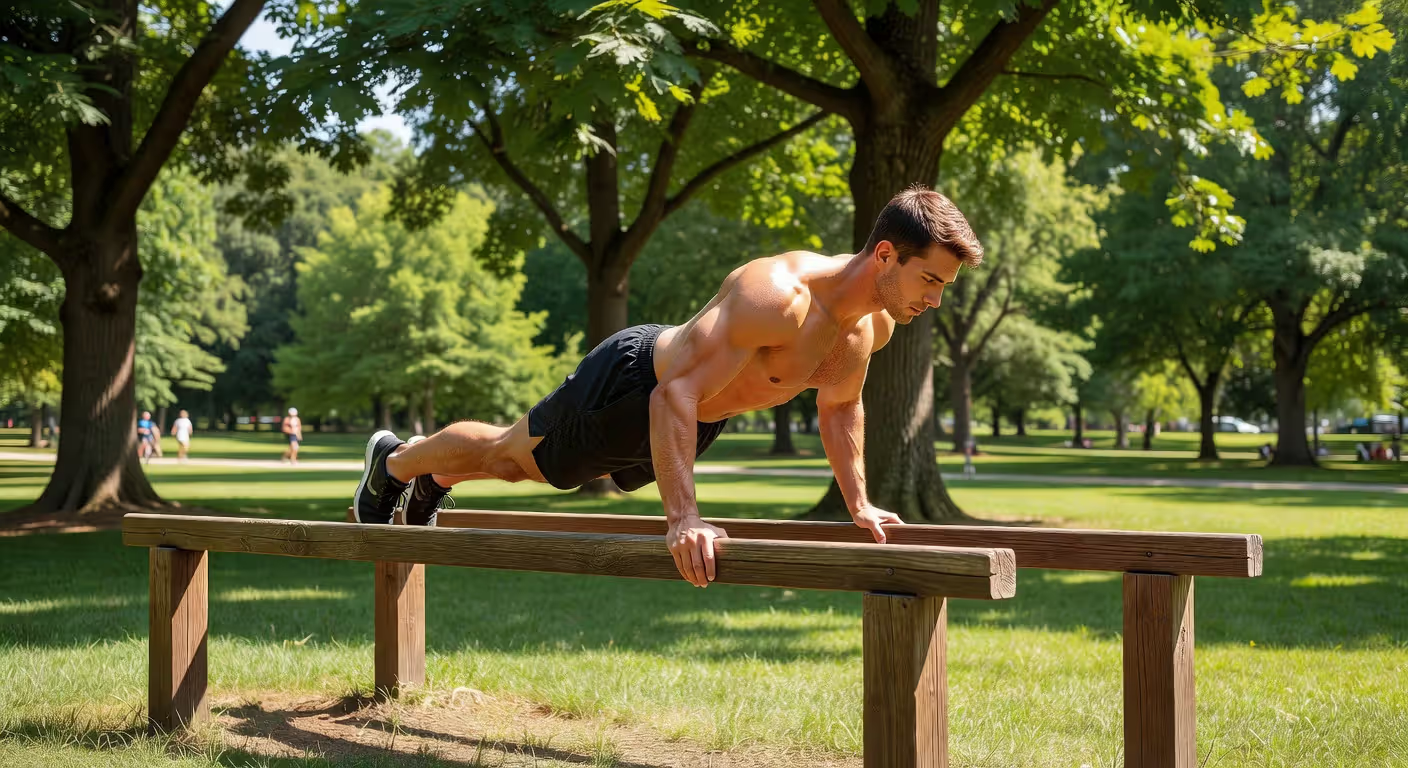
Push-ups are non-negotiable. Hands slightly wider than shoulders, body rigid as a plank from head to heels. Descend until there's maybe an inch of clearance between your torso and the ground. The biggest mistake? Letting your hips sag or pike up. Keep your abs braced like someone's about to punch you in the stomach.
Pull-ups build your back, biceps, and grip. Start from a dead hang with straight elbows. Ascend until your eyes clear the bar's height. Lower with control. Can't do one yet? Use a resistance band looped over the bar, or practice negatives—jump to the top position and take 5-8 seconds to lower yourself down. I've seen people go from zero pull-ups to five solid reps in eight weeks using negatives three times per week.
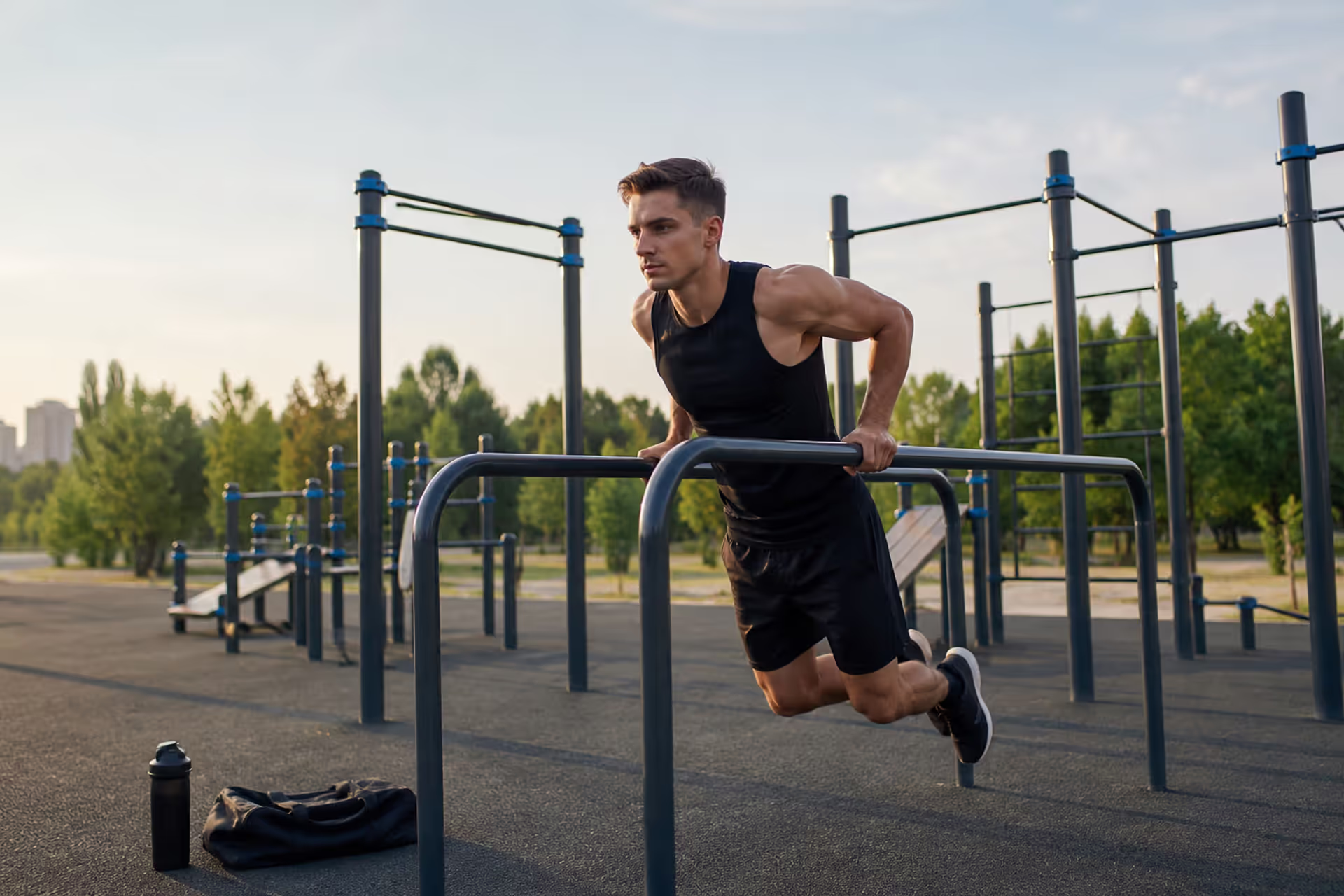
Dips hammer your triceps, chest, and shoulders. Using parallel bars or a sturdy bench, descend until your upper arms roughly parallel the floor. Push back up. Lean forward to emphasize chest. Stay upright to target triceps more. If these bother your shoulders, skip them—there are other options.
Pike push-ups bridge the gap toward handstand push-ups. Form an inverted V-shape with your body, hips pointing toward the ceiling. Bend your elbows to bring your forehead toward the floor space between your hands. These build serious overhead pressing strength without needing to kick up into a handstand.
Lower Body Calisthenic Exercises
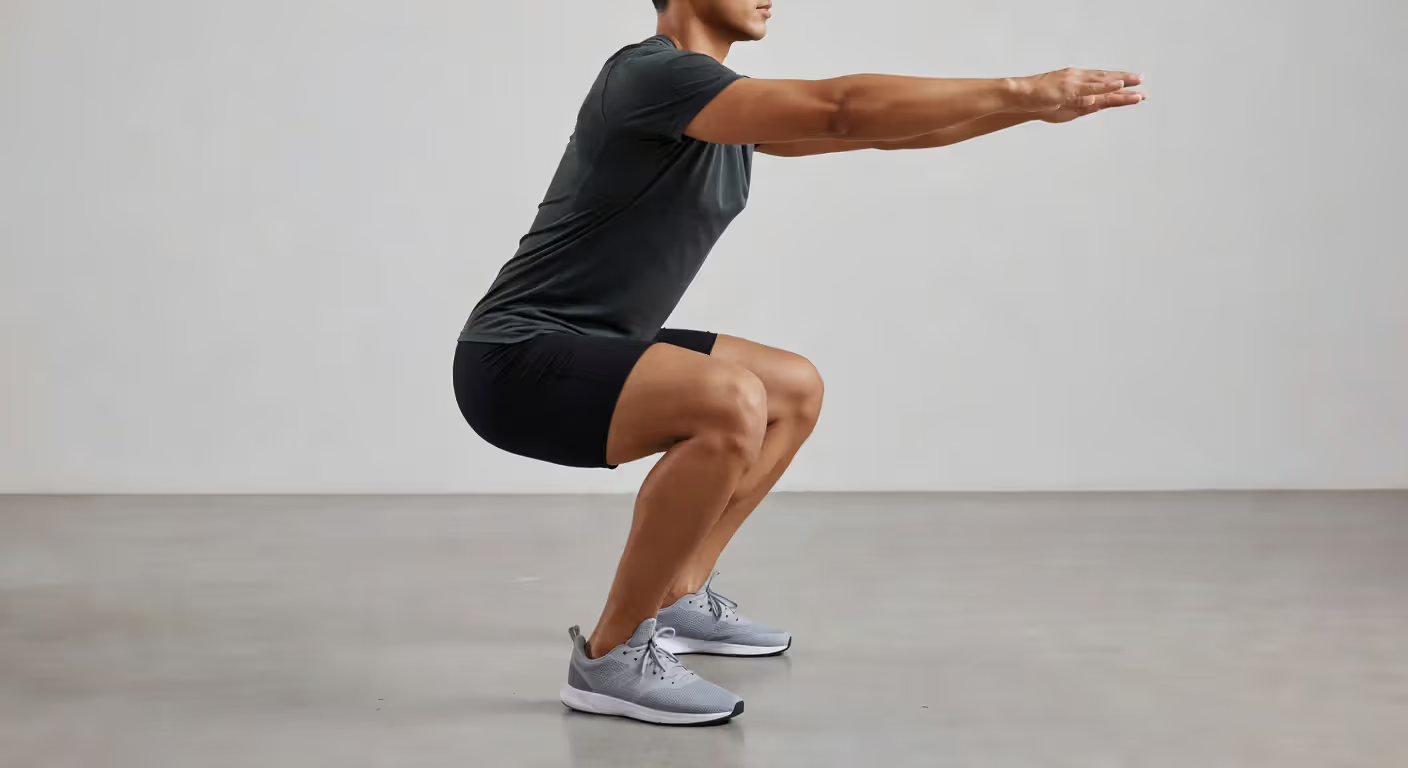
Squats are foundational. Feet shoulder-width apart. Sit back and down like you're aiming for a chair. Keep your chest up. Knees track over your toes. Full depth means your hip crease drops below your knees. Heels lifting off the ground signals you need to improve ankle range of motion.
Lunges develop single-leg strength and balance. Step forward into a split stance. Both knees should bend to about 90 degrees. Drive through your lead leg to stand back up. You can alternate legs each rep or finish one side completely before switching.
Pistol squats are the advanced single-leg version. Squat down on one leg while extending the other leg straight out in front of you. These require considerable strength, balance, and ankle mobility. Most people need months of progression work to nail their first clean rep. I spent four months on various progressions before achieving mine.
Glute bridges target your posterior chain. Lie on your back, feet flat. Drive upward through your heels until your body forms a diagonal line from knees to shoulders. Contract your glutes forcefully at the peak. If these feel too easy, try single-leg variations.
Core Bodyweight Exercises
Planks build isometric core strength. Rest on your forearms in a straight-body position. Avoid letting your midsection drop or your rear end rise too high. If you can hold a standard plank for over two minutes, move on to harder variations—you've outgrown this one.
Hollow body holds look simple but they're brutal. Lie on your back. Press your lower back flat into the floor. Lift your shoulders and legs slightly off the ground while reaching your arms overhead. This position forms the foundation for tons of advanced calisthenics skills.
Leg raises hit your lower abs. Hanging from a bar or lying flat, lift your legs to 90 degrees with straight knees. Lower slowly—that eccentric portion is where the magic happens. If hanging leg raises are too tough, start with lying variations.
Mountain climbers add a dynamic element. From a high plank, drive one knee toward your chest, then explosively switch legs like you're running in place. These build core endurance while spiking your heart rate. Thirty seconds of these will leave you breathing hard.
How to Build Your Calisthenics Workout Routine
Random exercise selection won't cut it. Structure matters.
Warm up properly. Five to ten minutes minimum. Arm circles, leg swings, spinal rotations, light cardio. Get blood flowing and wake up your nervous system. I know it's tempting to skip this, especially when you're short on time. Don't. A proper warm-up prevents injuries and improves performance.
Exercise order matters. Put the hardest, most technical movements first when you're fresh. Pull-ups and dips typically open sessions. Then push-ups and rows. Core work and conditioning come last. This prioritizes skill development and strength gains before fatigue compromises your form.
Match sets and reps to your goals. Building strength? Do 3-5 sets of 3-8 reps with challenging progressions. Want muscle growth? Try 3-4 sets of 8-15 reps. Developing endurance? Higher reps (15-25+) with shorter rest periods work better.
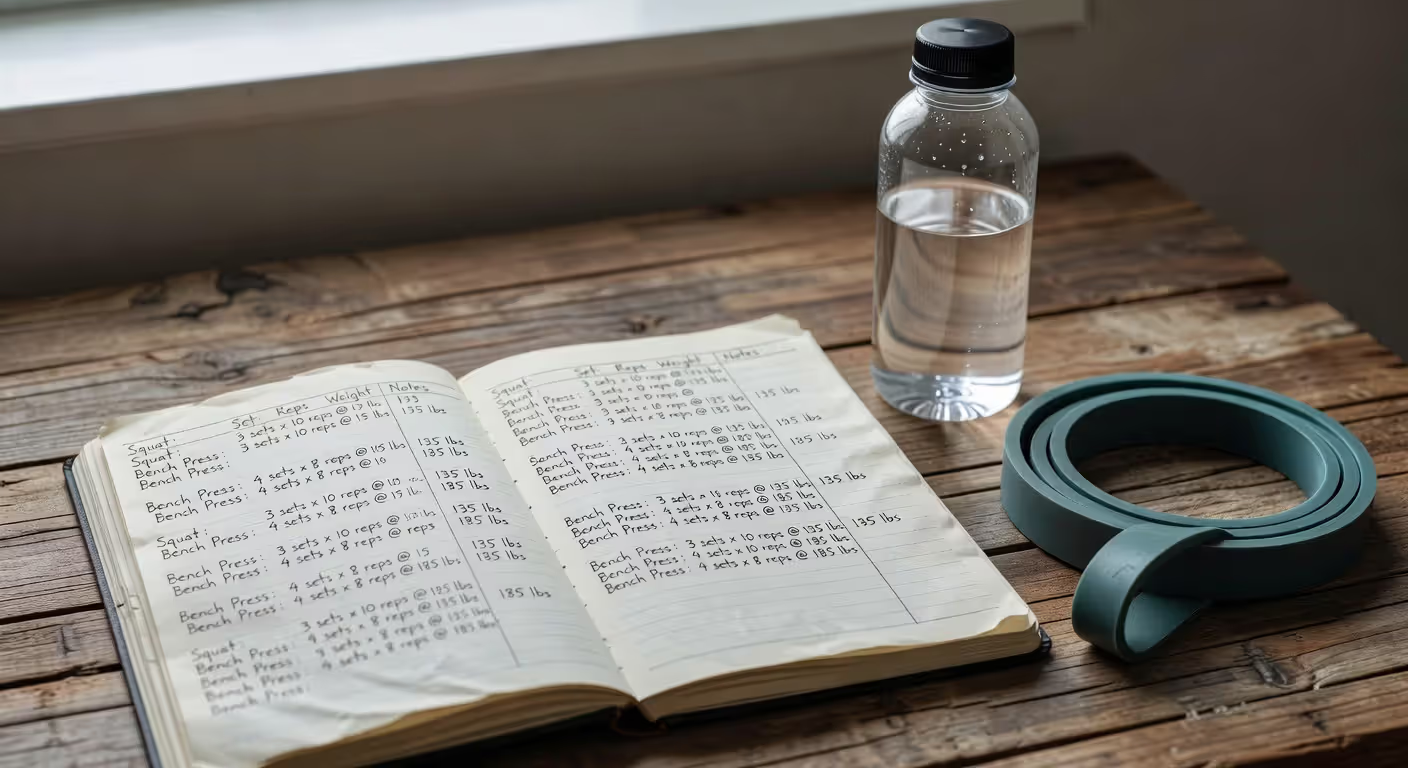
Progressive overload isn't optional. Your workouts must get harder over time. Add reps. Add sets. Shorten rest periods. Slow down the tempo. Progress to harder variations. Document everything you do—whether in a training journal, spreadsheet, or smartphone app. I see too many people doing identical workouts for months, then wondering why they've plateaued.
Frequency depends on recovery. Three to four full-body calisthenics workouts per week works for most people. Others prefer upper/lower splits done four to six times weekly. Listen to your body—persistent soreness, constant fatigue, or declining performance means you're overdoing it.
Cool down after training. Five to ten minutes of static stretching helps with flexibility and recovery. Hold stretches for 30-60 seconds, focusing on muscles you just worked. This isn't glamorous, but it pays dividends long-term.
Common Mistakes in Calisthenics Workouts
Even experienced folks fall into these traps.
Sacrificing form for reps. Thirty sloppy push-ups with sagging hips don't build strength—they reinforce bad movement patterns and invite injury. Ten perfect reps beat thirty ugly ones every time.
Skipping progressions. You can't jump from regular push-ups straight to one-arm variations. There are intermediate steps for a reason. Every variation prepares your body for the increased demands of what comes next. Respect the process.
Too much pushing, not enough pulling. Lots of people love push-ups but avoid pull-ups because they're harder. This creates imbalances—overdeveloped chest and front shoulders paired with weak back muscles. Match every push with a pull. Your posture will thank you.
Ignoring mobility work. Tight hips, stiff ankles, or limited shoulder mobility will cap your progress and increase injury risk. Spend 10-15 minutes daily on mobility. Future you will appreciate it.
Training to failure constantly. Occasionally pushing sets to complete muscular failure has its place. Doing it every set of every workout fries your nervous system and hampers recovery. Most sets should end with one or two quality reps left in the tank.
Inconsistent training. Going hard for two weeks, taking two weeks off, then starting over won't generate progress. Consistent moderate effort beats sporadic intensity every single time.
Beginner vs. Intermediate vs. Advanced Calisthenics Workouts
Everyone progresses at their own pace, but these benchmarks provide useful guideposts.
Master fundamental movement patterns, develop baseline conditioning, complete 10 consecutive push-ups and hold a 30-second plank
Intermediate
Standard push-ups, deep squats, pull-ups (band-assisted if necessary), parallel bar dips, hollow body holds, walking lunges
3-4 × 8-15
Three to four sessions (either full-body or split routines)
Perform 10+ consecutive pull-ups, 20+ push-ups, 60-second planks, begin skill training (L-sits, wall-supported handstands)
Advanced
Single-arm push-up variations, pistol squats, muscle-ups, freestanding handstand push-ups, front lever progressions, dragon flags
3-5 × 5-12
Four to six sessions (typically organized by movement categories)
Achieve mastery in advanced skills, sustain strength across all movement patterns, experiment with dynamic calisthenics movements
The beginner phase typically lasts 3-6 months with consistent practice. Focus on learning proper mechanics and building work capacity. Don't rush through this—the foundation you build here determines how far you'll go later.
The intermediate phase is where most people spend the longest time, often 1-2 years. You're strong enough to perform fundamentals competently while working toward advanced moves. This stage is particularly fun because you're exploring different progression paths and discovering which movements click for you.
The advanced phase takes years of dedicated practice. Here you're chasing skills that require exceptional strength-to-weight ratios and refined body control. Most people never reach this level, and that's completely fine—intermediate-level calisthenic strength provides more than enough fitness for excellent health and physical capability.
Frequently Asked Questions About Calisthenics Workouts
Do I need equipment for calisthenics workouts?
Technically, no. You can build impressive strength using just your body and floor space. That said, a pull-up bar significantly expands your options and costs maybe $30-40. Resistance bands help with assisted progressions. Parallettes or dip stations add variety. But if you're just starting or don't have access to equipment, you can absolutely make serious progress with zero gear.
How long before I notice results from calisthenics?
You'll feel better and move easier within two weeks. Measurable strength gains usually show up around the 4-6 week mark—more reps, longer holds, harder variations. Visible physique changes generally take 8-12 weeks of consistent training paired with decent nutrition. Everyone's timeline varies based on starting point, consistency, diet, sleep, and genetics.
Is building muscle possible using only calisthenics?
Absolutely. Your muscles can't tell the difference between a barbell and your body weight—they only respond to tension, volume, and progressive challenge. Plenty of calisthenics athletes have built impressive physiques using only bodyweight methods. The key is systematically making exercises harder while eating enough protein to support muscle growth. That said, achieving extreme muscle mass (competitive bodybuilder size) is easier with traditional weights, though most people aren't chasing that specific goal anyway.
Are calisthenics workouts appropriate for all ages?
Yes, with smart modifications. Kids naturally do bodyweight stuff—running, climbing, jumping. Adults at any age can benefit from calisthenics training, though older adults should start conservatively and emphasize mobility alongside strength. The scalability of calisthenic exercises makes them adaptable for nearly everyone. If you have specific medical conditions or existing injuries, talk to your doctor before starting any new training program.
What strategies prevent injury during calisthenics training?
Warm up thoroughly before each session. Master easier progressions before attempting advanced skills. Listen to your body—sharp pain means stop immediately, not push through. Build strength gradually; connective tissues adapt slower than muscles. Include mobility work and adequate recovery days in your weekly plan. Most calisthenics injuries come from ego-driven attempts at skills beyond your current readiness or ignoring early warning signs of overuse.
Is combining calisthenics with weight training effective?
Definitely. Many athletes use a hybrid approach—calisthenics for upper body pulling and pushing, weights for lower body strength, or vice versa. Some use calisthenics for skill work and relative strength while using weights for targeted muscle building. These methods complement each other well. Just manage your total weekly training volume to avoid overtraining. When mixing both within the same week, ensure adequate recovery between sessions.
Calisthenics workouts offer a sustainable, effective path toward building strength, mobility, and body control that serves you for life. The beauty is in the simplicity—no gym membership, no equipment requirements, just you systematically mastering progressively harder movements. Start where you are right now. Prioritize quality over quantity. Trust the process. Your body is capable of far more than you probably think. The only way to find out what's possible is to start training and stay consistent. Your first pull-up, your first pistol squat, your first L-sit hold—these accomplishments feel incredible because you earned them entirely through dedicated effort and persistent practice.