You've decided it's time to get in shape. Maybe you joined a gym, bought some dumbbells, or just cleared space in your living room. But now what? Standing in front of equipment—or staring at your empty floor—without direction wastes time and kills motivation fast. What transforms good intentions into real progress is a clear beginner workout plan that starts where you actually are, not where you think you should be. This eight-week framework will teach you the fundamental movements, build training habits that stick, and create the physical foundation for years of improvement ahead.
Why Starting with a Structured Plan Matters
Training without structure feels productive while accomplishing nothing.
Following work out plan for beginners delivers three outcomes that random gym sessions never will: systematic progression, reduced injury risk, and sustainable habits. Systematic progression means your muscles face incrementally greater demands each week. Without this roadmap, you'll either repeat identical workouts indefinitely or leap into exercises your body can't safely handle yet.
Injury prevention deserves more attention than beginners typically give it. Well-designed workout plans for beginners respect the fact that connective tissues adapt more slowly than muscle fibers do. Your tendons, ligaments, and stabilizing muscles need gradual exposure to increasing loads. Skip this adaptation period, and you're looking at strains or tendinitis that'll sideline you for weeks.
Then there's the habit factor. The classic beginner pattern goes like this: three intense sessions, debilitating soreness, then a full week off. A proper plan manages recovery, distributes intensity appropriately, and keeps you training even when enthusiasm dips. You're constructing a lifestyle, not just chasing a temporary endorphin rush.
What Makes a Good Workout Routine for Beginners
Every effective gym routine for beginners shares certain core principles.
Training frequency: Aim for three to four weekly sessions. More frequent training doesn't allow proper recovery. Less frequent training fails to build momentum. Your body strengthens itself between workouts, not during them. Plan for at least two complete rest days every week—they're as essential as the training days themselves.
Session length: Keep workouts between 45 and 60 minutes total. Beginners often mistakenly equate longer sessions with superior results. They're wrong. You'll achieve more with concentrated effort in 50 minutes than wandering aimlessly through a two-hour gym visit.
Movement selection: The most effective beginner exercise routine prioritizes compound movements—exercises recruiting multiple muscle groups simultaneously. Squats, push-ups, rows, and deadlifts deliver far greater returns than bicep curls or calf raises ever will. Save single-joint isolation exercises for later phases.
Built-in advancement: Each week should present slightly greater demands than the previous one. That might mean adding a single rep, increasing load by five pounds, or shortening rest intervals by 15 seconds. Small increments compound dramatically over time.
Strategic recovery placement: Never train identical muscle groups on back-to-back days. A typical arrangement is Monday/Wednesday/Friday for full-body training, or Monday/Tuesday, Thursday/Friday if you're splitting upper and lower body work.
Simplicity wins here. Programs with dozens of exercises sound impressive but rarely get completed consistently.
Your Week-by-Week Beginner Exercise Routine
This eight-week beginner workout plan unfolds across four progressive phases. Each phase builds directly on what came before.
Weeks 1–2: Foundation Phase
Right now, your only objectives are mastering basic movement patterns and establishing the training habit.
Schedule: Three sessions weekly (for example: Monday, Wednesday, Friday)
Concentrate exclusively on technique. When a movement feels awkward or painful, stop and reassess. Record yourself on video or request form feedback from a trainer. These initial two weeks aren't about testing your limits—they're about programming correct movement patterns into your nervous system.
Weeks 3–4: Building Consistency
You've learned the fundamental movements. Now we increase training volume and introduce variety.
Schedule: Three to four sessions weekly
Session format:
Same warm-up protocol
3 sets of 10-12 repetitions
60-75 second rest intervals between sets
Introduce one additional exercise per session
New movements:
Lunges (either walking or stationary variations)
Dumbbell chest press (or continue with push-ups)
Lat pulldowns or assisted pull-ups
Dead bugs (core stability work)
Romanian deadlifts (light weight, emphasize hip hinge pattern)
You'll notice significantly less soreness compared to week one. That's your body adapting, not evidence you need to push harder. Trust the process. Weight and repetitions will increase according to schedule.
Weeks 5–6: Adding Intensity
Time to genuinely challenge yourself. Your exercise routine for beginners now incorporates heavier loads and reduced rest periods.
Schedule: Four sessions weekly (consider splitting upper and lower body)
Upper body sessions:
Push-ups or dumbbell press: 3×12
Dumbbell rows: 3×12
Shoulder press: 3×10
Tricep dips (use assistance if needed): 3×8
Bicep curls: 2×12
Lower body sessions:
Goblet squats: 4×10
Romanian deadlifts: 3×10
Lunges: 3×10 per leg
Leg press (when available): 3×12
Calf raises: 3×15
Rest intervals: 60 seconds
The increased training frequency allows you to stimulate each muscle group twice weekly, which research indicates optimizes adaptation for beginners. You're also prepared to add a fourth set to primary movements like squats.
Weeks 7–8: Establishing Your Rhythm
You're no longer a true beginner—at least not in the "completely lost" sense.
Schedule: Four sessions weekly, upper/lower split
Programming adjustments:
Increase loads by 5-10% on movements that feel too comfortable
Add a fourth set to compound exercises
Reduce rest to 45-60 seconds on supplementary movements
Experiment with tempo (try lowering weights over a 3-second count)
Example upper session:
Barbell or dumbbell bench press: 4×8
Bent-over rows: 4×8
Overhead press: 3×10
Pull-ups or lat pulldowns: 3×8
Dumbbell curls and tricep extensions: 3×12 each
Example lower session:
Barbell back squats or goblet squats: 4×8
Romanian deadlifts: 4×8
Bulgarian split squats: 3×10 per leg
Leg curls: 3×12
Plank variations: 3×30-45 seconds
By the eighth week, you should clearly understand which movements you enjoy, which ones challenge you most, and how your body responds to different training approaches.
Program Type
Weekly Sessions
Training Focus
Recovery Days
Session Duration
Ideal For
3-Day Full Body
Mon/Wed/Fri
All major muscle groups per session
4 days weekly
45-60 minutes
True beginners, limited time
4-Day Upper/Lower
Mon/Tue/Thu/Fri
Upper body twice weekly, lower body twice weekly
3 days weekly
50-65 minutes
Beginners prepared for increased volume
Essential Exercises Every Beginner Should Know
These movements form the foundation of virtually any effective program. Master them, and you can construct almost any routine you want.
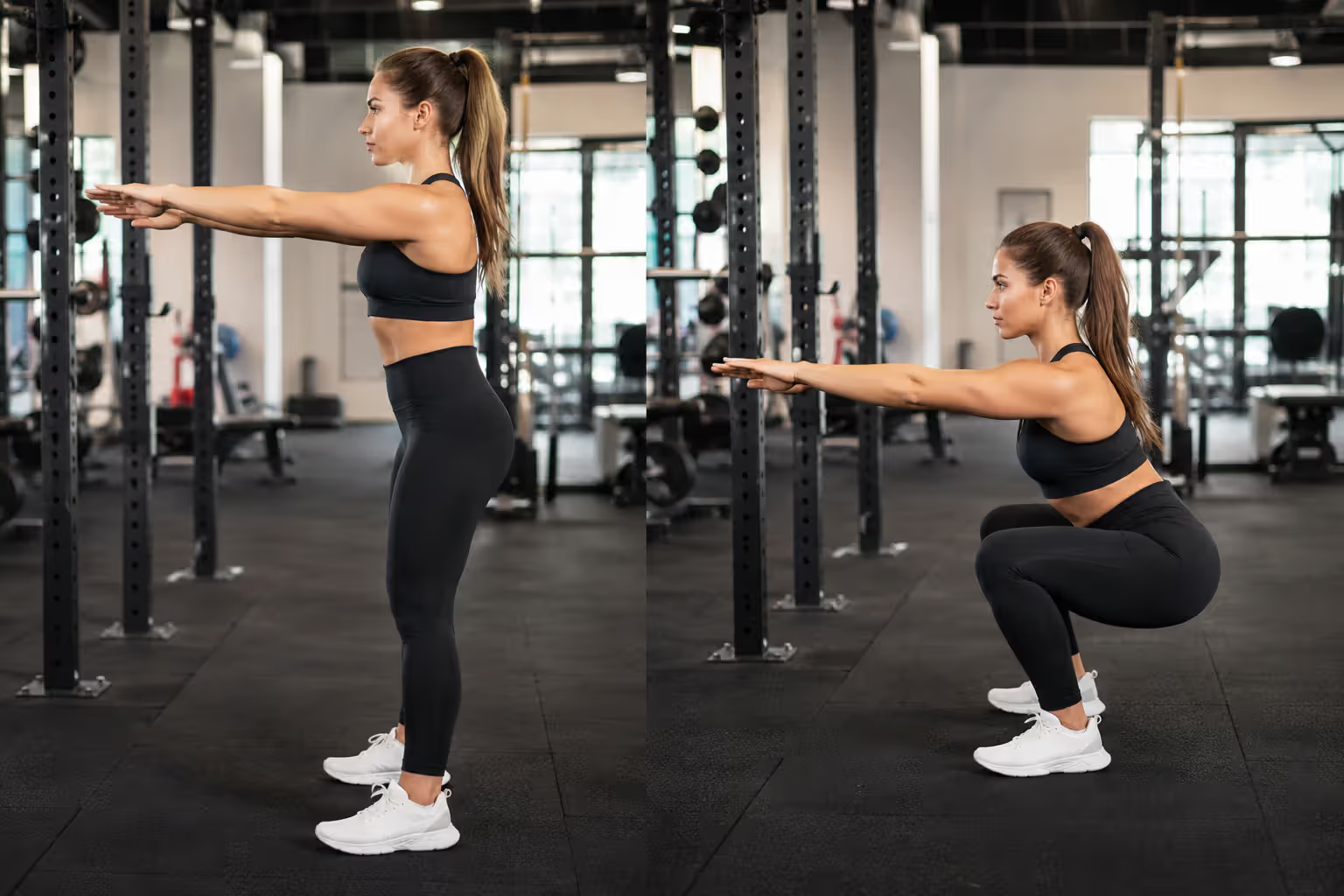
Bodyweight squat: Position feet at shoulder width with toes angled slightly outward. Initiate the movement by pushing your hips backward as though sitting into a chair. Maintain an upright chest while ensuring knees track in line with toes. Descend as far as you can while keeping your spine neutral. These represent easy workouts for beginners requiring zero equipment.
Push-up: Place hands just outside shoulder width, maintaining a rigid line from head through heels. Descend until your chest hovers just above the floor. Press back to starting position. Unable to complete full push-ups yet? Begin with knees down or hands elevated on a bench.
Dumbbell row: Place one knee and hand on a bench with the opposite foot planted on the floor. Pull the dumbbell toward your hip while keeping your elbow close to your torso. Contract your shoulder blade hard at the top position. This teaches back engagement rather than just arm pulling.
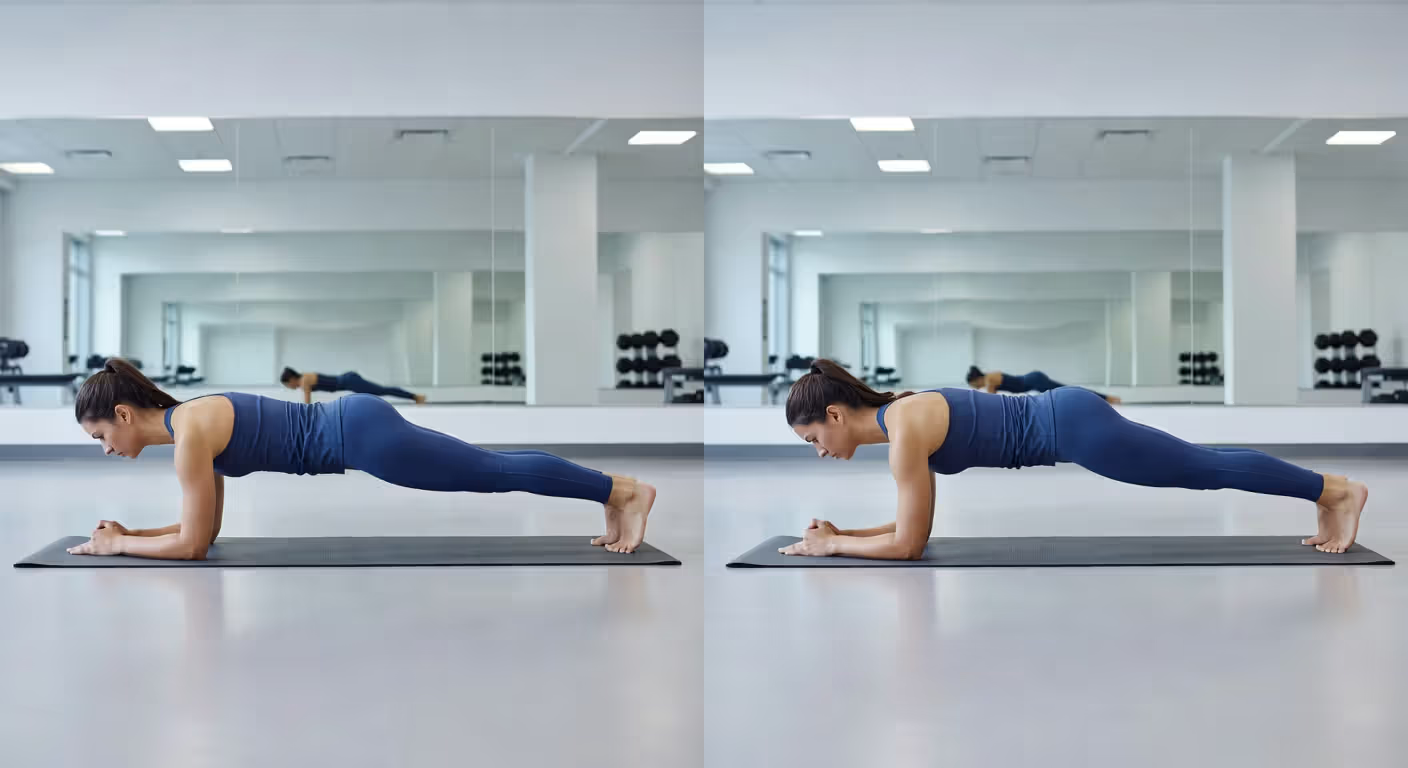
Plank: Rest on your forearms with elbows positioned beneath shoulders, maintaining a straight body line. Prevent your hips from dropping toward the floor or piking upward. Tense your midsection as if preparing to absorb a punch. Twenty seconds of flawless form surpasses a sloppy 60-second hold.
Lunge: Step forward with one leg, lowering your rear knee toward the floor. Keep your front knee aligned over your ankle—don't allow it to drift forward past your toes. Drive through your front heel to return to the starting position. Alternate legs.
Romanian deadlift: Hold dumbbells against the front of your thighs. Hinge forward at the hips, pushing them backward while maintaining slightly bent knees. Lower the weights along your legs until you feel tension in your hamstrings. Return to standing by contracting your glutes. This movement establishes the pattern for all deadlift variations.
Goblet squat: Hold a single dumbbell vertically at chest level. Squat down, allowing your elbows to track between your knees. This variation naturally promotes an upright torso position.
Technique always trumps load. A lighter weight performed with precision will deliver superior results—and dramatically fewer injuries—than heavy weight executed carelessly.
The biggest mistake I see with new clients isn't choosing the wrong exercises—it's progressing too quickly. Your muscles might feel ready to add 20 pounds after a good week, but your connective tissue is still adapting. Patience in the first two months prevents injuries that can derail six months of progress.
Common Beginner Workout Mistakes to Avoid
You'll make errors. Everyone does. But you can avoid the most damaging ones.
Excessive volume too early: Your enthusiasm is understandable. But launching into six-day-per-week programs or advanced training splits after years of inactivity guarantees burnout or injury. Begin with three weekly sessions. You can expand later if needed.
Neglecting warm-ups: Five minutes of gentle movement and dynamic stretching primes your nervous system, enhances blood flow, and minimizes injury risk. This isn't wasted time—it's an integral part of effective training.
Pursuing soreness: Muscle soreness doesn't indicate progress. It simply means you stressed your body in an unfamiliar way. You can build significant muscle and strength without hobbling around for days afterward.
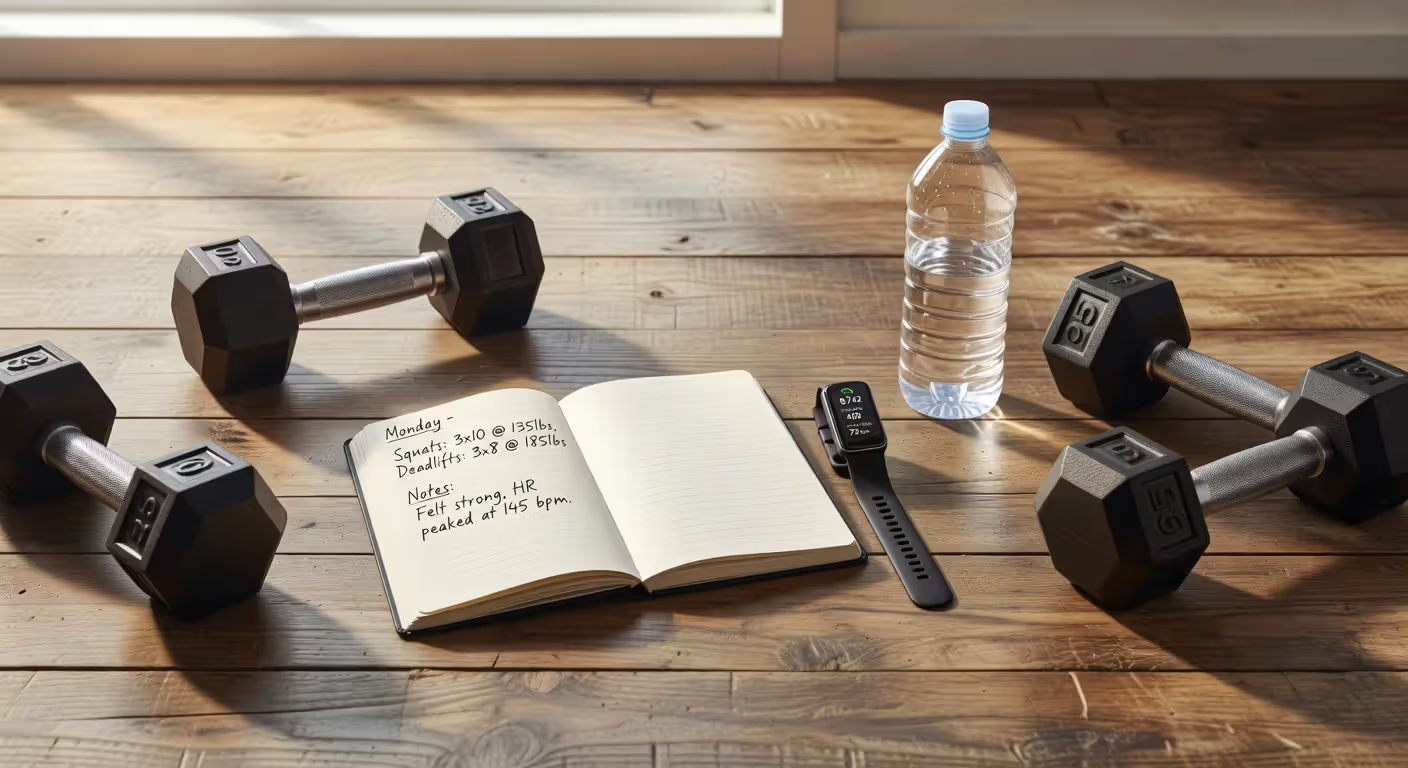
Zero tracking: You won't recall what weight you lifted last Tuesday. Record everything. Use an app, a notebook, whatever system works for you. Progressive overload requires knowing your previous performance.
Erratic scheduling: Training Monday and Tuesday, then not again until Saturday doesn't work. Your body responds to consistent, regular stimulation. Select specific training days and protect them fiercely.
Ignoring nutrition: You cannot out-train terrible eating habits. Perfection isn't required, but protein intake matters significantly. Target 0.7-1 gram per pound of body weight daily.
Comparison with others: That person benching twice your weight might be in year three of consistent training. Your only meaningful comparison is with last week's version of yourself.
How to Progress Beyond Your First Two Months
Eight weeks in, you've established a solid foundation. Where do you go from here?
Indicators you're ready to advance:
Movements that challenged you initially now feel manageable
You're consistently reaching the upper end of prescribed rep ranges
Increasing load: Add the smallest available increment—typically 5 pounds for lower body movements, 2.5 pounds for upper body work. If you cannot complete all prescribed sets with proper form, the weight is excessive. Reduce it.
Increasing volume: Add one set to your primary lifts. Or introduce one additional exercise per muscle group. Don't implement both changes simultaneously.
Modifying exercises: Once you can perform 15+ push-ups with perfect technique, advance to decline push-ups or add external resistance. When bodyweight squats become too comfortable, transition to goblet squats, then barbell variations.
Consider different program structures: After two months of full-body or upper/lower training, you might enjoy a push/pull/legs split distributed across five or six days. Or continue with what's working. No rule mandates changing programs.
The critical principle is altering one variable at a time. More weight or more sets or more training days. Never all three simultaneously.
Most people can continue adding weight or repetitions for 6-12 months on beginner programming before requiring something more specialized. Don't rush toward "intermediate" programs. Maximize your beginner gains for everything they're worth.
FAQ: Beginner Workout Questions Answered
How many days a week should a beginner work out?
Three to four weekly sessions works best for most beginners. This provides sufficient stimulus to trigger adaptation while permitting adequate recovery time. Your muscles develop during rest periods, not during the actual workout. If you're completely new to structured exercise, begin with three sessions and consider adding a fourth after 3-4 weeks if you're recovering well. Higher frequency isn't necessarily better—consistency measured across months matters far more than intensity within any single week.
Should I do cardio or weights first as a beginner?
Prioritize resistance training. Weight training demands greater coordination, mental focus, and energy than cardiovascular work. If you run for 30 minutes before attempting squats or deadlifts, you'll be fatigued when technique and concentration matter most, elevating injury risk and compromising workout quality. Schedule cardio after weights, or perform it on completely separate days. Many beginners discover that a 10-15 minute walk following strength training aids recovery without interfering with their primary training goals.
How long should my beginner workouts last?
Target 45 to 60 minutes total, including warm-up and cool-down periods. If your sessions consistently exceed 75 minutes, you're either taking excessively long rest periods, programming too many exercises, or losing focus. Beginners don't require the training volume that would necessitate 90-minute sessions. Emphasize quality over duration—a concentrated 50-minute session produces superior results compared to a scattered two-hour gym visit every single time.
What if I'm too sore to work out the next day?
Mild muscle soreness is acceptable to train through, particularly when you're working different muscle groups. Severe soreness that restricts your range of motion indicates you need additional recovery time. Avoid training the same muscles when they're extremely sore. Light activity like walking or swimming can actually reduce soreness by enhancing blood flow. If soreness persists beyond 72 hours or intensifies rather than improving, you likely overdid it—reduce intensity in your next session.
Do I need a gym membership or can I work out at home?
You can absolutely begin at home using bodyweight movements and minimal equipment. A set of adjustable dumbbells plus a resistance band will support months of meaningful progress. That said, commercial gyms offer equipment variety that becomes valuable as you advance—barbells, cable stations, leg press machines, and more. The optimal choice depends on your budget and personal preferences. Home training demands greater self-discipline but eliminates commute time and ongoing costs. Gyms provide structure and equipment access but require travel. Both approaches work if you maintain consistency.
When will I start seeing results from my beginner workout plan?
You'll notice internal changes within two weeks—increased energy levels, improved sleep quality, elevated mood. Visible physical changes typically emerge around the 4-6 week mark, though this varies based on your starting condition, nutrition habits, and genetics. Strength improvements arrive fastest—you might add 10-20 pounds to major lifts within your first month. Muscle definition becomes apparent around weeks 8-12 for most people. Fat loss depends heavily on dietary factors, not exercise alone. Take progress photographs and body measurements, not just scale weight. The mirror and how your clothing fits provide better feedback than any number on a scale.
You now have everything required. The framework, the movements, the timeline. What matters most isn't discovering the "perfect" program—it's beginning the one before you and maintaining it long enough to generate results. Eight weeks from now, you'll be stronger, more confident, and questioning why you delayed starting. The most difficult part is always that first week. After that, momentum builds naturally. Show up consistently, follow this plan, and trust the process.