Nicotinamide mononucleotide has become one of the most talked-about molecules in longevity research over the past few years. If you've heard about NAD+ and its role in aging, you've probably come across NMN. This naturally occurring compound serves as a direct precursor to NAD+, a coenzyme that's critical for energy production in every cell of your body. As we age, NAD+ levels drop significantly—sometimes by as much as 50% by middle age. That decline affects everything from how energetic you feel to how well your cells repair DNA damage. NMN supplements promise to restore those levels, but understanding what it actually does requires looking at the science behind it.
Understanding Nicotinamide Mononucleotide (NMN)
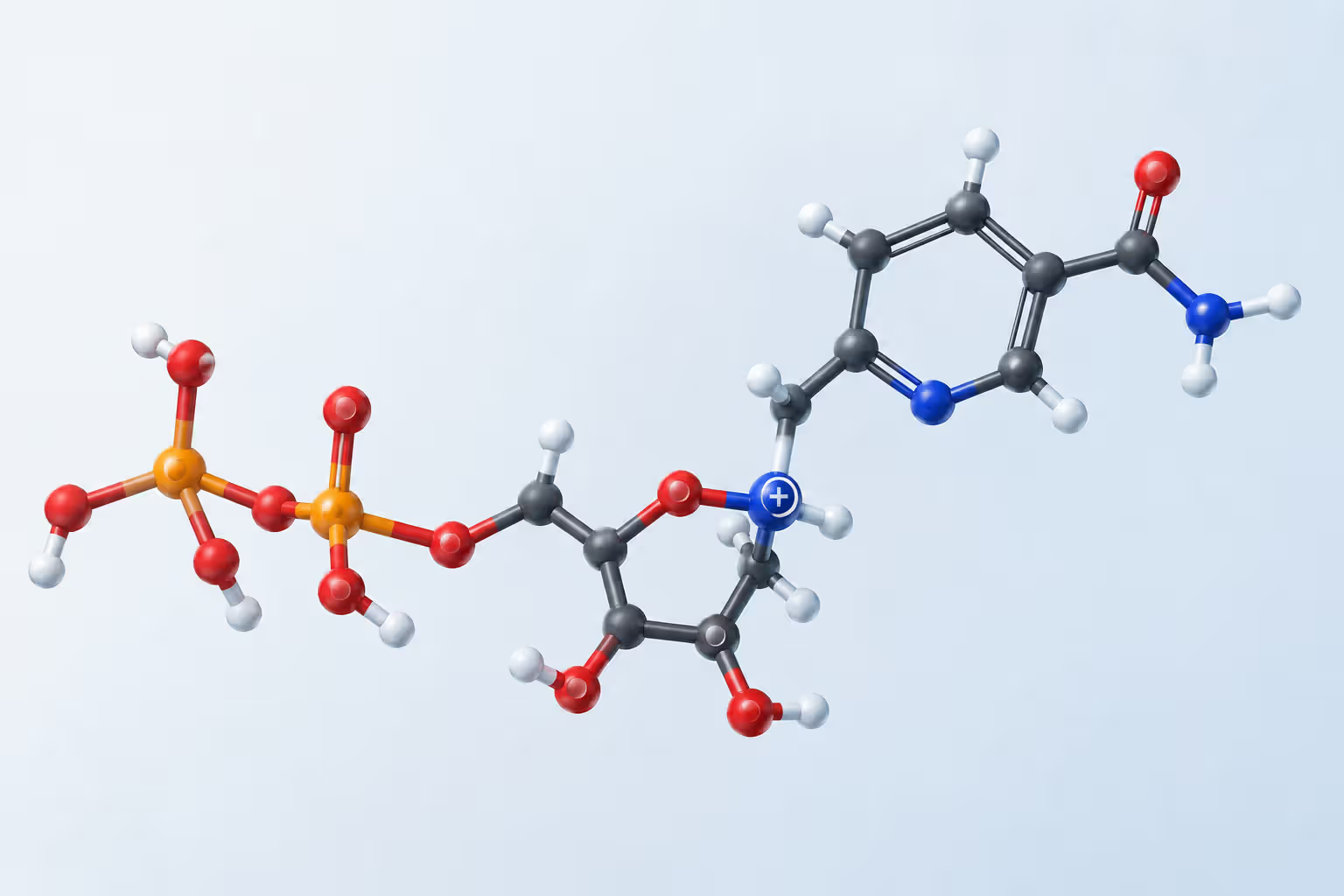
What is NMN, exactly? Nicotinamide mononucleotide is a molecule derived from ribose and nicotinamide. It's a nucleotide, which means it's a building block for larger molecules in your body. You produce small amounts naturally, and trace amounts exist in foods like broccoli, cabbage, and edamame. But the quantities in food are minimal—we're talking about 1-2 mg per serving at most.
NMN belongs to a family of NAD+ precursors that includes nicotinamide riboside (NR), nicotinic acid (niacin), and nicotinamide. Each takes a different path to become NAD+, and that path matters for efficiency. NMN sits just one biochemical step away from NAD+, which theoretically makes the conversion faster than other precursors.
The molecule itself is relatively small, with a molecular weight of 334 g/mol. This size matters because it affects how well it can enter cells. For years, researchers debated whether NMN could cross cell membranes directly or needed to convert to NR first. Recent studies identified a specific transporter protein called Slc12a8 that allows NMN to enter cells intact, at least in mice. That discovery changed how we think about NMN's bioavailability.
Here's something people often get wrong: NMN isn't a vitamin. It's a compound your body makes from B vitamins, specifically vitamin B3 derivatives. That distinction matters when you're thinking about supplementation strategy.
How NMN Functions as a NAD Booster
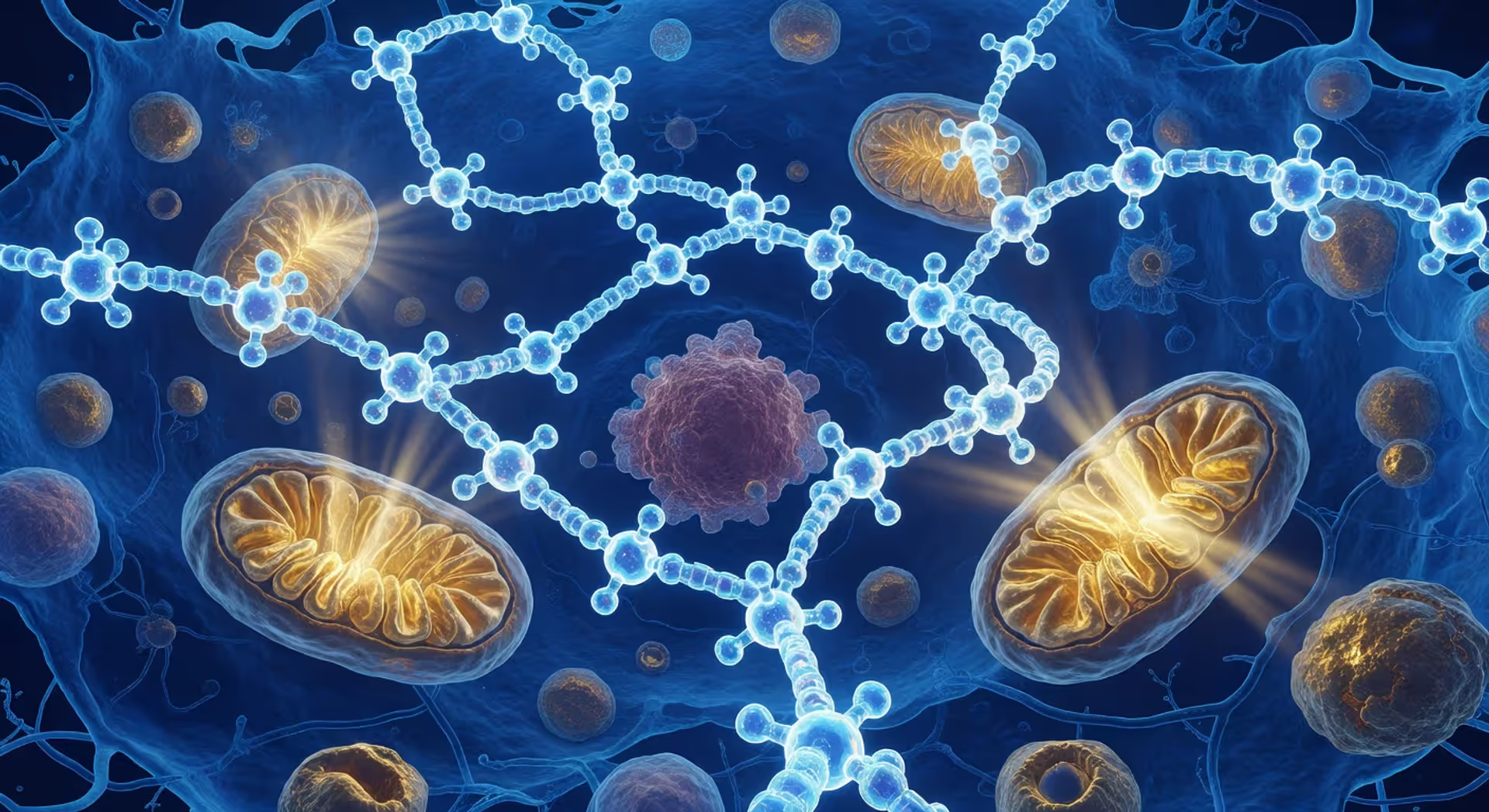
NAD+ (nicotinamide adenine dinucleotide) powers hundreds of metabolic processes. It's involved in converting food to energy, repairing damaged DNA, and regulating circadian rhythms. Every time your mitochondria produce ATP—the energy currency of cells—NAD+ plays a role.
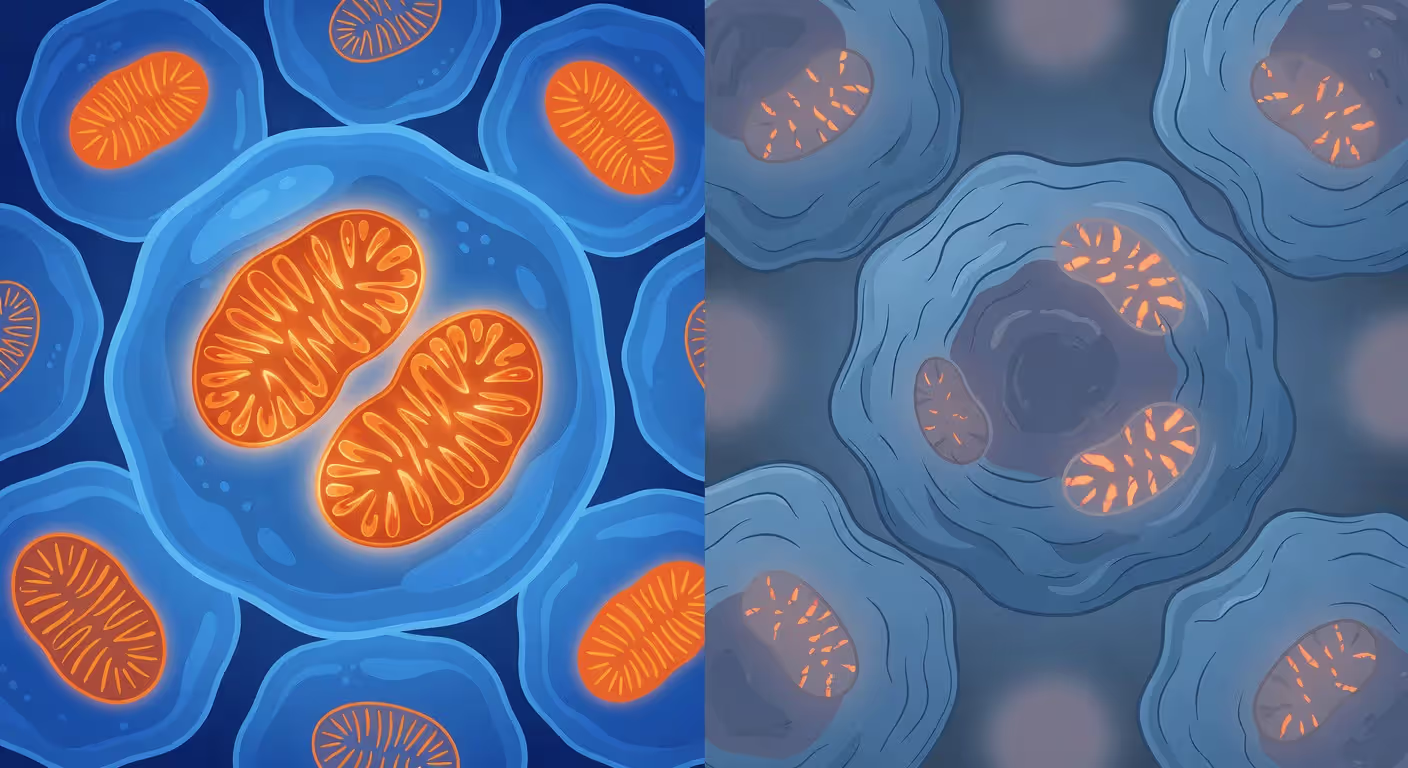
The problem? Your NAD+ levels don't stay constant throughout life. Research shows they decline steadily starting around age 40. By 60, you might have half the NAD+ you had at 20. This drop isn't just correlation—it's been linked to many age-related conditions, from metabolic dysfunction to cognitive decline.
NMN works by replenishing that supply. When you take an NMN supplement, it gets absorbed and converted to NAD+ through an enzyme called NMNAT (nicotinamide mononucleotide adenylyltransferase). The process is straightforward: NMN + ATP → NAD+ + PPi. One step. Compare that to niacin, which requires several enzymatic conversions and can cause uncomfortable flushing.
The speed of conversion matters for practical reasons. Studies in mice show that oral NMN raises NAD+ levels in liver tissue within 15 minutes. Human studies show measurable increases in blood NAD+ metabolites within 2-4 weeks of supplementation. That's faster feedback than many other longevity interventions.
But there's nuance here. Different tissues respond differently. Your liver and skeletal muscle seem to absorb NMN readily. Brain tissue is trickier because of the blood-brain barrier, though some evidence suggests NMN can still boost brain NAD+ levels through indirect pathways.
The loss of NAD+ as we age is a fundamental driver of cellular decline. By restoring NAD+ levels with precursors like NMN, we're not just treating symptoms of aging—we're addressing one of its root causes at the molecular level.
Research-Backed NMN Benefits
The pattern I see most often in NMN research is this: animal studies show dramatic effects, while human studies show more modest but still meaningful improvements. Let's break down what the evidence actually shows.
Cellular energy and metabolism support is where NMN shines most consistently. Multiple studies demonstrate that NMN supplementation improves mitochondrial function. In practical terms, that means better energy production at the cellular level. A 2021 human trial found that 250 mg daily for 10 weeks improved muscle insulin sensitivity in prediabetic women. That's significant because insulin resistance is a precursor to type 2 diabetes.
Potential anti-aging effects get the most attention, though we need to be careful about claims. Studies in mice show that NMN extends healthspan—the period of life spent in good health—even if it doesn't dramatically extend maximum lifespan. Treated mice show better physical endurance, improved bone density, and enhanced immune function compared to controls. Human longevity data doesn't exist yet because these trials take decades.
Cardiovascular health implications are promising. NMN appears to improve blood vessel elasticity, which naturally stiffens with age. One study showed that older mice given NMN had blood vessel function comparable to much younger mice. A small human trial in 2022 found that 300 mg daily improved walking endurance in older adults, suggesting better cardiovascular capacity.
Cognitive function support is harder to measure but shows potential. Animal studies demonstrate that NMN protects against neuroinflammation and improves cognitive performance in aged mice. Human data is limited, though participants in several trials report subjective improvements in mental clarity. More rigorous cognitive testing is needed.
Exercise performance and recovery might be where you notice effects first. Research shows NMN improves aerobic capacity in both rodents and humans. A 2021 study found that amateur runners taking 300-600 mg daily improved their oxygen utilization during training. Recovery markers also improved, though the effect wasn't dramatic.
DNA repair mechanisms depend heavily on NAD+. Enzymes called PARPs (poly ADP-ribose polymerases) use NAD+ to fix DNA breaks that occur constantly from normal metabolism and environmental damage. When NAD+ drops, repair efficiency suffers. NMN supplementation appears to restore PARP activity, at least in animal models.
NMN Supplement Forms and Absorption
You'll find NMN supplements in three main formats: capsules, powder, and sublingual tablets. Each has trade-offs.
Capsules are the most convenient and most common. They're pre-measured, portable, and tasteless. The downside? They must survive stomach acid and first-pass liver metabolism. Most quality capsules use delayed-release technology to improve survival rates, but some degradation is inevitable.
Powder offers flexibility in dosing and typically costs less per gram. You can mix it into water or juice, though it has a slightly bitter taste. Some people prefer powder because they can adjust doses more precisely. The absorption profile is similar to capsules.
Sublingual tablets are marketed as having superior bioavailability because they dissolve under your tongue, theoretically entering your bloodstream directly through mucous membranes. The evidence for this advantage is mixed. Some studies suggest sublingual delivery bypasses first-pass metabolism, but others show minimal difference in final blood levels compared to swallowed forms.
Bioavailability varies by product quality. NMN is relatively unstable and can degrade when exposed to moisture or heat. Look for supplements that use:
Third-party testing (USP, NSF, or ConsumerLab certification)
Opaque, moisture-resistant packaging
Manufacturing dates and expiration dates
Purity testing results showing >99% NMN content
Price doesn't always predict quality, but extremely cheap NMN is a red flag. Manufacturing pharmaceutical-grade NMN isn't cheap, so products priced far below market average may contain fillers or degraded material.
NMN Dosage Guidelines and Timing
Dosage recommendations vary widely because human research is still establishing optimal ranges. Most studies use 250-500 mg daily, but some go as high as 1,000 mg without adverse effects.
Health Goal
Under 150 lbs
150-200 lbs
Over 200 lbs
General wellness
250-500 mg/day
500-750 mg/day
750-1,000 mg/day
Anti-aging support
500-750 mg/day
750-1,000 mg/day
1,000-1,250 mg/day
Athletic performance
600-1,000 mg/day
1,000-1,200 mg/day
1,200-1,500 mg/day
These ranges are based on current research and clinical observations. Start at the lower end and increase gradually over 2-4 weeks. You're not looking for immediate effects—NAD+ restoration takes time.
Timing matters more than most people realize. NMN appears to work best when taken in the morning. Your body's NAD+ levels follow a circadian rhythm, peaking during waking hours. Taking NMN early may align with your natural metabolic cycle. Some people split their dose, taking half in the morning and half early afternoon.
Factors affecting your individual needs include age (older individuals may benefit from higher doses), metabolic health (insulin resistance may require more), and activity level (athletes often use higher amounts). There's no perfect formula. It depends on your baseline NAD+ status, which isn't easy to measure outside a research setting.
One common mistake: taking NMN with a large meal high in fat. Some evidence suggests that fat can interfere with absorption, though the data isn't conclusive. Taking it on an empty stomach or with a light breakfast seems to work best for most people.
Safety Profile and Potential Side Effects
The safety data on NMN is reassuring so far. Multiple human trials using doses up to 500 mg daily for 12 weeks have reported no serious adverse events. Longer-term studies are ongoing, but short-term safety looks good.
Reported side effects are mild and uncommon. Some people experience:
Mild nausea (usually when taking high doses on an empty stomach)
Temporary flushing or warmth (less common than with niacin)
Digestive discomfort (rare, typically resolves within days)
Changes in sleep patterns (usually improved sleep, occasionally more vivid dreams)
These effects are generally transient and resolve with continued use or dose adjustment.
Who should avoid NMN? The list is short but worth noting:
Pregnant or breastfeeding women (insufficient safety data)
People with hormone-sensitive cancers (theoretical concern about cellular proliferation)
Children and adolescents (no established need or safety data)
Drug interactions haven't been extensively studied, but there are theoretical concerns. NMN might interact with:
Chemotherapy drugs (by potentially protecting cancer cells along with healthy ones)
Blood pressure medications (NMN may have mild blood pressure-lowering effects)
Diabetes medications (due to effects on insulin sensitivity)
If you're on prescription medications, talk to your doctor before starting NMN. That's not just standard disclaimer language—NAD+ metabolism affects numerous physiological processes, and interactions are plausible even if not yet documented.
The bigger question is long-term safety. We don't have human data beyond a couple of years. Animal studies extending several years show no concerning patterns, but humans aren't mice. The conservative approach is to view NMN as a supplement with good short-term safety data and promising but incomplete long-term data.
FAQ: NMN Questions Answered
How long does it take for NMN to work?
This varies by what you're measuring. Blood NAD+ metabolites increase within hours of taking NMN, but you won't feel that. Most people report noticing effects—improved energy, better sleep quality, enhanced recovery—within 2-4 weeks of consistent use. Some changes, like improvements in cardiovascular markers or metabolic health, take 8-12 weeks to become measurable. The key is consistency. Taking NMN sporadically won't produce meaningful results.
Can I take NMN with other supplements?
Yes, NMN combines well with most supplements. It's often stacked with resveratrol, which activates sirtuins that depend on NAD+. The combination is popular in longevity protocols. NMN also pairs well with CoQ10, omega-3s, and vitamin D. Avoid taking it with large doses of nicotinamide (plain vitamin B3), which can inhibit the sirtuins you're trying to activate. Timing can matter—taking NMN and resveratrol together in the morning is a common approach.
Is NMN better than NR (nicotinamide riboside)?
The debate continues. NMN is one step closer to NAD+ in the conversion pathway, which theoretically makes it more efficient. NR has more published human studies, though NMN research is catching up quickly. Some evidence suggests NMN raises NAD+ levels more effectively in certain tissues, particularly muscle. But individual response varies. Some people respond better to one than the other. If you've tried NR without noticeable effects, NMN might work differently for you, and vice versa.
Does NMN need to be refrigerated?
It depends on the formulation. Pure NMN powder is relatively stable at room temperature if kept dry and away from light, but refrigeration extends shelf life. Most capsules don't require refrigeration if stored properly in their original container. Check your product label—some manufacturers recommend refrigeration after opening. Heat and moisture are the enemies. Don't leave NMN in a hot car or humid bathroom. A cool, dark cupboard usually works fine for capsules.
What's the difference between NMN and niacin?
Both are vitamin B3 derivatives, but they work differently. Niacin (nicotinic acid) converts to NAD+ through a longer pathway and causes uncomfortable flushing in most people due to prostaglandin release. NMN converts directly to NAD+ without the flushing. Niacin also inhibits lipolysis (fat breakdown), which can interfere with metabolic benefits. NMN doesn't have that effect. For NAD+ boosting specifically, NMN is more targeted and better tolerated than regular niacin.
Are there food sources of NMN?
Yes, but the amounts are too small to match supplement doses. Edamame contains about 1.9 mg per 100 grams. Broccoli has roughly 1.1 mg per 100 grams. Cabbage, avocado, and tomatoes contain trace amounts. You'd need to eat several pounds of these foods daily to approach even a modest 250 mg supplement dose. Food sources contribute to your baseline NAD+ production, but if you're looking for therapeutic effects, supplementation is necessary.
The evidence for NMN continues to evolve, with new human studies published regularly. While it's not a magic bullet for aging, it represents one of the more scientifically grounded approaches to addressing age-related NAD+ decline. The safety profile looks good, the mechanism is well-understood, and early human data supports what we've seen in animal models. Whether NMN makes sense for you depends on your health goals, age, and budget. Starting with a moderate dose and tracking how you feel over 8-12 weeks is the most practical approach for most people.