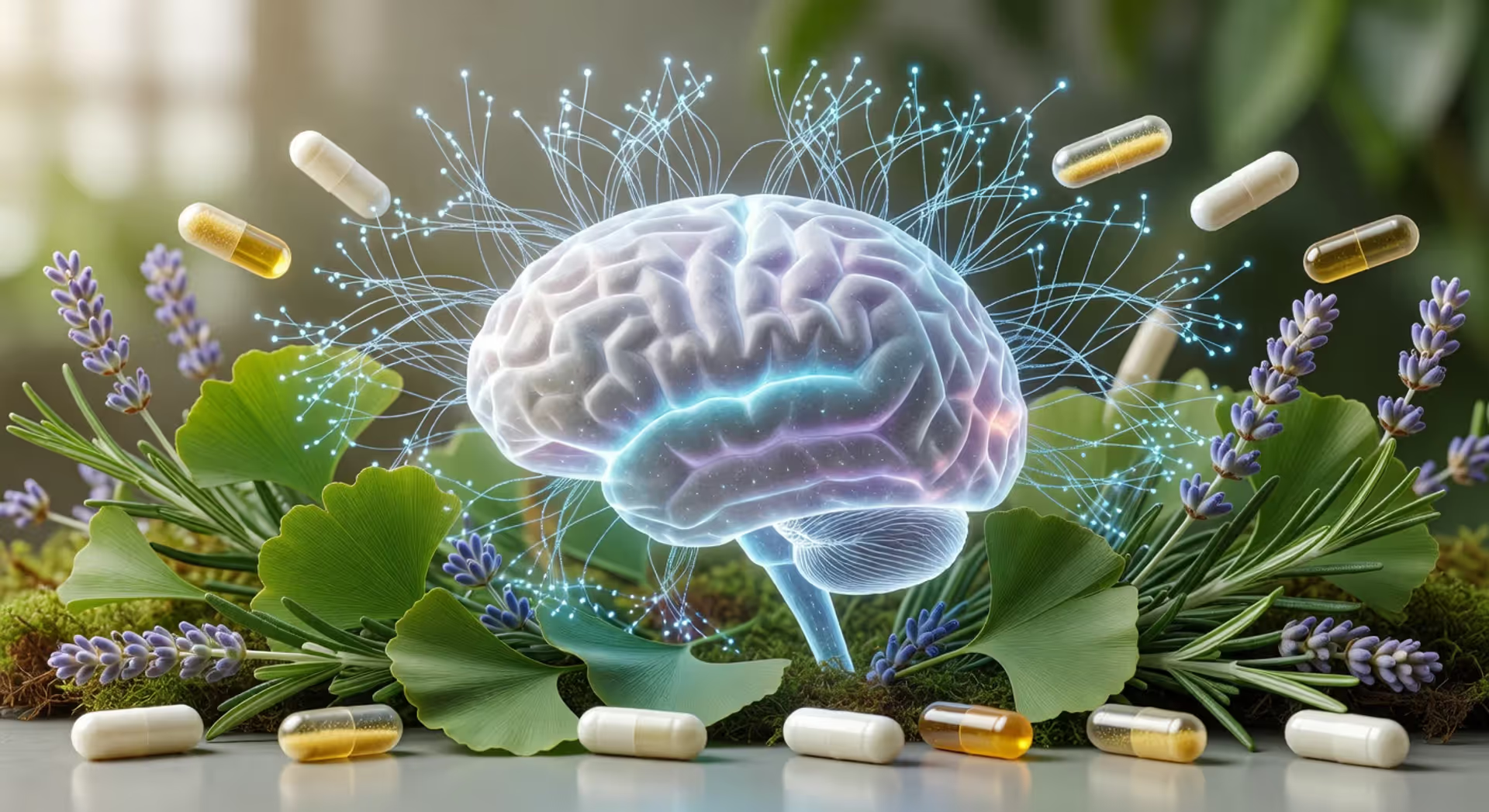
Walk into any pharmacy or health store today, and you'll see entire shelves dedicated to brain supplements. Pills, powders, and drinks all promise better focus, sharper recall, and enhanced mental performance. The nootropics market has grown explosively over the past decade, fueled by students cramming for exams, professionals juggling demanding workloads, and older adults concerned about cognitive decline. But here's the thing—some of these products deliver measurable benefits backed by solid research, while others are basically expensive placebos wrapped in clever marketing. The truth? It falls somewhere in the middle ground between miracle cure and complete waste of money. Understanding which compounds actually work (and which don't) can save you both money and disappointment.
Understanding Nootropic Supplements
Back in 1972, a Romanian psychologist named Corneliu Giurgea coined the term "nootropic." He wasn't just creating a catchy label. Giurgea laid out strict requirements: true nootropics had to boost learning capacity and memory formation, protect brain tissue from physical and chemical harm, facilitate better communication between neurons, and do all this without causing toxic effects or serious side effects.
So what are nootropics once you cut through all the marketing fluff? Think of them as compounds that modify how your brain functions—but through very specific biological mechanisms. Some increase blood flow to neural tissue, delivering more oxygen and nutrients. Others tweak neurotransmitter activity or protect cells from oxidative stress that accumulates over time.
You'll find cognitive supplements divided into two broad camps. Natural compounds come from plants, foods, or occur in your body already—things like caffeine from coffee beans, the amino acid L-theanine from tea, or bacopa monnieri extract from an Ayurvedic herb. Synthetic nootropics are lab-created molecules designed specifically to alter brain chemistry—the racetam family and modafinil fall into this category.
Their mechanisms vary wildly depending on the specific compound. Take acetylcholine boosters, for instance—they ramp up production of this memory-critical neurotransmitter. Others target dopamine or serotonin pathways, which influence motivation and mood regulation. Some enhance mitochondrial function, essentially giving your brain cells more energy to work with.
Here's where expectations often go sideways: nootropics won't turn you into Bradley Cooper from Limitless overnight. They work in smaller increments—maybe improving your concentration by 10-20%, or helping you pull up stored memories more efficiently. If you're studying for the bar exam or managing a complex software project, those marginal gains matter. But expecting to suddenly access 100% of your brain's potential? That's Hollywood fiction, not neuroscience.
The most promising nootropics don't create superhuman abilities—they optimize the brain's existing capacity by supporting neurotransmitter systems and protecting neural structures from age-related decline.
How Nootropics Support Memory and Cognitive Function
Your brain handles memory through three distinct stages. First comes encoding—when you initially take in new information. Then consolidation, where your brain transfers that data from short-term to long-term storage. Finally, retrieval—pulling up stored information when you actually need it.
Memory nootropics target these stages differently. Bacopa monnieri seems to strengthen the consolidation phase. Studies show people taking bacopa for twelve weeks perform significantly better on delayed recall tests compared to placebo groups—meaning they remember information better after time has passed.
Phosphatidylserine maintains the structural integrity of cell membranes in neurons. When these membranes function optimally, signals travel between cells more efficiently. You'll notice this improvement most in working memory—that cognitive function you rely on when keeping track of multiple things simultaneously or following complex instructions.
Focus and attention get a boost from nootropics affecting dopamine and norepinephrine. These neurotransmitters keep you alert and help filter out distractions. L-tyrosine (which converts into dopamine in your body) proves especially valuable during high-stress situations when mental performance typically tanks.
Mental clarity—admittedly tough to measure objectively—relates to how quickly you process information and how sluggish your thinking feels. Alpha-GPC provides raw materials for acetylcholine synthesis. More available acetylcholine generally means faster processing speed and crisper thinking.
Then there's neuroprotection—the long game. Certain nootropic compounds have antioxidant properties that shield brain cells from cumulative damage. Lion's mane mushroom stimulates nerve growth factor production, potentially encouraging formation of new neural connections. This becomes crucial as you age and natural brain plasticity declines.
The biggest mistake? Expecting Hollywood-style instant results. Most nootropics for memory produce subtle, accumulating benefits. Day one might feel completely unremarkable. Two weeks in, you realize you're finishing tasks faster or remembering details that would normally slip through the cracks.
Common Types of Nootropic Ingredients
Natural Nootropics
Caffeine is the world's most widely consumed nootropic—by a landslide. It blocks adenosine receptors, preventing this sleep-promoting neurotransmitter from building up. Result? Increased alertness and delayed fatigue. Effective doses typically range from 50-200mg (a cup of coffee contains roughly 95mg).
L-theanine is an amino acid found abundantly in tea leaves. It promotes alpha brain wave activity associated with calm, focused attention minus drowsiness. Combined with caffeine, it smooths out the jitters while preserving the alertness benefits. Most people respond well to a 2:1 ratio—200mg L-theanine with 100mg caffeine, for example.
Bacopa monnieri has centuries of use in Ayurvedic medicine behind it. Modern studies confirm its memory-enhancing and anxiety-reducing effects. Benefits build over 8-12 weeks at 300-450mg daily.
Rhodiola rosea acts as an adaptogen—it helps your body handle stress more effectively. Research shows it combats mental fatigue during demanding cognitive tasks. Studies typically use 200-600mg daily, standardized to 3% rosavins.
Lion's mane mushroom contains erinacines and hericenones—compounds that cross the blood-brain barrier and stimulate nerve growth factor. Animal studies show promising results for cognitive protection, though human trials remain limited. Typical dosing ranges from 500-3000mg per day.
Ginkgo biloba improves blood flow to the brain. Extensive research on age-related cognitive decline produces mixed but generally positive outcomes. Standard protocols use 120-240mg daily of standardized extract.
Synthetic Nootropics
Piracetam was Giurgea's original nootropic discovery. It modulates neurotransmitter receptor activity and improves cell membrane fluidity. European physicians have prescribed it for decades, though the FDA hasn't approved it stateside. Standard doses range from 1200-4800mg daily.
Aniracetam offers more potency than piracetam plus additional anti-anxiety properties. It amplifies acetylcholine and dopamine signaling. Typical protocols involve 750-1500mg daily, split into two doses.
Noopept is a peptide-based compound substantially more potent than racetams. It increases brain-derived neurotrophic factor (BDNF), which supports neuron health and growth. Effective amounts are much smaller—just 10-30mg daily.
Modafinil is a prescription narcolepsy drug frequently used off-label for cognitive enhancement. It promotes wakefulness and strengthens executive function. Its potency comes with higher side effect risk and legal restrictions.
Phenylpiracetam adds a phenyl group to piracetam's molecular structure, creating more stimulating effects. Students and athletes favor it for concentration benefits. Standard amounts range from 100-200mg.
For most people, the simple choice wins. Natural nootropics offer better safety profiles and don't require medical supervision. Synthetic alternatives pack more punch but introduce greater risks.
Nootropic Capsules vs Other Forms
Form
Absorption
Convenience
Dosing Accuracy
Best For
Capsules
Moderate; digestion slows uptake
High; pre-measured and portable
Excellent; precise amount per capsule
Daily routines, travel, exact dosing
Powders
Fast with sublingual; moderate when swallowed
Moderate; requires measuring equipment
Variable; depends on user precision
Custom dosing, budget-conscious users, stacking
Drinks (RTD)
Fast; liquid speeds absorption
Highest; zero preparation required
Good; pre-mixed but inflexible
Busy lifestyles, immediate effects
Sublingual tablets
Fastest; bypasses digestive breakdown
Moderate; dissolves under tongue
Excellent; pre-measured doses
Quick action needed, on-the-go use
Gummies
Slow; similar to capsules
High; tasty, portable
Good; sugar content varies
Taste preference, easy consumption
Nootropic capsules dominate the market for good reasons. They're shelf-stable, deliver consistent doses, and require zero preparation. Each serving contains a precise amount of every ingredient.
Powders offer flexibility in dosing. You can adjust amounts up or down and create custom combinations. Cost per serving usually runs lower too. The downsides? You'll need a precision scale for consistency, and many compounds taste awful—intensely bitter or metallic.
Ready-to-drink beverages maximize convenience but inflate the cost per serving. Many include sweeteners—either sugar or artificial alternatives. The ingredient amounts sometimes fall below research-supported effective doses—you're often paying for packaging and branding more than active compounds.
Sublingual formats and lozenges bypass first-pass liver metabolism, potentially improving bioavailability. This delivery method works well for certain compounds but not universally.
Absorption efficiency depends on both the specific compound and delivery method. Fat-soluble nootropics like curcumin require dietary fats for optimal uptake. Water-soluble compounds like B vitamins don't share this requirement.
Common mistake? Assuming faster absorption automatically means better results. For maintaining focus across an eight-hour workday, slower-releasing capsules might actually outperform a rapidly-absorbed powder that wears off after two hours.
Choosing the Right Memory Nootropics
Start by defining your specific goals. Are you trying to strengthen working memory for analytical tasks? Clear up mental fog? Improve long-term retention for academic work? Different memory nootropics target different biological pathways.
For working memory and sustained attention, look for formulations containing citicoline, L-tyrosine, or phosphatidylserine. These support the neurotransmitter systems governing focus and temporary information management.
For long-term memory formation and learning capacity, bacopa monnieri and lion's mane have the most reliable research support. These compounds work over weeks to months, not hours.
Check ingredient amounts against published research. Many commercial nootropic capsules contain token amounts—enough to list on the label but far below therapeutic doses. Bacopa should provide at least 300mg of standardized extract. Alpha-GPC should deliver 300-600mg.
Third-party testing matters more than most consumers realize. Look for products verified by independent laboratories for purity and potency. ConsumerLab, NSF International, and USP certification indicate quality control. This confirms the bottle actually contains what the label claims.
Proprietary blends should raise red flags. When labels say "Memory Blend 500mg" without listing individual ingredient amounts, you can't verify effective dosing. Transparent ingredient disclosure signals a trustworthy manufacturer.
Consider potential drug interactions. If you take prescription medications—especially antidepressants, blood thinners, or stimulants—certain nootropics can interfere. St. John's wort, for instance, affects how your liver processes many medications.
Individual responses vary significantly. Some people metabolize caffeine rapidly and need higher amounts. Others process it slowly and feel anxious from modest doses. Start with conservative amounts to assess your personal response.
Your baseline cognitive state matters considerably. If you're already well-rested, properly nourished, and mentally sharp, nootropics may produce minimal noticeable effects. They tend to deliver greatest benefit when there's a deficit to address—during stress, sleep deprivation, or age-related decline.
Budget is a practical consideration. Quality nootropic capsules typically cost $30-60 monthly for single ingredients, more for complex formulations. Powders reduce cost but sacrifice convenience. Determine which trade-offs align with your priorities.
Safety Considerations and Side Effects
Most naturally-derived nootropics show excellent safety profiles at recommended doses. Many have been consumed for generations in traditional medicine or as dietary components. That doesn't eliminate all risk, though.
Common side effects remain generally mild. Caffeine can trigger jitteriness, anxiety, or sleep disruption if consumed late in the day. Racetams occasionally cause headaches, likely because they increase acetylcholine utilization—pairing them with a choline source often solves this.
Digestive discomfort can occur with certain compounds. Bacopa sometimes causes stomach upset or nausea, especially on an empty stomach. Taking it with meals typically eliminates this issue.
Some people experience increased anxiety from specific nootropics, particularly stimulating varieties like phenylpiracetam or excessive caffeine. If you're anxiety-prone, start with calming options like L-theanine or magnesium L-threonate.
Who should avoid nootropics? Pregnant and breastfeeding women should skip them due to insufficient safety research. People with bipolar disorder need caution with dopamine-affecting compounds, which might trigger manic episodes.
Those with bleeding disorders should avoid ginkgo biloba, which has mild anticoagulant properties. Anyone scheduled for surgery should discontinue it two weeks prior.
Synthetic nootropics carry higher risks. Modafinil can cause severe skin reactions in rare cases. It also reduces birth control pill effectiveness. Long-term safety data for many synthetic nootropics remains incomplete.
The FDA regulates supplements less strictly than pharmaceuticals. Quality varies dramatically between manufacturers. Testing has found heavy metal contamination or undisclosed ingredients in some products.
Tolerance can develop with certain nootropics, especially stimulants. Your body adapts, and the same dose produces diminishing effects over time. Cycling—taking breaks every few weeks—helps maintain effectiveness.
Physical dependence rarely develops with most nootropics but remains possible with prescription stimulants used off-label. Even regular caffeine users experience withdrawal headaches when stopping abruptly.
Consulting healthcare professionals before starting nootropics makes sense, especially if you have existing medical conditions or take medications. They can identify potential interactions and contraindications you might miss.
FAQ: Nootropics Questions Answered
Are nootropics safe for daily use?
Most naturally-occurring nootropics carry minimal risk for daily use at research-supported doses. Compounds like caffeine, L-theanine, bacopa, and lion's mane have decades or centuries of regular human consumption with few serious adverse events documented. The key factors? Stick to evidence-based amounts and choose quality products from reputable manufacturers. Synthetic nootropics lack extensive long-term safety data, so they warrant more caution. Anyone on prescription medications or managing health conditions should get medical clearance before starting daily nootropic use. Cycling—taking periodic breaks every 4-8 weeks—can prevent tolerance buildup and let your system reset.
How quickly do nootropics produce noticeable effects?
Timeline varies based on the specific compound and which cognitive aspect you're measuring. Stimulant-type nootropics like caffeine show effects within 30-60 minutes with clearly perceptible changes in alertness. Acetylcholine precursors such as alpha-GPC might produce subtle shifts within a few hours. But nootropics supporting memory consolidation and neuroprotection—like bacopa monnieri or lion's mane—require consistent daily use for 4-12 weeks before producing measurable improvements. This extended timeframe reflects gradual changes to brain structure and function rather than temporary stimulation. Don't expect instant transformations. Track your cognitive performance over weeks to properly evaluate whether a nootropic delivers benefits for you.
Is it safe to combine nootropics with prescription medications?
Some nootropics interact problematically with prescription drugs, making this question absolutely critical. Ginkgo biloba increases bleeding risk when combined with blood thinners like warfarin. St. John's wort interferes with numerous medications including antidepressants, birth control pills, and immunosuppressants. Stimulant nootropics can cause problems when combined with ADHD medications or antidepressants. Even caffeine affects how your body processes certain pharmaceuticals. Inform your healthcare provider and pharmacist about every supplement you take. They can screen for interactions using specialized databases. When in doubt, separate medication and supplement timing by at least two hours, and start nootropic protocols with reduced doses while monitoring for unusual reactions.
Can nootropics genuinely enhance memory performance?
Certain compounds do improve memory, though effects are typically moderate and show individual variation. Bacopa monnieri has the strongest research foundation for enhancing memory retention and recall, with multiple studies showing benefits after twelve weeks of consistent use. Phosphatidylserine shows promise for addressing age-related memory decline. Caffeine combined with L-theanine can strengthen working memory during tasks requiring sustained focus. However, if you're young, healthy, and already performing cognitively well, improvements might be imperceptible. Nootropics typically show greatest value when addressing a specific deficit—whether from aging, stress, sleep deprivation, or cognitive demands exceeding current capacity. View them as optimization tools rather than miracle solutions.
How do prescription nootropics differ from over-the-counter options?
Prescription nootropics like modafinil, Adderall, or donepezil are pharmaceutical medications FDA-approved for treating specific medical conditions—narcolepsy, ADHD, or Alzheimer's disease. They deliver stronger effects, carry more side effect risks, and require medical supervision. Over-the-counter nootropics are dietary supplements available without prescriptions. They're generally gentler and safer but face less stringent FDA regulation. The supplement industry has quality control challenges, making brand selection crucial. Some prescription drugs get used off-label for cognitive enhancement, but this raises legal and health concerns. If you have a diagnosed condition affecting cognition, prescription options under medical guidance represent the appropriate route. For general cognitive optimization, OTC nootropics offer a safer, legal approach.
Do nootropics help eliminate brain fog?
Brain fog—characterized by mental sluggishness and difficulty concentrating—stems from various causes, and nootropics may help depending on what's driving it. If sleep deprivation is the culprit, supplements won't fully compensate, though rhodiola and L-tyrosine can provide temporary support. If nutrient deficiencies contribute, B vitamins and omega-3 fatty acids might produce significant improvement. Inflammation-driven brain fog could respond to curcumin or resveratrol. Acetylcholine-supporting nootropics like alpha-GPC or citicoline often improve processing speed and mental sharpness. However, addressing root causes—sleep quality, stress management, nutrition, hydration—typically matters more than supplementation alone. Use nootropics as one piece of a comprehensive approach rather than as compensation for poor lifestyle habits.
Nootropics offer real opportunities for supporting cognitive performance, but they're not magic bullets. The most effective approach combines research-validated supplements with foundational health practices—quality sleep, regular exercise, stress management, and mental challenges. Start with one or two well-studied compounds, allow adequate time for effects to develop, and pay attention to how your body responds. The ideal nootropic combination varies dramatically between individuals. What produces remarkable results for your colleague might generate zero benefit for you, or vice versa. Practice patience, maintain skepticism toward exaggerated marketing claims, and prioritize safety and quality above everything else.