Counting calories doesn't have to be complicated—though it probably feels that way right now if you're just getting started. Here's what most people don't realize: tracking your food intake is simply a skill, and like any skill, it gets easier with practice. You might spend five minutes logging a meal today, but give it two weeks and you'll breeze through in thirty seconds. Whether you're trying to drop twenty pounds, maintain where you are, or fuel muscle growth, understanding exactly what you're eating gives you control. Let's break down everything you need to know.
Why Calorie Tracking Matters for Weight Loss
Weight loss boils down to energy balance. Consume fewer calories than your body burns, and you'll lose fat. Eat more than you burn, and the scale climbs. That's your caloric deficit—the non-negotiable requirement for dropping pounds.
Your body burns calories constantly. We call this your Total Daily Energy Expenditure, or TDEE for short. It includes everything: your heart beating, lungs breathing, brain thinking, steps walked, workouts completed, and even the energy spent digesting food. For steady, sustainable fat loss, most people do well eating 300–500 calories below their TDEE each day. That typically translates to losing one to two pounds weekly.
Now here's the uncomfortable truth: studies repeatedly show that people who don't track underestimate what they eat by 30–50%. Sometimes more. That handful of crackers while making dinner? You forgot about it, but it was 120 calories. The "splash" of creamer in your coffee? Actually two tablespoons and 70 calories. These memory gaps aren't character flaws—they're just how human brains work.
Tracking turns those invisible calories visible. You might not need it forever (more on that later), but spending even four to six weeks logging your food teaches you what portions actually look like and where your calories hide. That education sticks with you.
Understanding Calorie Labels and Nutrition Facts
Reading a nutrition label seems straightforward until you realize how many people get it wrong. The panel tells you everything—you just need to know what you're looking at.
How to Read a Calorie Label Correctly
Every Nutrition Facts panel bases its calorie count on a single serving. Sounds simple, except the serving size the manufacturer chose probably doesn't match what you're actually eating.
Look at "servings per container" first. See a bag of pretzels listing 140 calories? Great—but if that bag contains three servings, eating the whole thing means you consumed 420 calories. Always multiply the calories shown by however many servings you ate.
Pay attention to how they measure that serving. You'll see something like "About 12 chips (28g)" or "1/2 cup (113g)." The weight in grams matters more than the description. Why? Because twelve chips can weigh anywhere from 24 to 32 grams depending on their size and how you counted broken pieces. Use the gram weight with a food scale, and you'll get it right.
Quick check: do the math on the macronutrients. Add up (protein grams × 4) + (carb grams × 4) + (fat grams × 9). You should get close to the total calories listed. If the numbers are way off, something's wrong with that label.
Calories Per Gram of Macronutrients Explained
Each type of macronutrient provides different amounts of energy. Protein and carbohydrates both deliver 4 calories per gram. Fats pack 9 calories per gram—more than twice as much. Alcohol (not technically a macronutrient, but worth mentioning) sits at 7 calories per gram.
Macronutrient
Calories Per Gram
Common Sources
Protein
4 calories
Chicken, fish, eggs, Greek yogurt, tofu, protein powder
Olive oil, butter, nuts, seeds, avocado, cheese, fatty fish
Alcohol
7 calories
Beer, wine, spirits, cocktails (provides energy without nutrition)
This explains why a tablespoon of olive oil (pure fat) contains 120 calories while a whole cup of strawberries (mostly carbs and water) has only 50. Fat isn't bad—you need it for hormone production, vitamin absorption, and brain function. But because it's calorie-dense, you've got to measure it carefully. The difference between one tablespoon and two tablespoons of peanut butter? That's 190 extra calories right there.
Alcohol often gets overlooked. A standard beer runs about 150 calories, a glass of wine around 120-130, and cocktails easily hit 300-400 once you factor in sugary mixers. Those calories add up fast during weekend social events.
Methods for Counting Calories
You've got several options for tracking what you eat. Each comes with trade-offs between accuracy, convenience, and how much effort you're willing to invest upfront.
Using Mobile Apps and Digital Tools
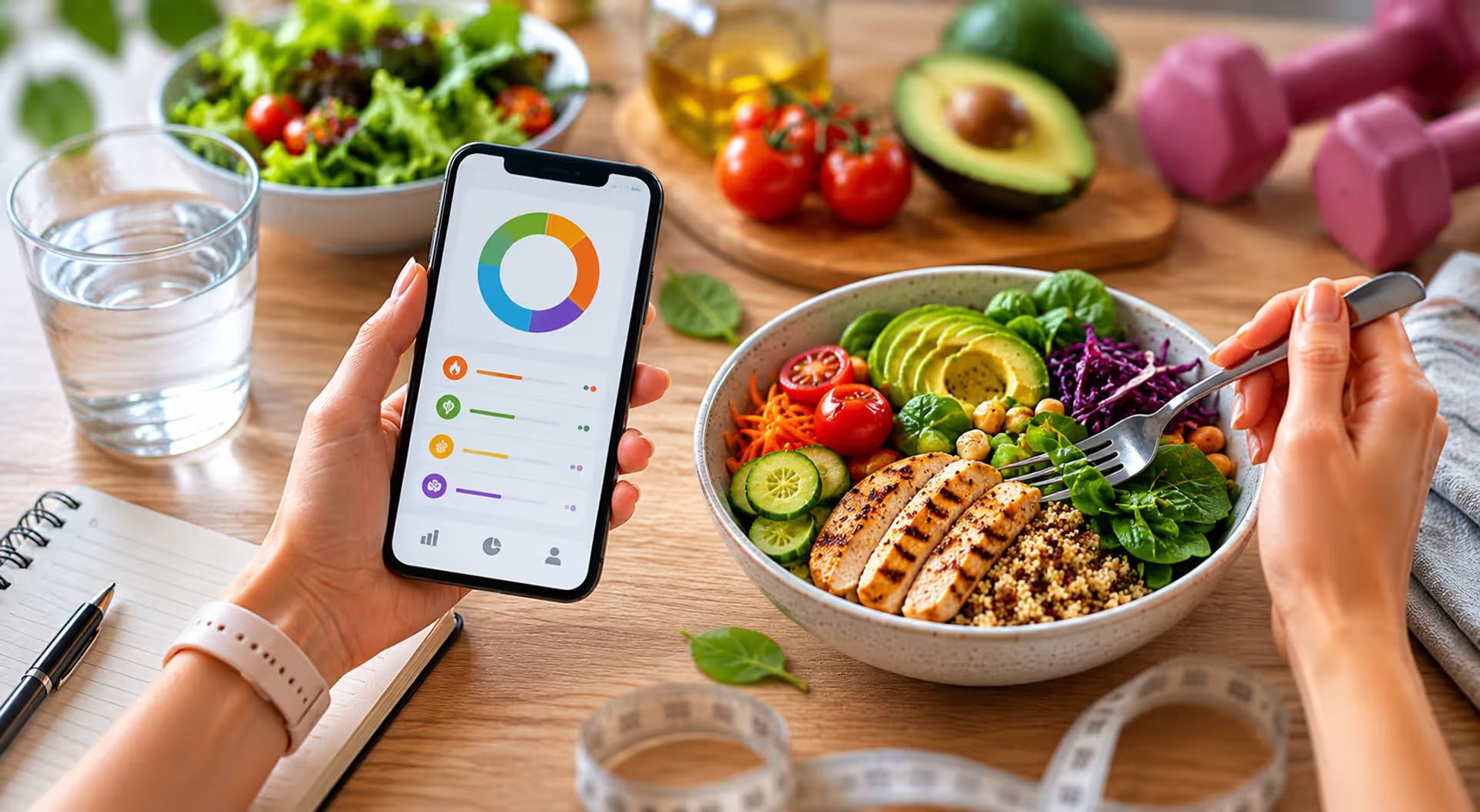
Smartphone apps dominate calorie tracking today, and for good reason. MyFitnessPal, Lose It!, Cronometer, and similar platforms store millions of foods in their databases. You can scan barcodes, search by name, save frequent meals, and even use voice input.
The biggest advantage? Speed. Once you're familiar with your app, logging a meal takes maybe 20-30 seconds. The app does the math automatically, tracks your daily totals, shows you macronutrient breakdowns, and generates progress charts. Many sync with fitness trackers to adjust your calorie budget based on activity (though take those exercise calorie estimates with a grain of salt—they often run 20-30% high).
The downside: database accuracy varies. Since users can create entries, you'll occasionally find errors. Always double-check against the actual package label for anything processed. For basic whole foods like raw chicken breast or bananas, the database numbers are generally reliable.
Manual Food Journaling
Some folks prefer old-school pen and paper. You write down everything you eat and look up the calorie values yourself, either online or from packaging.
This method takes more time, no question. But there's something about physically writing that creates stronger awareness. You're less likely to mindlessly snack when you know you'll need to pull out your journal and document it. The act of writing forces you to slow down and think.
You'll handle your own calculations for daily totals, and you'll spend extra time researching foods. But if apps feel overwhelming or you prefer keeping screens out of your eating routine, a notebook works just fine.
Weighing and Measuring Food Portions
This isn't really a separate method—it's a tool you use alongside apps or journals. But portion accuracy deserves its own discussion because this is where most tracking fails or succeeds.
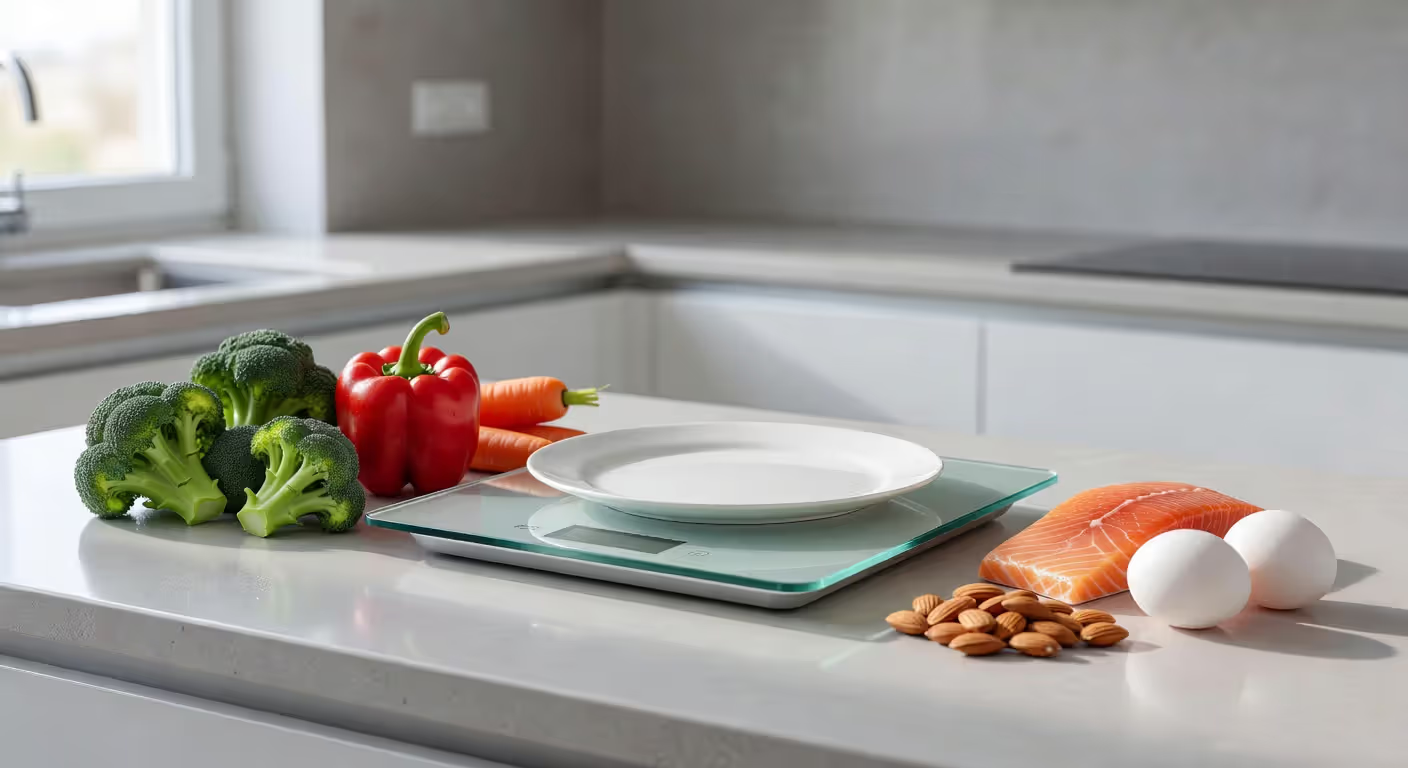
A digital kitchen scale costs fifteen to twenty-five bucks and eliminates guesswork. Put your plate on the scale, hit the "tare" button to zero it out, add your food, note the weight in grams, and log it. Done.
Measuring cups and spoons work okay for liquids and some solids, but they're unreliable for foods like shredded cheese, nuts, or nut butters. These items compress differently every time, making volume measurements inconsistent.
You won't need to weigh food forever. Most people develop pretty good portion judgment after three to four weeks. During that initial learning phase, though, the scale is your best friend.
Step-by-Step Process to Count Calories for Weight Loss
Ready to actually do this? Here's your practical game plan, broken into actions you can take today.
Step 1: Calculate Your TDEE
Find a TDEE calculator online (there are dozens of free ones). Plug in your age, sex, height, current weight, and how active you typically are. The calculator spits out an estimate of how many calories you burn daily. Is it perfect? No—it might be off by 200-300 calories either direction. But it gives you a starting point.
Step 2: Determine Your Deficit
Subtract 300-500 calories from your TDEE. That's your daily target for fat loss. So if your TDEE is 2,200 calories, you'd aim for 1,700-1,900 daily. Don't go crazy with huge deficits—cutting more than 750 calories usually backfires through excessive hunger, low energy, and eventually giving up.
Step 3: Pick Your Tracking Tool
Download an app or grab a notebook. If you choose an app, spend ten minutes learning how to log foods, save meals, and use the barcode scanner. Most have built-in tutorials.
Step 4: Log Everything
Everything means everything. Meals, snacks, drinks (except water), cooking oils, salad dressings, the three M&Ms you grabbed from the candy bowl, the cream in your coffee. If it went in your mouth and contained calories, write it down.
Log as you eat or immediately after. Waiting until bedtime guarantees you'll forget half of what you ate.
Step 5: Weigh Your Food
Use your kitchen scale for solids, measuring cups for liquids. Weigh raw when possible—cooking changes water content, which affects weight but not calories. A hundred grams of raw chicken has the same calories as that same chicken after cooking, even though it weighs less cooked.
Step 6: Monitor and Adjust Each Week
Weigh yourself two or three times weekly under the same conditions—first thing in the morning, after using the bathroom, before eating. Average those weigh-ins. Losing 0.5-1 pound per week? Perfect, keep going. Scale not moving after ten days? Drop your daily intake by 100-150 calories and reassess next week. Losing weight too fast (more than 2 pounds weekly)? Add 100-200 calories.
This feedback loop helps you dial in your actual calorie needs, since those initial calculator estimates are just educated guesses.
Pick whichever tracking approach you'll genuinely use day after day. Perfection isn't what we're after—it's awareness. Even if you only track 80% of the time, that gives you plenty of information to make smarter decisions about your diet.
Common Calorie Tracking Mistakes to Avoid
Even with good intentions, certain mistakes pop up again and again. Watch out for these.
Eyeballing Portions Instead of Measuring
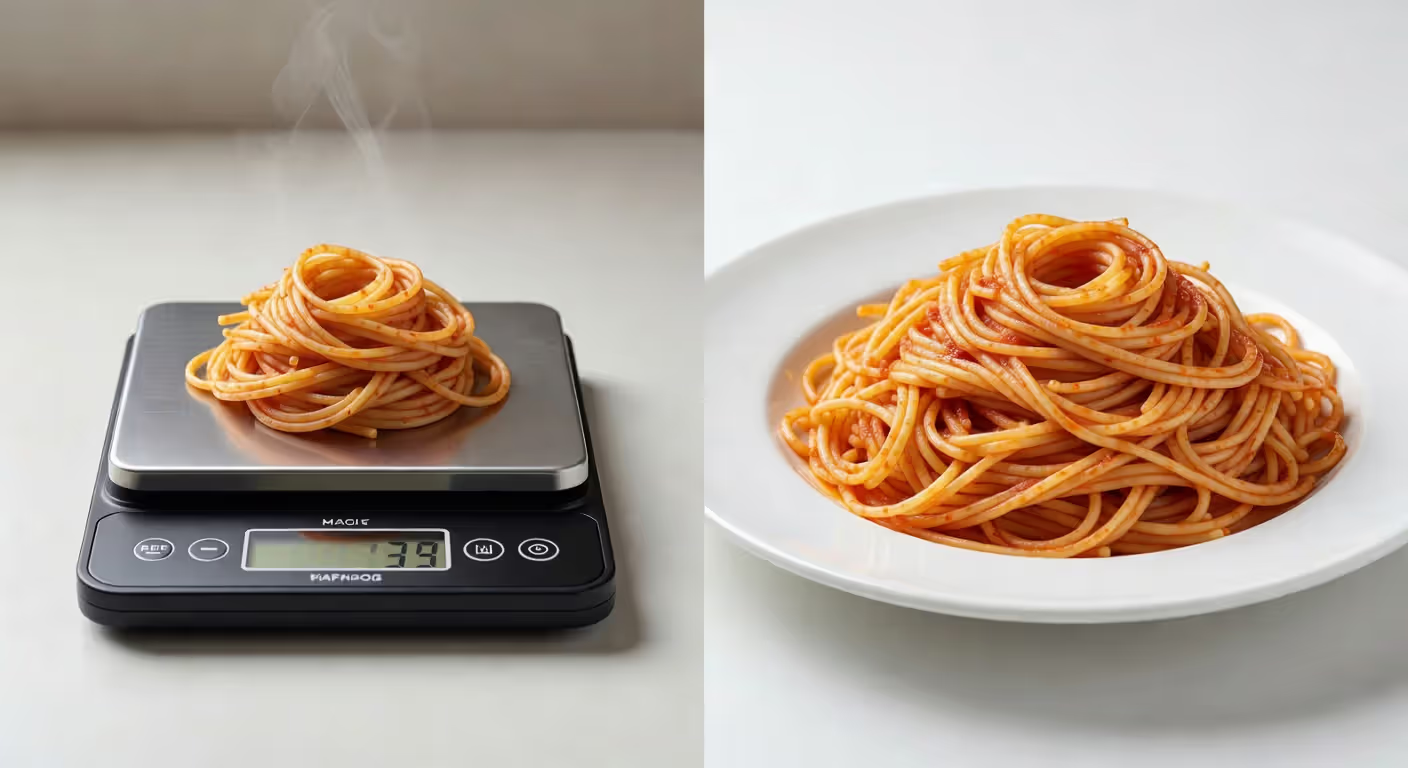
This trips up nearly everyone at first. What looks like a "medium" banana to you might be 90 calories or 120 calories depending on its actual size. A proper serving of dry pasta is 2 ounces, which looks surprisingly small on a plate—most people serve themselves 3-4 ounces without realizing it.
Fix it: weigh everything for your first two to three weeks. You'll train your eye to recognize actual portions, making future estimates much more accurate.
Ignoring Cooking Fats and Condiments
That tablespoon of olive oil you used to sauté vegetables? 120 calories. Butter on your toast? 100 calories. Two tablespoons of ranch dressing? 140 calories. Ketchup, mayo, BBQ sauce—they all count.
These "invisible" calories easily add up to 300-500 per day. Always log your cooking oils, butter, and condiments.
Forgetting About Drinks
Beverages contain just as many calories as solid food. A large vanilla latte with whole milk can pack 300+ calories. Orange juice has 110 calories per cup. Regular soda delivers 140 calories per can. Even diet drinks, while technically zero-calorie, might increase appetite for some people.
The only truly "free" drinks: water, black coffee, and plain unsweetened tea.
Taking Restriction Too Far
Some people turn calorie tracking into punishment, cutting out every food they enjoy while eating barely enough to function. This pattern leads straight to binge eating, guilt spirals, and eventually quitting altogether.
Pizza fits in your calorie budget. So does ice cream. The goal is balance, not suffering.
Tracking Weekdays But Not Weekends
This happens all the time. You diligently log Monday through Friday, then abandon all structure Saturday and Sunday. Problem is, two days of overeating can easily erase five days of deficit. If you maintain a 300-calorie deficit five weekdays (1,500 total deficit) but eat 1,000 calories over maintenance each weekend day (2,000 total surplus), you've actually created a 500-calorie weekly surplus.
Consistency beats perfection every time.
Best Practices for Accurate Calorie Counting
Once you've got the basics down, these strategies make tracking easier and more accurate.
Prep Meals in Advance and Log Once
When you meal prep, you can weigh and log all your ingredients once, then divide everything into containers for the week. This saves massive amounts of time and eliminates daily decision-making.
Some people take this further by pre-logging their entire day each morning. Plan your meals, enter them in your app before eating anything, then stick to the plan. If structure helps you, this approach works great.
Navigate Restaurant Meals Strategically
Eating out makes tracking harder since you can't weigh anything. Your best bet: use the calorie information posted by chain restaurants (required by law for chains with 20+ locations). If that's not available, search for similar dishes in your app.
When you're guessing, add 20% to whatever the menu or app suggests. Restaurant portions run larger than home-cooked meals, and they use more butter and oil than you would.
Ask for dressings and sauces on the side so you control how much goes on your food. Choose grilled over fried when possible.
Handle Foods Without Labels
Homemade recipes, farmer's market produce, and local bakery items don't come with nutrition labels. For these, use the USDA FoodData Central database (free online) or search generic entries in your app—things like "banana, medium" or "chicken breast, raw."
Most apps include recipe builders for homemade dishes. Enter all ingredients with their amounts, specify how many servings the recipe makes, and the app calculates calories per serving.
Aim for Consistency, Not Perfection
Some days make tracking impossible or impractical—weddings, vacations, celebrations, days when life just gets chaotic. That's completely fine. One day doesn't derail your progress.
Shoot for tracking 80-90% of the time. Log most of your meals, get reasonably accurate with portions, and don't stress about the occasional untracked meal. What you do most of the time determines your results, not what happens occasionally.
FAQ: Calorie Tracking Questions Answered
How many calories should I eat to lose weight?
It depends on your TDEE, which varies based on your age, sex, body size, and activity level. Most women lose fat eating somewhere between 1,400-1,800 calories daily. Most men need 1,800-2,300 daily calories for fat loss. Start with a TDEE calculator to get your baseline estimate, then adjust based on what actually happens to your weight over two to three weeks. A 300-500 daily calorie deficit works well for sustainable fat loss without extreme hunger.
What is the best way to track calories for beginners?
Start with a smartphone app like MyFitnessPal or Lose It! paired with a digital kitchen scale. Apps make logging quick and provide huge food databases, while scales ensure your portions are accurate. For your first week, just track what you normally eat without changing anything—this builds the habit and shows you where your calories come from. After that initial week, set your calorie target and start working toward it.
Is calorie counting something I'll need to do permanently?
Not at all. Think of tracking as an educational phase, not a life sentence. Most people benefit from six to twelve weeks of consistent tracking to learn portion sizes, identify calorie-dense foods, and build better habits. After that, many folks maintain their weight through intuitive eating with occasional tracking check-ins every few months. Some people prefer to keep tracking because it provides structure and accountability, which is totally fine too. It's your choice.
How accurate is calorie counting?
When done carefully, calorie tracking is reasonably accurate—though it's not perfect. Food labels can legally be off by up to 20% in the United States, and TDEE calculators give estimates rather than exact numbers. That said, tracking is accurate enough to produce consistent results when you're thorough and honest. The goal isn't perfection—it's creating a reliable deficit over time. Small errors tend to average out with consistent practice.
Should I track calories on weekends?
Yes, if you're trying to lose weight. Weekend overeating is one of the top reasons people don't see results despite "being good" all week. You don't have to be equally strict on weekends, but you should stay aware of what you're eating. Some people budget extra weekend calories by eating slightly less Monday through Friday. Others track loosely on weekends, aiming for maintenance calories rather than a deficit.
What if a food doesn't have a calorie label?
Use the USDA FoodData Central database or find a generic entry in your tracking app. Search for things like "apple, medium" or "ground beef, 85% lean, raw." For homemade recipes, use your app's recipe builder—enter all ingredients with their amounts, and it calculates the total. For restaurant meals without calorie information, find a comparable dish from a chain restaurant that does provide nutritional data, or estimate using individual ingredients and add 20% to account for extra cooking fats and larger portions.
Learning to track calories gives you a powerful tool for managing your weight and understanding your eating patterns. It takes some practice upfront, but once you've established your routine, it becomes second nature. Start simple, stay consistent, and remember that progress matters more than perfection. You don't need to track forever—just long enough to figure out what works for your body and lifestyle.