Understanding what's printed on the side of your cereal box or yogurt container isn't just helpful—it's one of the simplest ways to take control of what you eat. The nutrition label gives you a snapshot of what's actually inside that package, but only if you know how to decode it. Most people glance at the calories and move on. That's a mistake. The label holds clues about portion sizes, hidden sugars, and whether that "healthy" snack is really what it claims to be. Once you learn the system, comparing products becomes fast and you'll spot marketing tricks a mile away.
What Information Is on a Nutrition Facts Label
Every nutrition facts label you encounter follows an identical structure required by the FDA. This standardization exists for a practical reason—it lets you evaluate products side-by-side without hunting for information in different spots on each package.
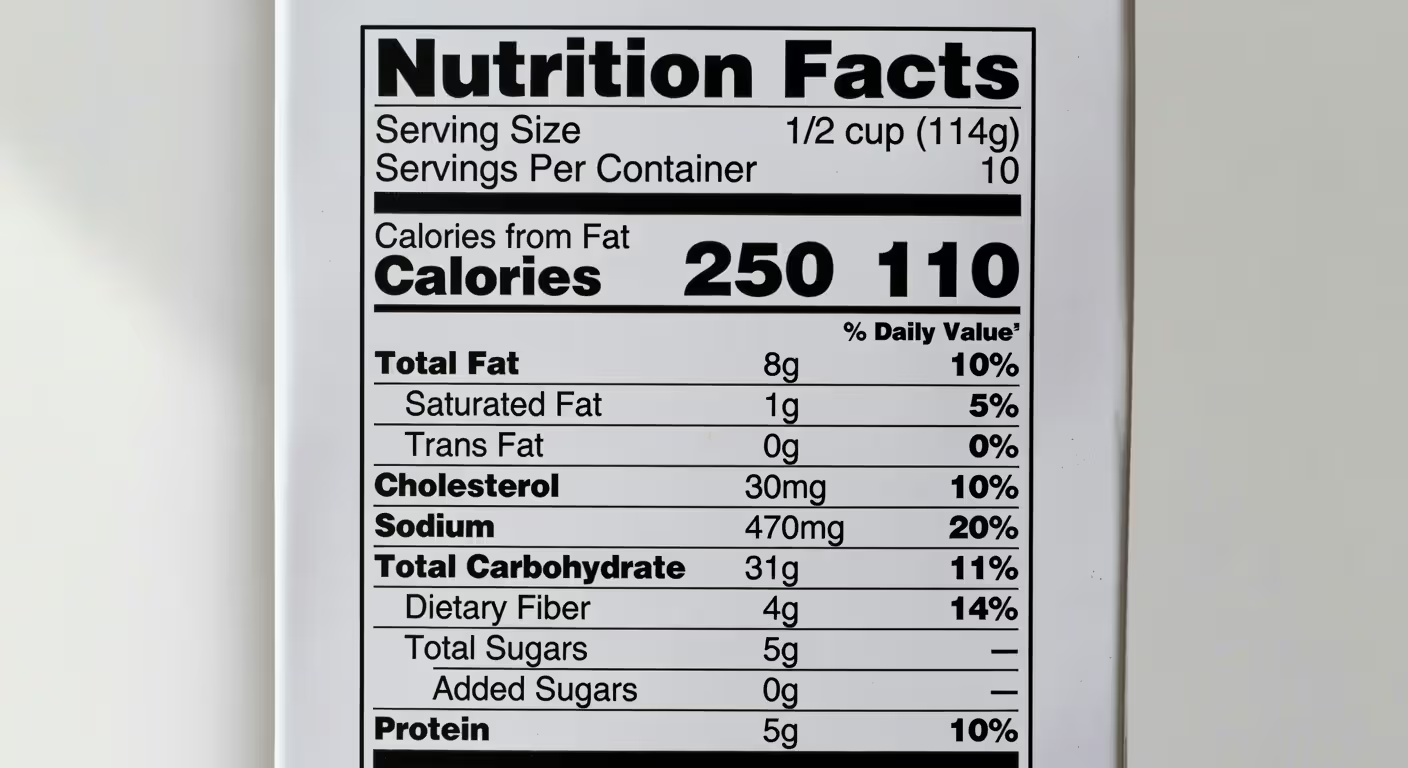
The top section displays serving size and the number of servings the package contains. Directly beneath that, you'll find the calorie count per serving, printed in prominent bold numbers. The label then moves into a detailed breakdown: total fat, cholesterol, sodium, total carbohydrates, and protein. Most of these nutrients include both their weight in grams and their percent Daily Value.
Further down, the micronutrient section appears. Since the 2020 update, manufacturers must include vitamin D, calcium, iron, and potassium on every label. Additional vitamins and minerals can be added at the company's discretion.
At the very bottom, a small-print footnote clarifies that the percent Daily Values reference a 2,000-calorie eating pattern. This benchmark remains identical across all food labels, establishing a universal framework for nutrition information.
Something worth noting: the format underwent substantial revision in 2020. Products manufactured before the compliance deadline might still display the older version, which featured vitamins A and C rather than vitamin D and potassium. The redesigned label also introduced "Added Sugars" as its own line—a crucial change that exposes sweeteners manufacturers slip into unexpected products.
Most packaged foods must carry this label. Fresh produce, raw meats, and certain small-batch items receive exemptions, but anything arriving in a box, bag, jar, or bottle will typically display one.
Understanding Serving Size and Servings Per Container
This is where confusion starts for most people. The serving size doesn't represent a nutritional recommendation—it's a standardized measurement the FDA established by studying typical eating behaviors.
This distinction matters enormously because every single number below it references that specific serving size. When a bag of chips lists 150 calories but contains three servings, eating everything means consuming 450 calories. And realistically, who carefully divides a snack bag into thirds?
The FDA determines these portions by analyzing consumption data, not by calculating optimal nutrition. A pint of ice cream might indicate four servings, yet research demonstrates most consumers treat it as two servings—or occasionally just one.
Here's something I notice repeatedly: shoppers compare two similar products without recognizing that one uses a 1-cup serving while the competitor shows ¾ cup. The second item appears lower in calories or sugar, but that's purely because it's using a smaller measurement unit.
Accurate nutrition information requires basic multiplication. Eating two bread slices instead of one? Double every value. If the serving size reads 30 grams but you measure out 45 grams, multiply each nutrient by 1.5.
Certain packages display servings per container as approximate figures, such as "about 8." This happens because package weights fluctuate slightly during manufacturing. When precision matters, weigh or measure your actual portion and calculate accordingly.
Single-serve packaging has improved since the recent label changes. When a package holds between 200% and 400% of the reference amount but someone might reasonably consume it all at once, companies must provide dual-column labeling showing both per-serving and per-package totals. That 20-ounce soda? You'll see exactly what drinking the entire bottle delivers.
How to Use Percent Daily Value
Percent Daily Value (%DV) indicates what fraction of a day's worth of each nutrient appears in one serving. The calculation uses a 2,000-calorie diet as its foundation, which serves as a practical middle ground for typical adults.
You don't need to memorize every percentage. The FDA recommends a straightforward approach: anything at 5% DV or below qualifies as low, while 20% DV or above qualifies as high.
The interpretation reverses depending on the nutrient. For fiber, vitamin D, calcium, iron, and potassium, higher percentages benefit you. Most Americans consistently fall short on these nutrients. For saturated fat, sodium, and added sugars, lower percentages serve you better. We generally overconsume those.
The percent Daily Value is the most underused tool on the nutrition label. My clients often fixate on absolute gram amounts, but the %DV instantly tells you whether a food contributes a little or a lot to your daily targets. It transforms label reading from math homework into quick pattern recognition.
The 2,000-calorie foundation doesn't prescribe your personal requirements. Your needs might run higher or lower based on age, sex, activity patterns, and health objectives. Yet the %DV remains valuable for comparisons. A food delivering 40% of daily sodium qualifies as high-sodium regardless of whether you consume 1,600 or 2,400 calories.
Comparing products becomes straightforward with %DV: examine two cereal boxes. The first shows 8% DV for fiber and 15% DV for added sugars. The second displays 20% DV for fiber and 5% DV for added sugars. The second choice clearly wins—abundant in what you need, minimal in what you don't.
Some nutrients lack a %DV altogether. Total sugars, protein, and trans fat don't include one because the FDA hasn't established daily reference amounts for them (or, regarding trans fat, advises eliminating it entirely).
Daily Value Percentage
Nutrient Level
Best For These Nutrients
Concerning For These Nutrients
Below 5%
Minimal amount
Saturated fat, sodium, added sugars
Fiber, vitamin D, calcium, iron, potassium
Between 6% and 19%
Medium contribution
Context-dependent based on your complete eating pattern
Context-dependent based on your complete eating pattern
Above 20%
Substantial amount
Fiber, vitamin D, calcium, iron, potassium
Saturated fat, sodium, added sugars
Reading Calories, Fats, and Macronutrients
The calorie count appears in the label's largest font for an important reason—it reveals how much energy one serving delivers. But that number alone tells an incomplete story.
The macronutrients listed below—fats, carbohydrates, and protein—explain where those calories originate. Fat contains 9 calories in every gram, whereas carbohydrates and protein each contain 4 calories per gram. High-fat foods pack more calories into smaller portions; high-protein or high-carb foods deliver less energy per gram.
Total Fat vs. Saturated and Trans Fats
The label begins with total fat, then subdivides it into saturated fat and trans fat. Some manufacturers voluntarily include monounsaturated and polyunsaturated fats as well.
Total fat isn't your enemy. Your body requires fat for hormone creation, vitamin absorption, and brain function. The specific type matters far more than the total quantity in most situations.
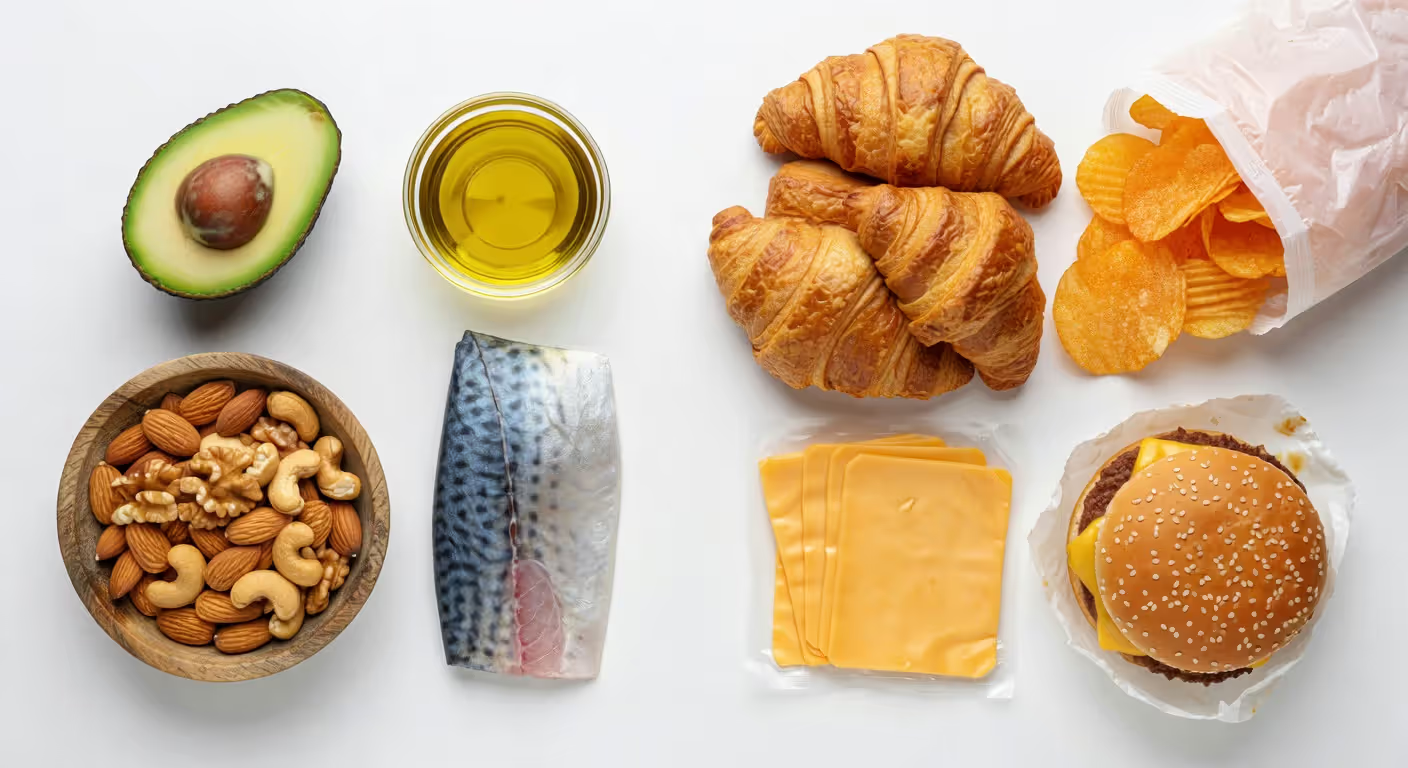
Saturated fat, concentrated primarily in animal products and tropical oils, deserves limitation. The FDA advises keeping daily intake under 20 grams (targeting 10% DV per serving or less works well).
Trans fat stands alone as the fat to eliminate entirely. It elevates LDL cholesterol while simultaneously decreasing HDL cholesterol. Although the FDA prohibited artificial trans fats in 2018, trace amounts occur naturally in meat and dairy. When a label claims "0 g" trans fat, that actually means under 0.5 grams per serving—not absolute zero. Scan the ingredient list for "partially hydrogenated oil." Its presence confirms the product contains trans fat.
Unsaturated fats—both monounsaturated and polyunsaturated varieties—support cardiovascular health. These originate from sources like olive oil, nuts, avocados, and fatty fish. Labels don't always separate these out, but when total fat runs high while saturated fat stays low, you're probably looking at predominantly unsaturated fats.
Understanding Added Sugars
The label separates total sugars from added sugars. Total sugars encompass naturally present sugars (such as lactose in dairy or fructose in fruit) plus any sugars introduced during manufacturing.
Added sugars deserve your attention. They supply calories without delivering meaningful nutrients. The FDA suggests capping added sugars below 50 grams daily (representing 10% of a 2,000-calorie diet).
Plain yogurt might display 12 grams of total sugars (from naturally occurring lactose) yet 0 grams of added sugars. Flavored yogurt could show 24 grams total sugars with 12 grams added. That second figure reveals exactly how much sweetener the manufacturer included.
This separation helps you identify sugar lurking in surprising products. Pasta sauce, salad dressing, and bread frequently contain added sugars. Before the label redesign, you couldn't determine whether those grams came from tomatoes or from high-fructose corn syrup.
Protein lacks a %DV because requirements fluctuate widely depending on body size and physical activity. As a general guideline, most adults require 50–70 grams daily. Any food offering 10+ grams per serving qualifies as a solid protein source.
Vitamins, Minerals, and Micronutrients on Food Labels
Beneath the macronutrient section, the micronutrient area appears. The FDA mandates that labels display vitamin D, calcium, iron, and potassium because American diets frequently lack adequate amounts of these.
The quantities appear in two formats: actual measurements (micrograms or milligrams) and %DV. For most consumers, the percentage provides more practical information. When your cereal supplies 20% DV of iron, you're obtaining a meaningful portion of your daily requirement.
Vitamin D supports skeletal health and immune response. Its daily value stands at 20 micrograms (800 IU). Natural food sources remain limited—fatty fish, egg yolks, and fortified dairy represent the primary options.
Calcium constructs and maintains skeletal structure. The daily value equals 1,300 milligrams. Dairy products, fortified plant-based milks, and leafy greens deliver calcium.
Iron transports oxygen throughout your bloodstream. The daily value reaches 18 milligrams. Meat, beans, fortified cereals, and spinach serve as reliable sources. Plant-derived iron absorbs less readily than animal-derived iron, so vegetarians should monitor this number more carefully.
Potassium maintains healthy blood pressure and fluid equilibrium. The daily value sits at 4,700 milligrams. Bananas receive all the publicity, yet potatoes, beans, and yogurt actually deliver more potassium per serving.
Companies can optionally list additional nutrients like vitamin A, vitamin C, vitamin E, or B vitamins. If they advertise a nutrient claim ("Excellent source of vitamin C!"), they must include it on the label.
Upper limits rarely appear on food labels, though they exist. Certain nutrients become harmful in excessive quantities. You're unlikely to reach dangerous levels from food alone, but this matters if you take supplements. For instance, the upper limit for vitamin D reaches 100 micrograms daily—five times the daily value.
The practical approach: use the %DV to identify foods that meaningfully contribute nutrients you need. When a serving delivers 10% or more of a micronutrient, it's making a real nutritional contribution.
Common Mistakes When Reading Nutrition Information
The most frequent error? Overlooking serving size. You believe you're consuming one serving when you're actually having three. The nutrition information becomes useless unless you account for your actual intake.
Another widespread mistake involves fixating exclusively on calories. Two snacks might contain identical calorie counts, yet one overflows with added sugar and sodium while the other delivers fiber and protein. The calorie number reveals energy content, not nutritional quality.
Consumers frequently misinterpret %DV. They assume reaching 100% represents the target for every nutrient, but that's incorrect. You're pursuing 100% DV across everything you consume throughout the day, not from a single food item. And for nutrients like sodium and saturated fat, staying considerably below 100% benefits you more.
Many shoppers skip comparing similar products. You grab the first cracker box without verifying whether another brand provides more fiber and less sodium at the same calorie level. Investing 30 seconds in label comparison can meaningfully shift your diet over time.
Some people succumb to the "health halo" phenomenon. A package prominently features "organic," "natural," or "gluten-free," so they assume it's nutritious. Then they bypass reading the label and overlook that it contains 18 grams of added sugar per serving.
Here's something counterintuitive: front-of-package declarations can be technically accurate yet misleading. "Made with whole grains" might mean whole grain ranks as the fifth ingredient. "Low fat" might signal high sugar. Always flip to the nutrition facts label for genuine information.
Failing to adjust for your real consumption creates another problem. You eat half a restaurant entrée and feel virtuous, but you didn't verify that the label indicates two servings. You still consumed 100% of your daily sodium in one meal.
Finally, people often forget that %DV functions as a comparison tool, not an absolute standard. If you're an athlete consuming 3,000 calories daily, a food showing 15% DV for sodium carries less significance than it would for someone eating 1,600 calories. Use the percentages as a comparison framework, but mentally adjust for your individual requirements.
Percent Daily Value Quick Reference
The table below condenses %DV interpretation into an at-a-glance reference and clarifies when to pursue or avoid elevated percentages for various nutrients.
Daily Value Percentage
What This Indicates
Nutrients You Want High Here
Nutrients You Want Low Here
5% or lower
Minimal presence
Not applicable (you need more beneficial nutrients)
Saturated fat, sodium, added sugars
6% through 10%
Small contribution
Acceptable for most nutrients
Monitor sodium and saturated fat if consuming multiple servings
11% through 19%
Medium presence
Beneficial for fiber, vitamins, minerals
Approaching high territory for sodium and added sugars
20% or higher
Significant presence
Fiber, vitamin D, calcium, iron, potassium
Saturated fat, sodium, added sugars (reserve for occasional indulgences)
Reference this table during grocery shopping when deciding between two products. The food containing 25% DV fiber and 6% DV sodium surpasses the one with 8% DV fiber and 22% DV sodium in nearly every scenario.
FAQ: Nutrition Label Questions Answered
What does serving size mean on a nutrition label?
Serving size represents a standardized measurement the FDA established by analyzing typical consumption habits. It doesn't suggest how much you ought to eat—it simply defines the quantity that all other label numbers reference. When you consume more or less than the stated serving size, you must proportionally adjust the nutrition information. For instance, if the serving size reads ½ cup but you consume 1 cup, you're receiving double the calories, sodium, and every other listed nutrient.
How do I know if a food is high in a nutrient?
Apply the 5/20 guideline. When a food contains 5% Daily Value or less of a nutrient per serving, it's minimal in that nutrient. When it contains 20% DV or above, it's substantial. This guideline enables quick identification of foods that significantly contribute to your daily nutritional targets. For nutrients like fiber and vitamins, substantial amounts benefit you. For sodium, saturated fat, and added sugars, you typically want minimal percentages unless you're deliberately managing your complete daily intake.
What's the difference between total sugars and added sugars?
Total sugars encompass every sugar present in the food, including naturally occurring varieties (such as lactose in dairy products or fructose in whole fruit) and those introduced during manufacturing. Added sugars specifically refer to sweeteners that manufacturers incorporate during production—ingredients like cane sugar, high-fructose corn syrup, honey, or agave nectar. The added sugars line reveals how much of the total derives from these introduced sources. Plain milk might contain 12 grams of total sugars yet 0 grams of added sugars, whereas chocolate milk might show 24 grams total with 12 grams added.
Do I need to eat exactly 2,000 calories for the %DV to be accurate?
Not at all. The 2,000-calorie reference simply provides a standardized foundation that enables consistent comparisons across every food product. Your individual calorie requirements might run higher or lower based on age, sex, body composition, and physical activity. The %DV continues functioning as a comparison instrument regardless of your specific requirements. A food supplying 30% of daily sodium qualifies as high-sodium whether you consume 1,600 or 2,400 calories. Consider %DV as a relative measurement rather than an absolute directive.
Are nutrition labels required on all foods?
Most packaged foods must display a nutrition facts label, though exceptions exist. Raw fruits and vegetables, fresh meat and poultry, and fish generally don't require labels (though many stores voluntarily provide nutrition information). Very small packages, products from small businesses, and items prepared on-site at restaurants or bakeries frequently receive exemptions. Alcoholic beverages follow different labeling regulations under the Alcohol and Tobacco Tax and Trade Bureau rather than the FDA.
How often do nutrition label regulations change?
Major revisions occur infrequently but create substantial impact. The FDA implemented comprehensive changes in 2016 (with a compliance deadline in 2020) that revised serving sizes, introduced the "Added Sugars" line, and modified which vitamins and minerals must appear. Before that revision, the previous major update occurred in 1993. The FDA does make minor adjustments periodically based on emerging nutrition science and public health priorities. When changes occur, manufacturers typically receive several years to achieve compliance, so you might encounter both old and new label formats on shelves during transition periods.
Reading a nutrition label gets faster with practice. What feels like information overload the first few times becomes automatic pattern recognition. You'll start spotting the high-sodium products immediately, identify genuinely high-fiber foods without thinking, and decode serving size tricks in seconds. That knowledge shifts your shopping cart gradually toward foods that align with your health goals—not because you're following a restrictive diet, but because you finally understand what you're actually buying.