Stress doesn't just live in your head. It settles into tight shoulders, disrupts sleep, and colors every interaction gray. You've probably heard that exercise helps, but understanding how it works changes everything. The mechanisms are real, measurable, and surprisingly fast-acting. Let's break down exactly what happens in your body and brain when you move, and why that 30-minute walk might be more powerful than you think.
The Science Behind Exercise and Stress Relief
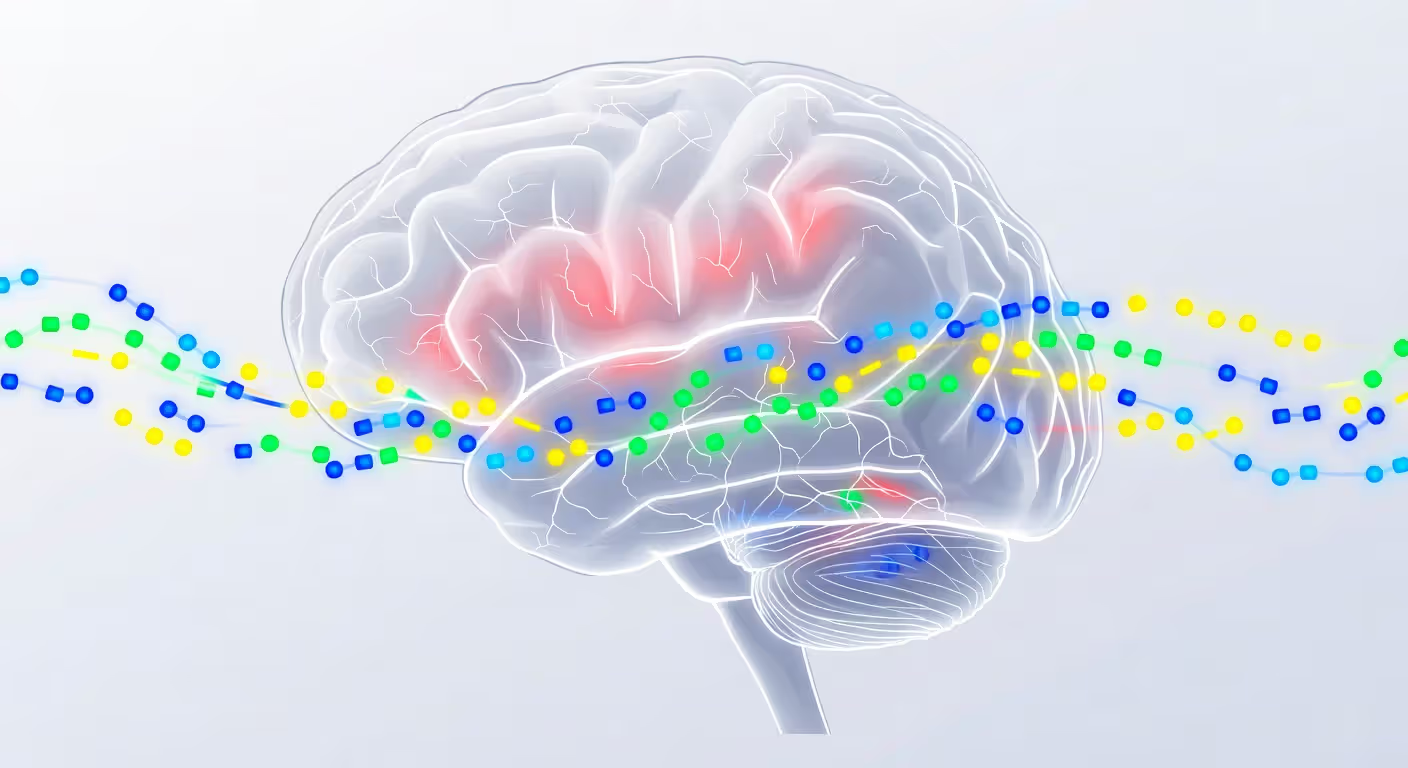
When you exercise, your body launches a coordinated chemical response that directly counteracts stress. This isn't metaphorical or vague—it's biochemistry you can track in a lab.
Endorphins get most of the attention, and for good reason. These natural opioids flood your system during moderate to intense physical activity, creating what runners call a "high." But they're just the opening act.
Cortisol reduction matters more for chronic stress. Cortisol is your primary stress hormone, useful in short bursts but destructive when elevated for weeks or months. Regular physical activity and stress management work together to lower baseline cortisol levels. One study tracking office workers found that those who exercised three times weekly showed 23% lower cortisol levels after eight weeks compared to sedentary colleagues.
The neurotransmitter story runs deeper. Exercise increases serotonin availability—the same target as many antidepressants. It boosts norepinephrine, which helps your brain deal with stress more efficiently. And it elevates dopamine, improving mood and motivation simultaneously.
Your prefrontal cortex—the part that handles rational thinking and emotional regulation—literally gets more blood flow during and after exercise. Meanwhile, activity in the amygdala (your brain's alarm system) decreases. You're simultaneously strengthening the brake and loosening the gas pedal on stress responses.
There's also a fascinating temperature angle. Exercise raises your core body temperature slightly, which may trigger relaxation responses similar to sitting in a warm bath. Some researchers believe this thermoregulatory effect contributes to the calm feeling that follows a workout.
The pattern I see most often is people expecting instant transformation and missing the cumulative effect. Yes, you'll feel better after one session. But the real magic happens at the two-week mark, when your brain starts rewiring its stress response pathways.
How Exercise Helps Anxiety and Depression
Anxiety operates differently than general stress, and exercise addresses it through multiple channels.
For anxiety specifically, exercise for mental health works partly through distraction—not in a dismissive way, but as genuine cognitive relief. When you're focused on breathing, form, or simply not tripping on the trail, your brain gets a break from rumination loops. That 45-minute interruption in catastrophic thinking can reset your entire day.
The physical sensations matter too. Anxiety often involves misinterpreting normal body signals as danger. Your heart races, you sweat, breathing quickens—and your brain screams "threat!" Regular exercise teaches your body that these sensations are safe, even beneficial. You're literally training yourself out of panic responses.
Clinical evidence backs this up strongly. A 2025 meta-analysis of 89 studies found that how exercise helps anxiety rivals SSRIs for mild to moderate cases. The effect size was comparable, though individual responses varied. Twelve weeks of structured exercise reduced anxiety symptoms by an average of 38% across participants.
Depression responds too, though through slightly different mechanisms. Exercise increases BDNF (brain-derived neurotrophic factor), which essentially fertilizes new neural connections. Depression is partly a connectivity problem—regions of your brain stop communicating effectively. BDNF helps rebuild those bridges.
Exercise is the single most powerful tool you have to optimize brain function. It affects mood, memory, and learning through multiple mechanisms—increasing neurotransmitters, improving circulation, and stimulating neuroplasticity. For anxiety and depression, the evidence is now so strong that we should consider it a first-line treatment, not an afterthought.
One counterintuitive finding: exercise doesn't need to be enjoyable to work. A 2024 study compared people who "liked" their workouts to those who found them neutral or mildly unpleasant. Both groups showed similar anxiety reduction. Consistency mattered far more than enjoyment.
That said, forcing yourself through exercise you hate rarely leads to consistency. The trick is finding something tolerable enough to repeat.
Types of Exercise That Reduce Stress Most Effectively
Not all movement affects stress equally. The type, intensity, and setting all shift the outcome.
Exercise Type
Stress Reduction Mechanism
Time to Feel Benefits
Best For
Accessibility
Aerobic exercise
Endorphin release, cortisol reduction, cardiovascular health
20-30 minutes during/after
General stress, anger, restlessness
High - walking, jogging, cycling
Strength training
Sense of mastery, improved body image, focused attention
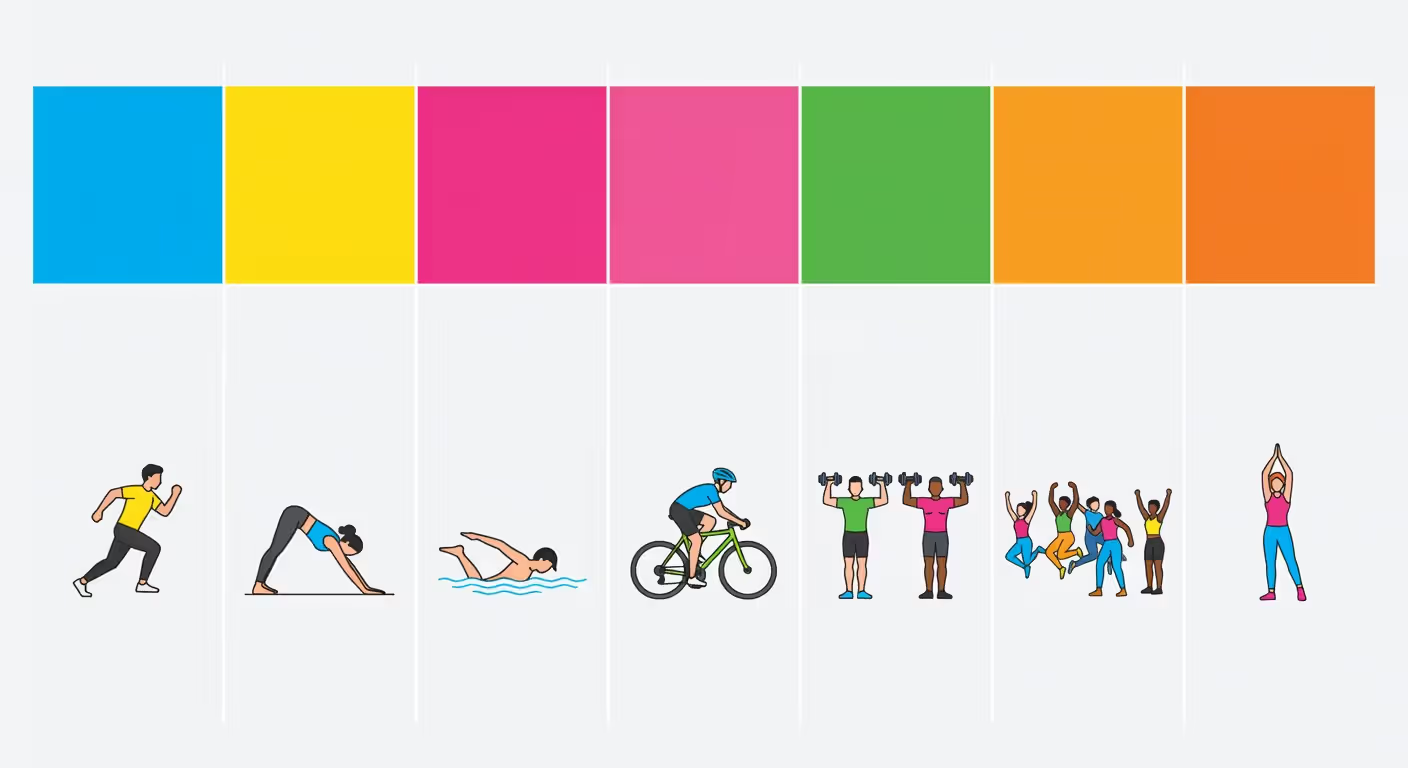
Aerobic exercise dominates the research. Running, cycling, swimming—anything that elevates your heart rate for sustained periods—produces the most consistent stress-reduction effects. The sweet spot sits around 60-75% of your maximum heart rate, sustained for at least 20 minutes.
But strength training offers unique benefits. Lifting creates a sense of concrete accomplishment. You moved 50 pounds last week; this week you moved 55. That tangible progress builds self-efficacy, which directly buffers against stress and anxiety.
Mind-body practices like yoga activate your parasympathetic nervous system—the "rest and digest" mode that stress suppresses. The combination of movement, breath control, and present-moment focus hits anxiety from three angles simultaneously.
Does the Gym Help with Anxiety
The gym question splits people. Some find the structured environment helpful—equipment, routine, clear goals. Others feel self-conscious or overwhelmed by the social setting.
Does the gym help with anxiety? It can, but it's not magic. The gym provides tools and consistency. If you're someone who needs external structure to maintain habits, a gym membership might be worth it. If crowds and mirrors spike your anxiety, home workouts or outdoor exercise will serve you better.
One often-overlooked gym benefit: personal training or group classes remove decision fatigue. You show up, someone tells you what to do, you do it. When anxiety already has you paralyzed by choices, that simplicity helps.
Outdoor Exercise vs. Indoor Workouts
Nature adds a measurable bonus. Studies using the term "green exercise" show that outdoor physical activity reduces cortisol more than identical indoor exercise. A 2025 study found that a 30-minute outdoor walk lowered anxiety scores 18% more than a treadmill walk at the same pace.
The theory involves attention restoration. Indoor environments demand directed attention—you have to consciously focus. Natural settings allow "soft fascination," where your attention flows easily without effort. This gives your prefrontal cortex a break, reducing mental fatigue that amplifies stress.
Weather, safety, and access complicate the outdoor picture. The simpler option usually wins here—if getting outside requires 20 minutes of preparation, you'll skip it. Indoor exercise you actually do beats outdoor exercise you avoid.
Exercise Mood Benefits Beyond Stress Reduction
The exercise mood benefits extend past stress relief into broader mental wellness.
Sleep quality improves noticeably. Exercise increases slow-wave sleep—the deep, restorative kind. It also helps regulate your circadian rhythm, making it easier to fall asleep and wake naturally. People who exercise regularly report 40-50% better sleep quality than sedentary individuals.
Timing matters here. Morning or afternoon exercise tends to improve sleep. Late evening workouts (within 2-3 hours of bedtime) can interfere for some people, though this varies individually.
Self-esteem gets a boost through multiple pathways. There's the obvious body composition angle—you look different, you feel different. But even before visible changes, the act of keeping commitments to yourself builds self-respect. You said you'd exercise three times this week. You did. That's evidence you can trust yourself.
Cognitive function sharpens. Exercise increases blood flow to the hippocampus, improving memory formation. It enhances executive function—planning, organizing, multitasking. Students who exercise before studying retain information better than those who don't.
Social connection emerges naturally from many exercise settings. Group classes, running clubs, pickup basketball—these create low-pressure social interaction. You're doing something together, which removes the awkwardness of forced conversation. For people whose stress includes loneliness, this social element can be as valuable as the movement itself.
One unexpected benefit: emotional regulation improves. Regular exercisers show better ability to identify their emotions and respond appropriately rather than react impulsively. This probably ties to improved prefrontal cortex function, but the practical result is fewer regrettable stress-driven decisions.
How Much Physical Activity Do You Need for Stress Relief
The dose-response curve for exercise and stress isn't linear. More isn't always better, and the minimum effective dose is surprisingly low.
For basic stress reduction, research points to 150 minutes of moderate activity weekly. That's the standard recommendation you've heard everywhere, and it holds up. Break it into 30 minutes, five days a week, and you'll see measurable benefits.
But here's what often gets missed: you don't need to hit that target immediately. Starting with just 10 minutes three times weekly produces noticeable mood improvements within two weeks. It's not optimal, but it's infinitely better than zero and actually sustainable for beginners.
Intensity matters less than you'd think for stress relief specifically. Vigorous exercise produces stronger endorphin responses, but moderate activity reduces cortisol more effectively. A brisk walk often beats a sprint for pure stress management.
That said, some people respond better to intense workouts. If you're someone who carries physical tension and restlessness, high-intensity exercise might feel more satisfying. The "right" intensity is the one you'll actually maintain.
Consistency trumps everything. Three 20-minute sessions weekly, maintained for months, will outperform sporadic hour-long workouts. Your brain adapts to regular exercise, building stronger stress-resistance pathways. Irregular exercise doesn't trigger the same adaptive response.
The minimum effective dose for anxiety specifically appears to be about 75 minutes weekly at moderate intensity. Below that, benefits become inconsistent. Above 300 minutes weekly, additional gains plateau for most people.
One important nuance: acute stress responds faster than chronic anxiety. If you're having a rough day, a single 20-minute walk can noticeably improve your mood within an hour. If you're dealing with generalized anxiety disorder, expect 4-6 weeks of consistent exercise before you notice substantial changes.
Common Mistakes When Using Exercise for Mental Health
People sabotage their own success in predictable ways when using exercise for mental health.
Overtraining is more common than you'd expect. When exercise makes you feel better, the temptation is to do more. But excessive training elevates cortisol, disrupts sleep, and can worsen anxiety. If you're exercising more than 90 minutes daily and feeling increasingly irritable or anxious, you've crossed into counterproductive territory.
Wrong exercise choice derails many people. You hate running but force yourself to run because that's "real exercise." Three weeks later, you've quit entirely. The best exercise for stress is the one you'll actually do repeatedly. Walking counts. Dancing in your living room counts. Yard work counts.
Inconsistency kills results. Exercising intensely for two weeks, then stopping for three, then restarting produces minimal mental health benefits. Your brain needs regular, repeated signals to adapt. Two sessions weekly for six months beats daily workouts for one month.
Unrealistic expectations create unnecessary disappointment. Exercise isn't a miracle cure. It won't eliminate anxiety disorders or replace therapy for serious depression. It's a powerful tool in a larger toolkit. Expecting it to solve everything sets you up for frustration when it doesn't.
Another mistake: ignoring recovery. Rest days aren't laziness—they're when adaptation happens. Your muscles rebuild, your nervous system recalibrates, and stress-reduction pathways strengthen. Training seven days weekly prevents this recovery process.
All-or-nothing thinking stops people before they start. "I can only do 15 minutes today, so why bother?" Because 15 minutes provides real benefits. Partial credit counts in exercise. Something is always better than nothing.
Finally, not adjusting for life circumstances. The exercise routine that worked when you were single and childfree might not fit your current life. Rather than abandoning exercise entirely, scale it to what's realistic now. Ten minutes is your new baseline, not failure.
FAQ: Exercise and Stress Management Questions Answered
How quickly does exercise reduce stress?
You'll notice acute effects within 20-30 minutes of moderate exercise—improved mood, reduced tension, clearer thinking. These immediate benefits come from endorphin release and increased blood flow to your brain. For chronic stress and anxiety, expect to see substantial changes after 2-3 weeks of consistent exercise (at least three sessions weekly). The neurochemical adaptations that provide lasting stress resilience take 4-6 weeks to fully develop. One workout helps; regular workouts transform.
What's the best time of day to exercise for anxiety relief?
Morning exercise tends to provide the longest-lasting anxiety reduction throughout the day. It also helps regulate cortisol, which naturally peaks in the morning. That said, the best time is whenever you'll actually do it consistently. If you're not a morning person, forcing 6 AM workouts will backfire. Some people find evening exercise helps them decompress from work stress, though working out within 2-3 hours of bedtime can interfere with sleep for some individuals. Experiment and track how you feel.
Can too much exercise increase stress?
Absolutely. Overtraining syndrome elevates cortisol, disrupts sleep, suppresses immune function, and can worsen anxiety. Warning signs include persistent fatigue, irritability, declining performance, increased resting heart rate, and trouble sleeping despite being exhausted. For stress management purposes, more than 60-75 minutes daily starts showing diminishing returns for most people. If exercise is adding stress rather than relieving it, you've crossed the line. Scale back, add rest days, and focus on moderate intensity rather than pushing limits.
Do I need intense workouts or will walking help?
Walking absolutely helps. Studies show that regular walking (30 minutes, 5 days weekly) reduces anxiety and depression as effectively as more intense exercise for most people. The key factors are consistency and duration, not intensity. That said, some individuals respond better to vigorous exercise—it depends on your personality and how your body processes stress. If you carry a lot of physical tension and restlessness, higher-intensity workouts might feel more satisfying. But if you're choosing between intense workouts you'll skip and moderate walks you'll actually do, walking wins every time.
Can exercise replace therapy for anxiety?
For mild anxiety, exercise alone might be sufficient. For moderate to severe anxiety disorders, exercise should complement therapy, not replace it. The 2025 American Psychological Association guidelines recommend exercise as a first-line intervention for mild anxiety, but suggest combining it with cognitive-behavioral therapy for moderate cases. Exercise changes your brain chemistry; therapy changes your thought patterns and coping strategies. Together, they're more effective than either alone. If your anxiety significantly impairs daily functioning, see a mental health professional regardless of your exercise routine.
How does exercise compare to medication for stress?
For mild to moderate stress and anxiety, exercise produces comparable results to common medications like SSRIs, with fewer side effects. A 2025 meta-analysis found similar effect sizes between regular exercise and pharmacological interventions for generalized anxiety. However, exercise takes longer to show results (2-4 weeks vs. 4-8 weeks for medication) and requires ongoing effort to maintain benefits. Medication works faster and doesn't require daily discipline, but comes with potential side effects. For severe anxiety or depression, medication plus exercise typically outperforms either alone. This isn't an either-or decision—many people benefit from combining both approaches.
Understanding how does exercise relieve stress transforms it from vague advice into a practical tool. The mechanisms are real: neurochemical shifts, brain structure changes, and nervous system recalibration. Start where you are, with what you can sustain. Ten minutes counts. Consistency beats intensity. And the benefits extend far beyond stress relief into sleep, cognition, and overall mental resilience. Your body already knows how to feel better—you just need to move it regularly.