Every morning, millions of Americans crack open an energy drink or brew their coffee, counting on caffeine to jumpstart their day. But here's what most people miss: that jolt you feel isn't actual energy—it's your brain being tricked.
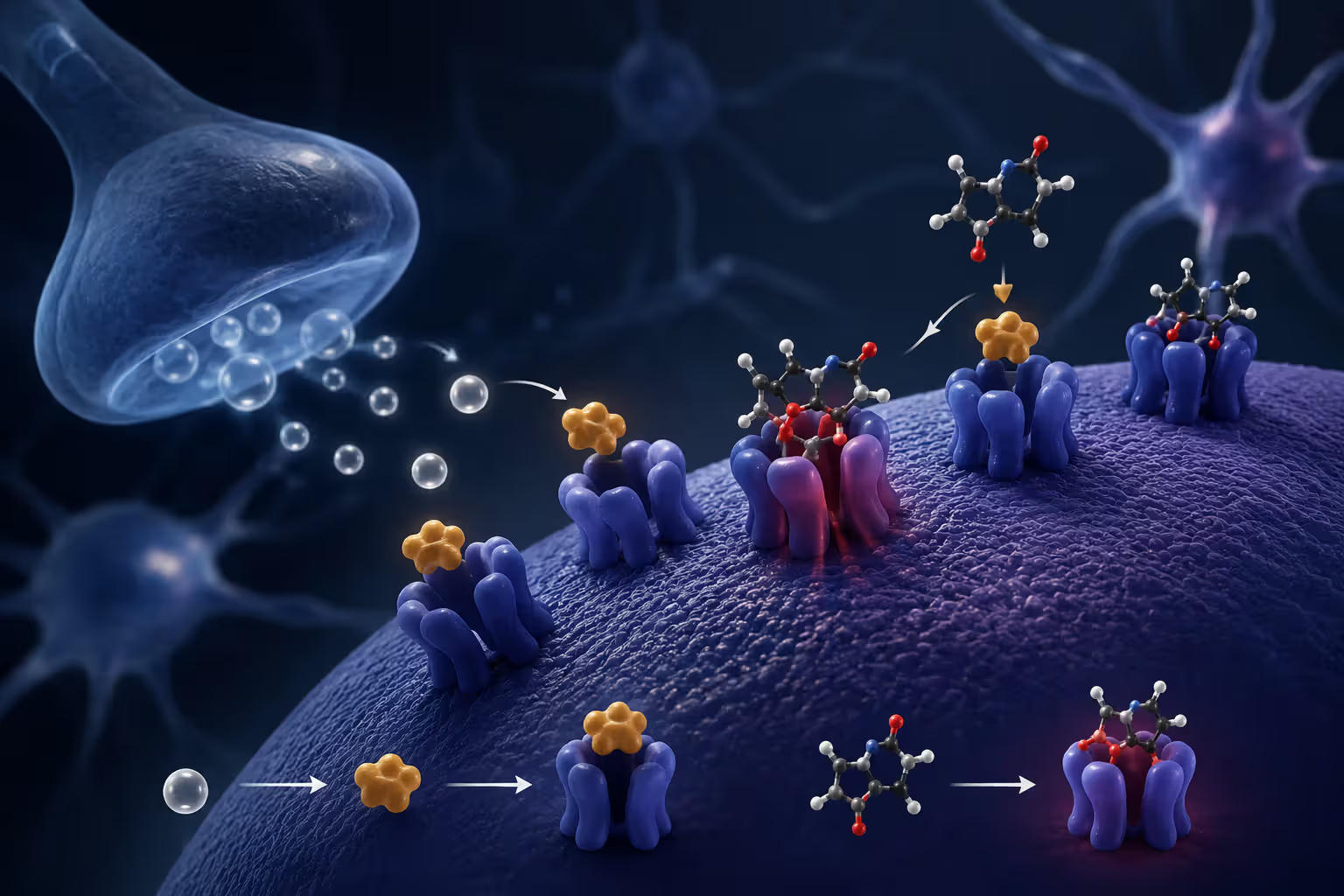
While you're awake, adenosine builds up in your brain. Think of it as your body's "you need rest" messenger. Caffeine sneaks in and occupies the spots where adenosine normally docks, essentially blocking the tired feeling from registering. Your exhaustion hasn't disappeared. It's just been temporarily muted.
Walk into any gas station at 2 PM and watch people grab energy drinks without checking labels. They don't know if they're getting 80mg or 300mg. They can't explain why their hands shake an hour later or why they're staring at the ceiling at midnight. Understanding how caffeine actually works—and how much you're really consuming—changes everything about how you use it.
What Caffeine Does and Why People Use It
Caffeine blocks specific receptors in your brain. That's the short version.
Here's what's really happening: Your brain has docking stations for adenosine, the chemical that makes you feel drowsy. Caffeine molecules are shaped similarly enough to fit into those same stations. When caffeine gets there first, adenosine can't deliver its "slow down" message. Your brain never receives the fatigue signal, so you stay alert.
People use caffeine for way more than just staying awake. College students down energy drinks before pulling all-nighters because it sharpens focus. Marathon runners take caffeine pills before races—studies show it can improve endurance by 3-5% and make the effort feel easier. Your grandmother's headache powder probably contains caffeine because it constricts blood vessels in the brain, which is why it appears in Excedrin and similar medications.
What people actually notice: sharper thinking, faster reflexes, the ability to push through boring tasks. These effects hit hardest around 45 minutes after your first sip and stick around for 3-5 hours, though everyone's different.
Here's the catch nobody mentions: caffeine doesn't manufacture energy out of thin air. It borrows against your future tiredness. That debt comes due later, usually as a crash that hits harder than if you'd just dealt with being tired in the first place.
Your liver breaks down caffeine using an enzyme called CYP1A2. Some people produce tons of this enzyme—they metabolize caffeine quickly and can drink espresso at dinner without issues. Others make very little, meaning even a morning cup can disrupt their sleep 12 hours later. It's genetic, and you can't change it.
How Much Caffeine Is in Energy Drinks
Energy drinks pack serious caffeine content. The amounts swing wildly depending on which brand you grab.
Almost every energy drink on the market contains caffeine—it's the main ingredient that actually does something. Most fall between 80mg and 300mg per container. Some brands push even higher with their "extreme" versions.
Companies load their drinks with high caffeine levels because it works. Caffeine in energy drinks creates the immediate buzz that gets people to buy them again. Mix it with sugar (or artificial sweeteners) plus B-vitamins, and you've got a product that feels like instant fuel.
The problem: can sizes are all over the place. Red Bull comes in 8.4 ounces. Monster is 16. Some brands sell 24-ounce cans. You need to actually read the label to know what you're getting.
Brand Name
Container Size
Caffeine Amount
Sugar Amount
Red Bull (Original)
8.4 fl oz
80 mg
27g
Monster Energy
16 fl oz
160 mg
54g
Celsius
12 fl oz
200 mg
0g
Bang Energy
16 fl oz
300 mg
0g
Rockstar (Original)
16 fl oz
160 mg
62g
5-Hour Energy
1.93 fl oz
200 mg
0g
Reign Total Body Fuel
16 fl oz
300 mg
0g
NOS Energy
16 fl oz
160 mg
54g
C4 Energy
16 fl oz
200 mg
0g
Alani Nu Energy
12 fl oz
200 mg
0g
People make this mistake constantly: assuming all energy drinks are basically the same. They're not. Red Bull has half the caffeine of Bang. Switch brands without checking, and you might accidentally double your dose.
The "zero sugar" versions usually contain the same caffeine as regular ones—they just swap out the sweeteners. Though some brands actually increase the caffeine in sugar-free versions to compensate for the missing sweetness.
Daily Caffeine Limits and Safety Guidelines
The FDA says healthy adults can safely consume up to 400mg of caffeine daily. That's roughly four cups of brewed coffee or two standard energy drinks.
But "healthy adults" is doing a lot of work in that sentence.
Pregnant women should cap it at 200mg. Teenagers shouldn't exceed 100mg. Anyone with heart problems, anxiety issues, or taking certain medications needs to talk to their doctor before making caffeine a daily habit.
That 400mg limit is a ceiling, not a target. You don't need to max out to function. Plenty of people do fine on 100-200mg per day.
Signs you've had too much:
Shaky hands or twitching
Heart racing or beating irregularly
Can't fall asleep even though you're exhausted
Stomach hurts or feels upset
Feeling anxious for no reason
Headaches that won't quit
Your body adapts over time. The amount that felt strong three months ago barely registers now. Your brain compensates by growing more adenosine receptors. You're not getting extra energy—you're just maintaining baseline normal.
I've seen people drinking 600mg or more daily. They're accumulating a sleep debt that eventually has to be paid back. The bill keeps getting bigger.
Caffeine Effects on Energy and Performance
Caffeine hits fast. You'll feel the first effects within 15 minutes. It reaches peak concentration in your blood around 45 minutes after drinking. The half-life—how long it takes your body to eliminate half of it—averages about 5 hours for most people.
The short-term benefits are real and measurable. Research shows caffeine improves reaction time, extends attention span, and boosts physical endurance. Athletes who take caffeine before workouts report that the exercise feels easier. They can push harder because the effort doesn't seem as brutal.
Mental tasks get easier too. Caffeine helps you stay focused during boring, repetitive work. It won't make you smarter, but it prevents your brain from checking out when you'd normally zone out.
The tricky part: people react completely differently to the same dose. Two coworkers drinking identical energy drinks can have opposite experiences. One feels focused and productive. The other gets jittery and can't concentrate.
Caffeine metabolism varies by up to 40-fold between individuals due to genetic differences in liver enzymes. What feels like a moderate dose for one person might trigger anxiety or sleep disruption in another. There's no universal 'right' amount—you have to find your own threshold through careful observation.
Timing matters more than most people realize. Drink an energy drink at 4 PM, and it's still active in your system at 9 PM. Half of it remains at bedtime. You might fall asleep, but your sleep quality tanks. The deep, restorative stages get shortened.
Caffeine works best when used strategically. Before a workout, before a long drive, or during a mid-morning slump. Drinking it all day long means you need it just to feel normal.
Side Effects and Risks of Too Much Caffeine
Too much caffeine feels awful. Your hands shake. Your heart pounds. Anxiety creeps in from nowhere.
Common side effects when you exceed your personal threshold:
Restlessness, can't sit still
Heart racing or skipping beats
Upset stomach, acid reflux
Running to the bathroom constantly (caffeine makes you pee more)
Headaches, especially when you skip your usual dose
Disrupted sleep, even from afternoon consumption
The effects go beyond physical discomfort. High caffeine intake can trigger or worsen anxiety disorders. The physical symptoms—rapid heartbeat, shallow breathing—feel like a panic attack. Your brain interprets these signals as danger, creating a feedback loop.
Long-term heavy use raises other concerns. Bone density might decrease because caffeine increases calcium loss through urine. Blood pressure can rise, though the effect is usually modest. Chronic sleep deprivation from late-day caffeine accumulates slowly.
Dependence sneaks up on you. Miss your morning dose and you'll have a pounding headache by noon. That's withdrawal. Your brain adapted to constant caffeine by growing more adenosine receptors. Without caffeine blocking them, you feel worse than before you ever started.
Tolerance is different from dependence, but they go hand in hand. You need more to get the same effect. One cup becomes three. Three becomes five. You're not getting more energy—you're just avoiding withdrawal.
The fix isn't fun. Cut back gradually over 2-3 weeks. Expect headaches and fatigue. But afterward, smaller amounts will work again.
FAQ: Caffeine and Energy Questions Answered
Do all energy drinks have caffeine?
Almost every major energy drink brand includes caffeine as the primary active ingredient, though a few caffeine-free versions exist. Red Bull and Monster both make decaf options, but they're nowhere near as popular. Check labels carefully—some "natural energy" drinks use guarana or yerba mate, which contain caffeine even though it's not listed as "caffeine" in the ingredients.
How long does caffeine energy last?
The strongest effects kick in 45-60 minutes after drinking. That energized feeling typically lasts 3-5 hours, but caffeine stays in your body much longer. With a half-life around 5 hours, half your dose is still active five hours later. Drink caffeine at 3 PM, and a quarter of it is still affecting you at 1 AM.
What's the safest way to consume caffeine for energy?
Keep your daily intake between 200-400mg, spread across morning and early afternoon. Stop drinking caffeinated beverages at least six hours before you plan to sleep—so if you go to bed at 10 PM, nothing after 4 PM. Drink water alongside it since caffeine increases urination. Never mix energy drinks with alcohol—the stimulant masks alcohol's effects, leading to dangerous overconsumption.
Can you build tolerance to caffeine?
Yes, and it happens fast. Regular consumption triggers your brain to create more adenosine receptors within 1-2 weeks. You'll need increasingly larger amounts to feel the same effects. Taking occasional breaks (even just 3-5 days) can reset your tolerance and restore caffeine's effectiveness.
Is caffeine from energy drinks different than coffee?
Chemically, caffeine is identical regardless of source. But energy drinks typically include other ingredients like taurine, B-vitamins, and sweeteners that change how you experience it. Energy drinks also deliver caffeine faster because people usually chug them quickly, while coffee gets sipped over 20-30 minutes. That faster absorption creates a more intense sensation.
When should you avoid caffeine?
Skip caffeine during pregnancy (or limit to 200mg maximum), if you have heart rhythm problems, struggle with anxiety, or take certain medications including some antibiotics and antidepressants. Don't consume it less than six hours before bedtime. And when you're already stressed or sleep-deprived, more caffeine won't help—it'll just mask the real problem while making it worse.
Caffeine delivers real benefits, but it's not magic. It temporarily blocks your tired signals and extracts a price when overused. Figure out your personal limits, time your consumption strategically, and remember that genuine energy comes from adequate sleep, proper nutrition, and regular movement—not from a can.